Wetsuits & clothing
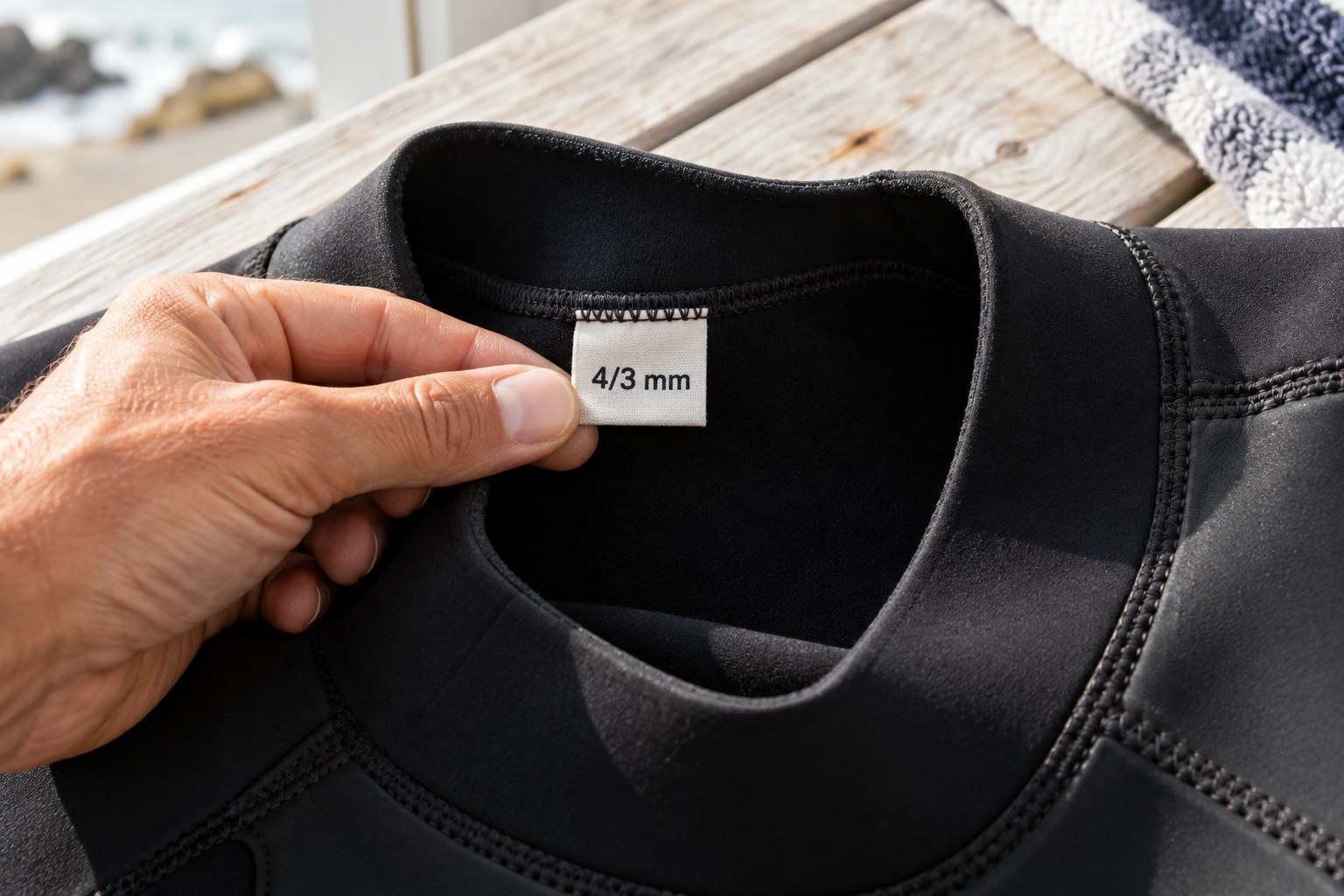
Read a wetsuit thickness label before comparing suits
Those slash-separated numbers describe material thickness, not a complete verdict on warmth. Read them alongside the suit's construction, fit and intended conditions.
Wetsuits & clothing
Compare the sleeve and leg coverage first, then the model's thickness and intended use. A seasonal name is not a temperature recommendation.
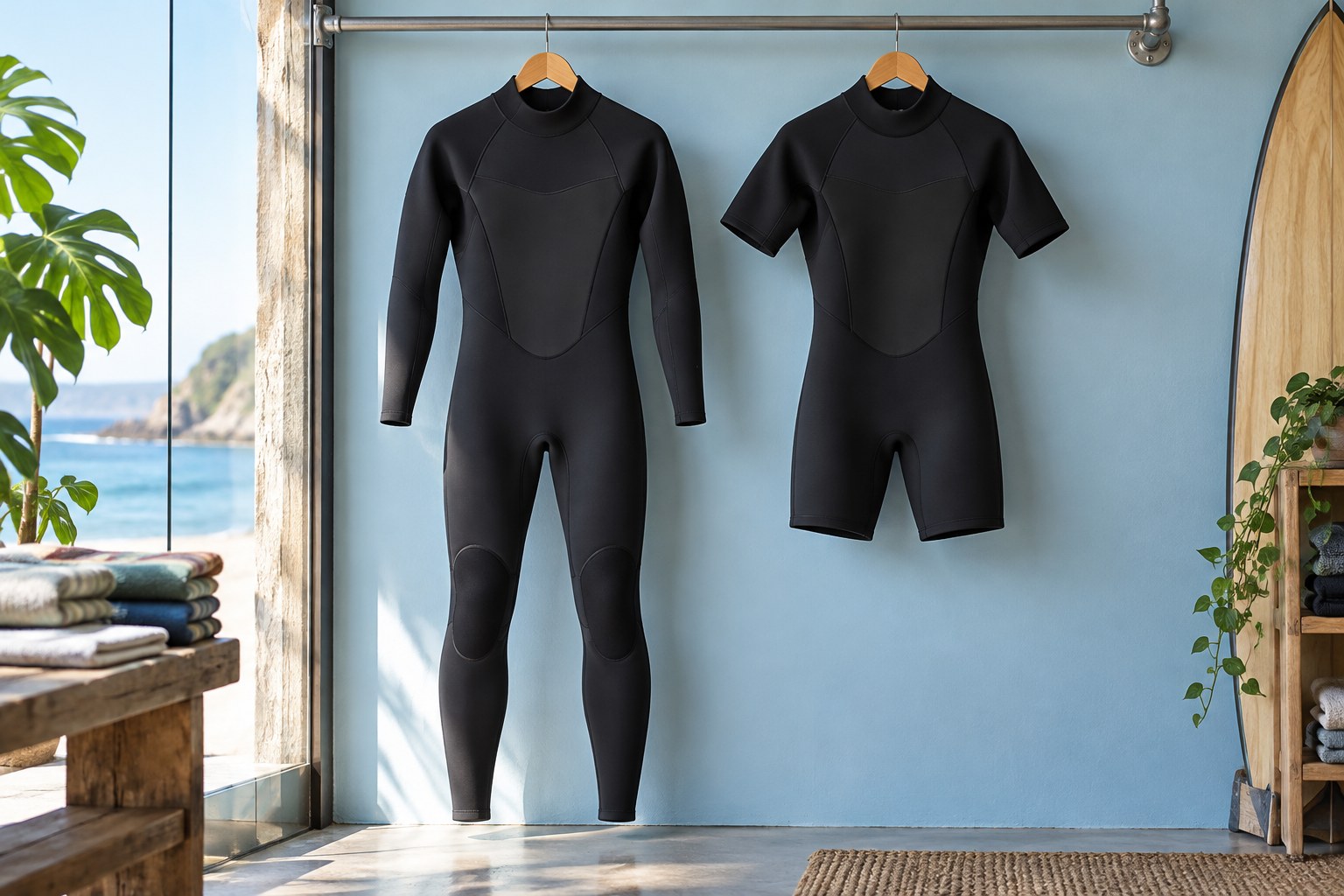
AI-generated illustration. Equipment details are illustrative; follow the instructions for your own item.
A full suit usually covers the arms and legs, while products sold as spring suits come in several shorter configurations. Read the actual sleeve and leg description before comparing prices. The name 'spring suit' does not mean it will suit every spring climate, and a full-length garment is not automatically the right choice for every cool day.
Describe your destination, season and session plan to the school or local shop. Ask what type of garment they recommend for that use. If equipment is supplied for lessons, confirm the available coverage and sizing before buying a separate suit.
Photograph or note the exact cut of each candidate. A short-leg suit with long sleeves is a different option from a short-sleeve, short-leg model. Check how the openings sit during movement and whether the garment works with any other equipment the school recommends.
Then compare the stated material thickness and construction. Two garments with the same coverage can differ substantially in those details. Conversely, matching thickness numbers do not erase a difference in exposed areas. Keep these decisions separate so that a sale label does not conceal a mismatch.
Follow the retailer's fitting instructions and check the body length as well as the openings. A short-leg suit can still pull through the torso if the proportions are wrong. Do not judge it only by whether the zip closes or whether the sleeve ends look neat.
If you plan to wear additional layers, ask whether the proposed combination is appropriate and try the complete arrangement. Adding an arbitrary top underneath is not a reliable way to turn one garment into another kind of suit.
Consider your travel plans before buying several versions. For occasional lessons in one place, a rental may let you learn what you need without building a collection immediately. For repeated trips, keep a record of the conditions and equipment recommendations so future purchases address a clear gap.
No coverage label replaces local judgement about whether the session itself is suitable. Select the garment as part of the plan, then remain willing to change that plan when the conditions or the school’s advice change.
Wetsuits & clothing
Those slash-separated numbers describe material thickness, not a complete verdict on warmth. Read them alongside the suit's construction, fit and intended conditions.
Wetsuits & clothing
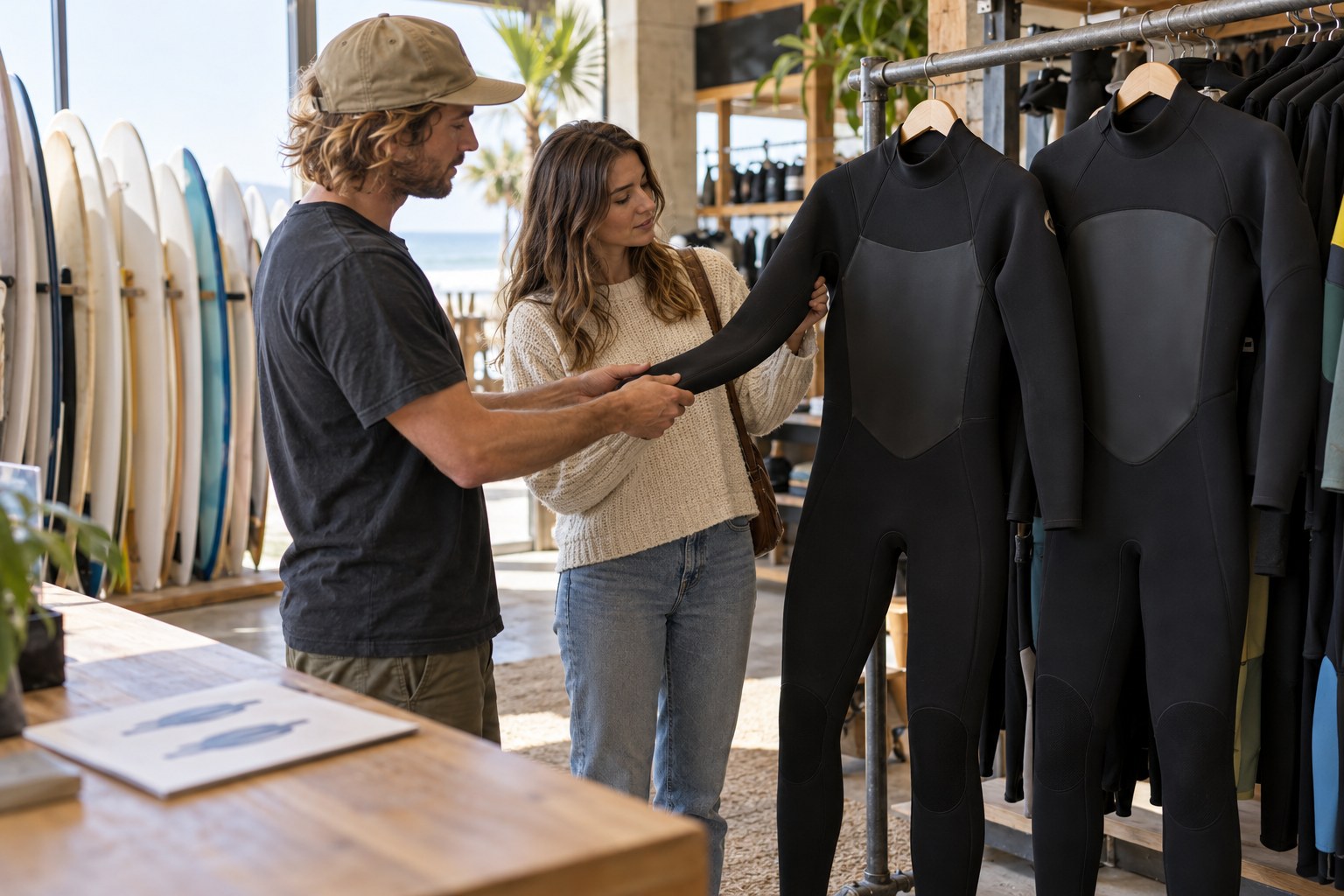
Bring the destination, season and session plan to a local shop, then compare its advice with the manufacturer guidance for the actual suit.