Boards & equipment
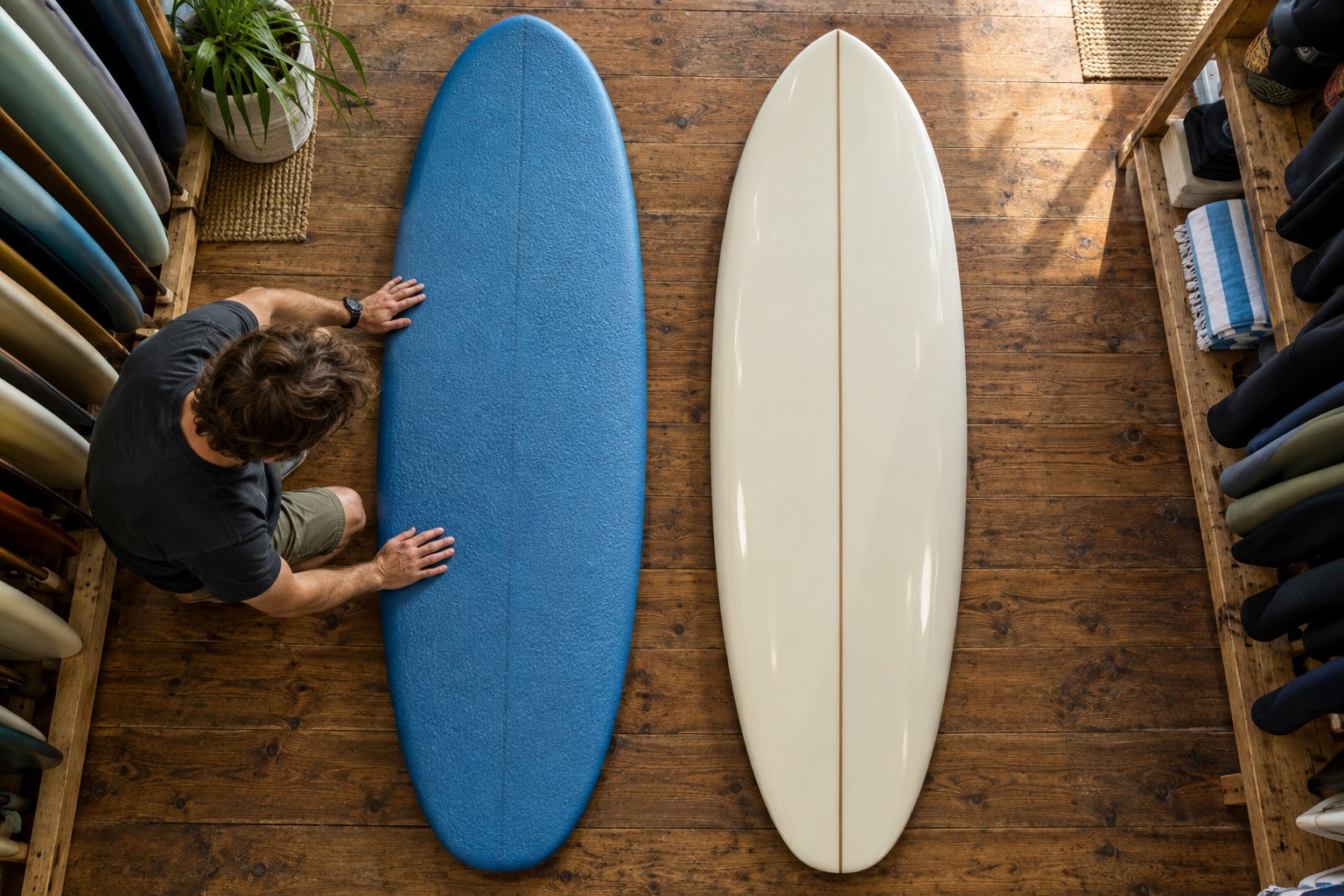
Soft top or hard board for your first purchase
Choose construction alongside shape, condition and the way you will use the board, rather than treating a hard board as an automatic upgrade.
Boards & equipment
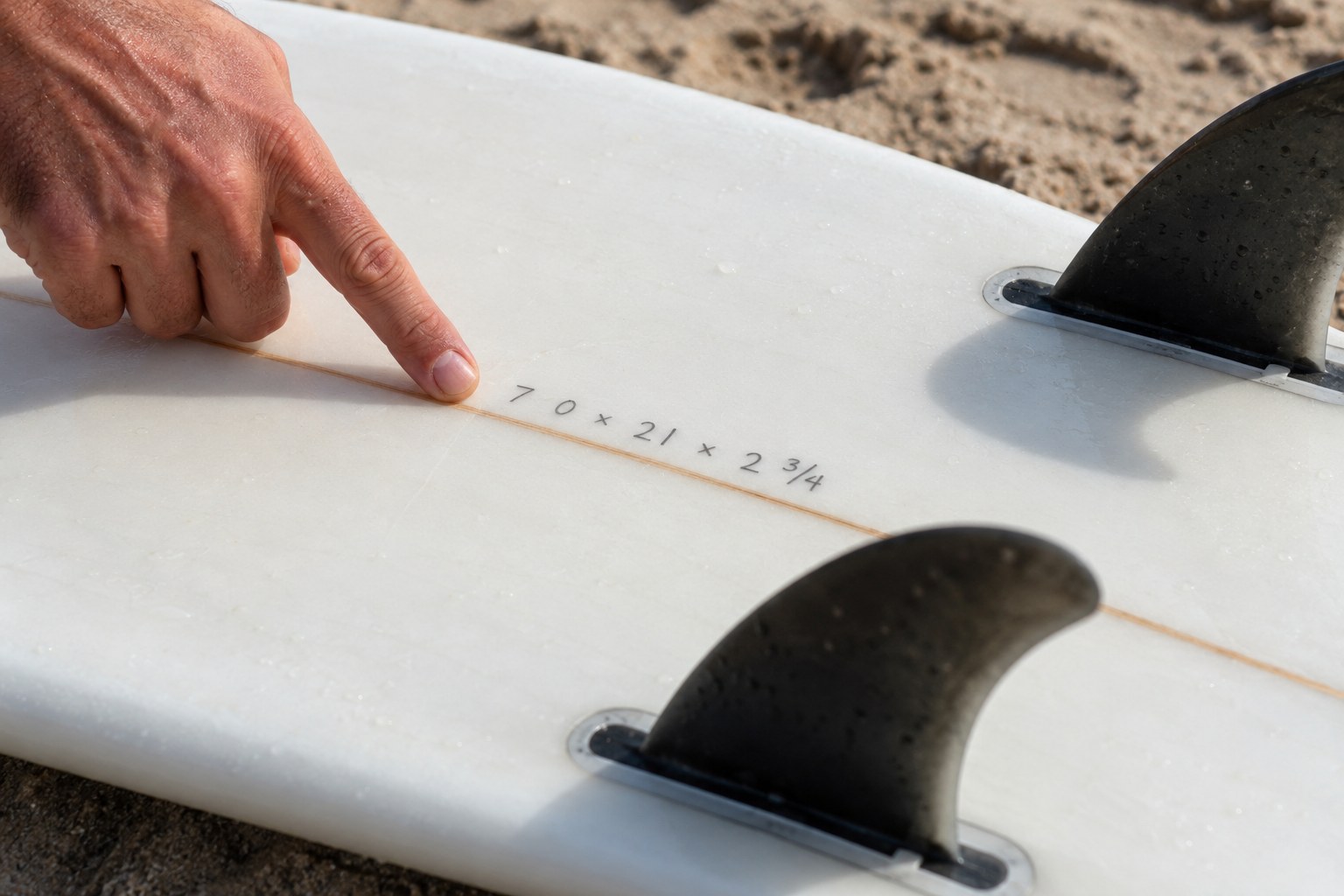
Read the units and keep the entire dimensions line together when identifying a board or comparing a proposed replacement.
AI-generated illustration. Equipment details are illustrative; follow the instructions for your own item.
A surfboard label often shows length, width and thickness, followed by volume in litres. The dimensions may use feet and inches with fractions, or another format chosen by the maker. Read the units rather than assuming every number is decimal or that every board follows exactly the same sequence.
For example, a length written as 7'2" means seven feet and two inches, not 7.2 feet. A width shown as 21 1/2" is twenty-one and a half inches. These distinctions matter when ordering a bag, comparing sizes or sending details to a shop.
Take a clear photograph of the label and transcribe it exactly. Keep the model name and construction in the same record. A number detached from the board identity becomes less useful when a maker offers several designs in similar dimensions.
If handwriting is unclear, ask the seller or manufacturer rather than guessing. A serial number, order number or shaper's mark may appear near the dimensions without being part of them. Do not treat every figure on the underside as a measurement.
Older or custom boards may omit volume. Record that it is not stated instead of calculating a precise litre figure from length, width and maximum thickness. Those measurements do not describe every curve and taper needed to determine the complete volume.
The label does not fully describe the outline, rocker, rails or thickness distribution. Two boards with similar dimensions can therefore have different intended uses. Use the measurements to identify and compare, then read the maker's explanation of the whole design.
When buying accessories, check which measurement the accessory maker needs. A board bag may require the actual outline and packed dimensions, while a fin purchase needs the fitting system and intended configuration. The dimensions line is important but is not a universal parts code.
Save the photograph with your receipt and any care information. If you later order a replacement, compare the full specification before accepting a substitute. A retailer offering the same length in another model is offering a different board, and that difference deserves a fresh suitability discussion.
Boards & equipment
Choose construction alongside shape, condition and the way you will use the board, rather than treating a hard board as an automatic upgrade.

Boards & equipment
Bring a record of the boards you have used and the sessions you want to your sizing conversation.