Wetsuits & clothing
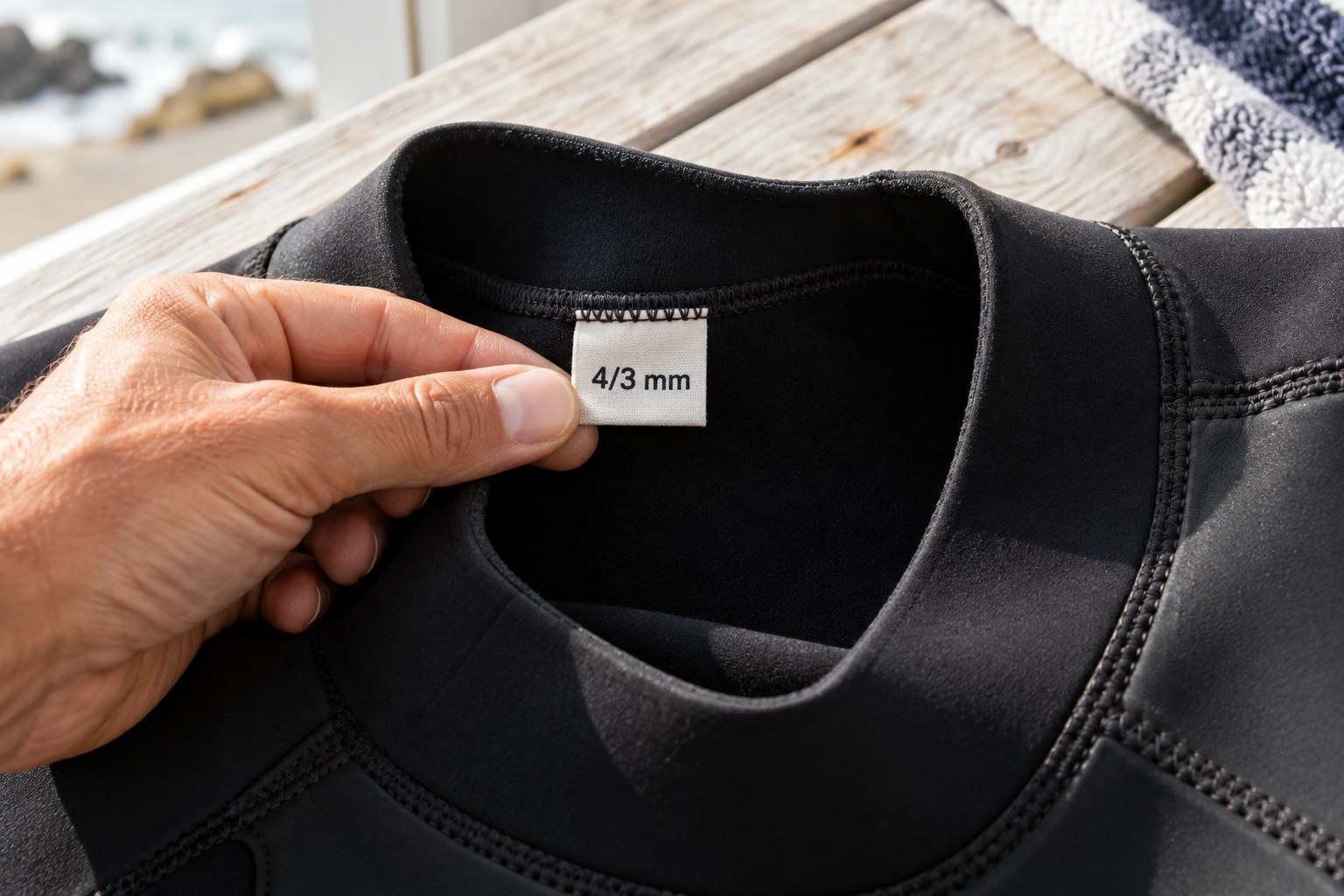
Read a wetsuit thickness label before comparing suits
Those slash-separated numbers describe material thickness, not a complete verdict on warmth. Read them alongside the suit's construction, fit and intended conditions.
Wetsuits & clothing
Separate the need to see clearly in the water from choosing sunglasses for time on shore. Discuss prescription and water-use requirements with qualified providers.
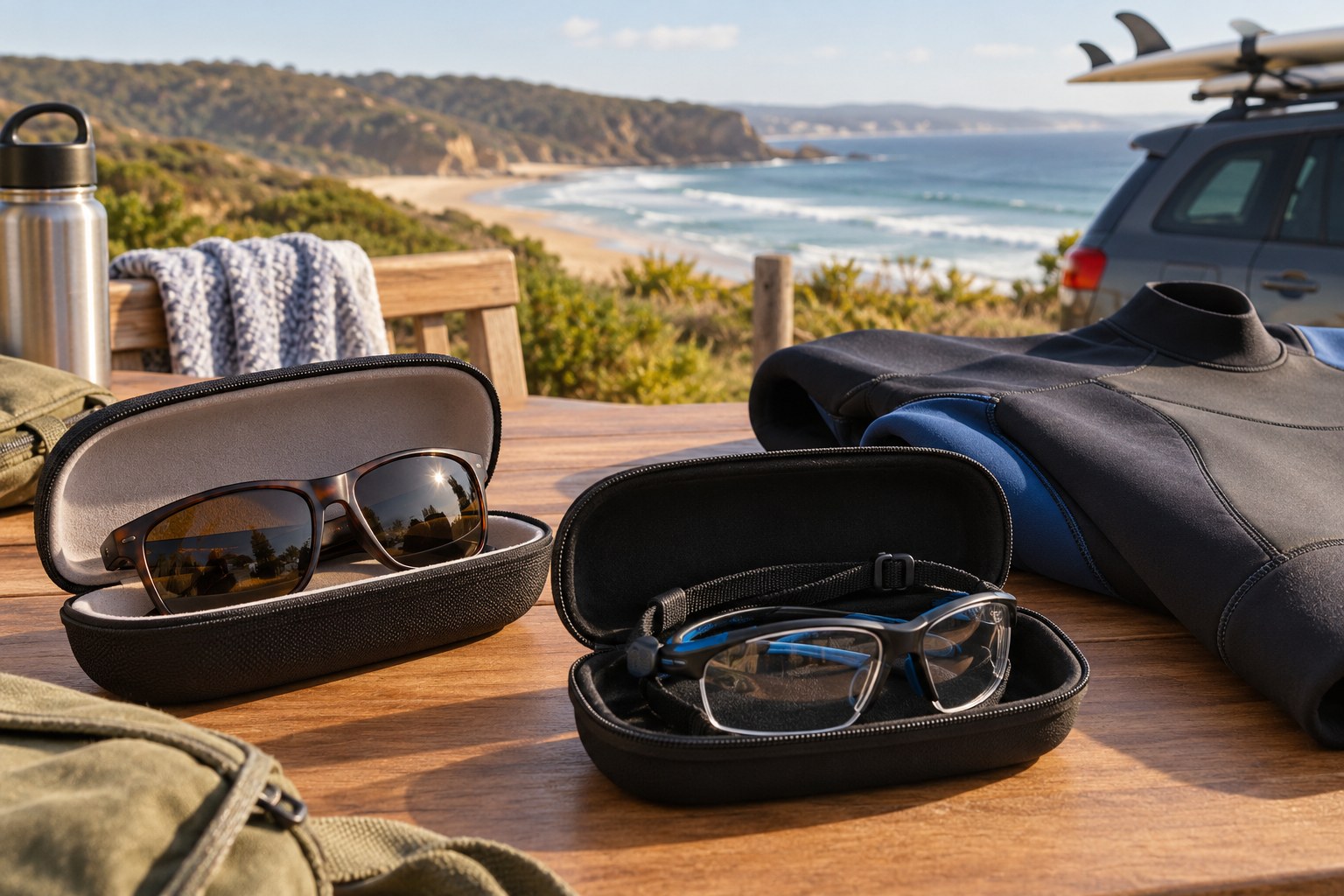
AI-generated illustration. Equipment details are illustrative; follow the instructions for your own item.
If you need corrective eyewear, begin a surf-lesson enquiry by explaining that clearly. Ask the school what arrangements it can support and discuss suitable options with your optometrist. Do this before buying an accessory or assuming your everyday glasses can be adapted with a strap.
Fashion sunglasses, prescription spectacles and eyewear intended for a particular water activity have different purposes. A similar-looking frame does not establish equivalent suitability. Read the manufacturer's intended-use information and let the relevant professional address your vision requirements.
Explain whether the difficulty is seeing the instructor, recognising equipment or navigating the beach and meeting point. These details make the conversation more useful than saying only that you have poor eyesight. Ask the school how it communicates during lessons and whether a different arrangement is available.
Do not choose contact lenses on the basis of a surfing article. The CDC advises removing lenses before water activities such as swimming. Ask your eye-care professional about your individual situation and suitable alternatives. The school can describe its lesson, but it cannot replace clinical advice about your eyes.
If considering specialist eyewear, ask the manufacturer what activity it is designed for and what limitations apply. Check fit, field of view and the prescribed retention arrangement with the appropriate provider. Do not attach ordinary frames to unrelated straps or modify a product to imitate a specialist design.
Keep onshore eyewear in a protective case while changing, and arrange a secure storage place with the school. Label the case discreetly so it can be found after the session. Bring the information you need for the journey home separately from equipment that may be left at the beach.
Allow time to resolve these questions before booking a non-refundable lesson. If the available arrangement does not meet your needs, discuss another provider or plan instead of improvising at the water's edge. The goal is a workable lesson in which the instructor understands the situation and any equipment has been chosen for its stated purpose.
Wetsuits & clothing
Those slash-separated numbers describe material thickness, not a complete verdict on warmth. Read them alongside the suit's construction, fit and intended conditions.
Wetsuits & clothing
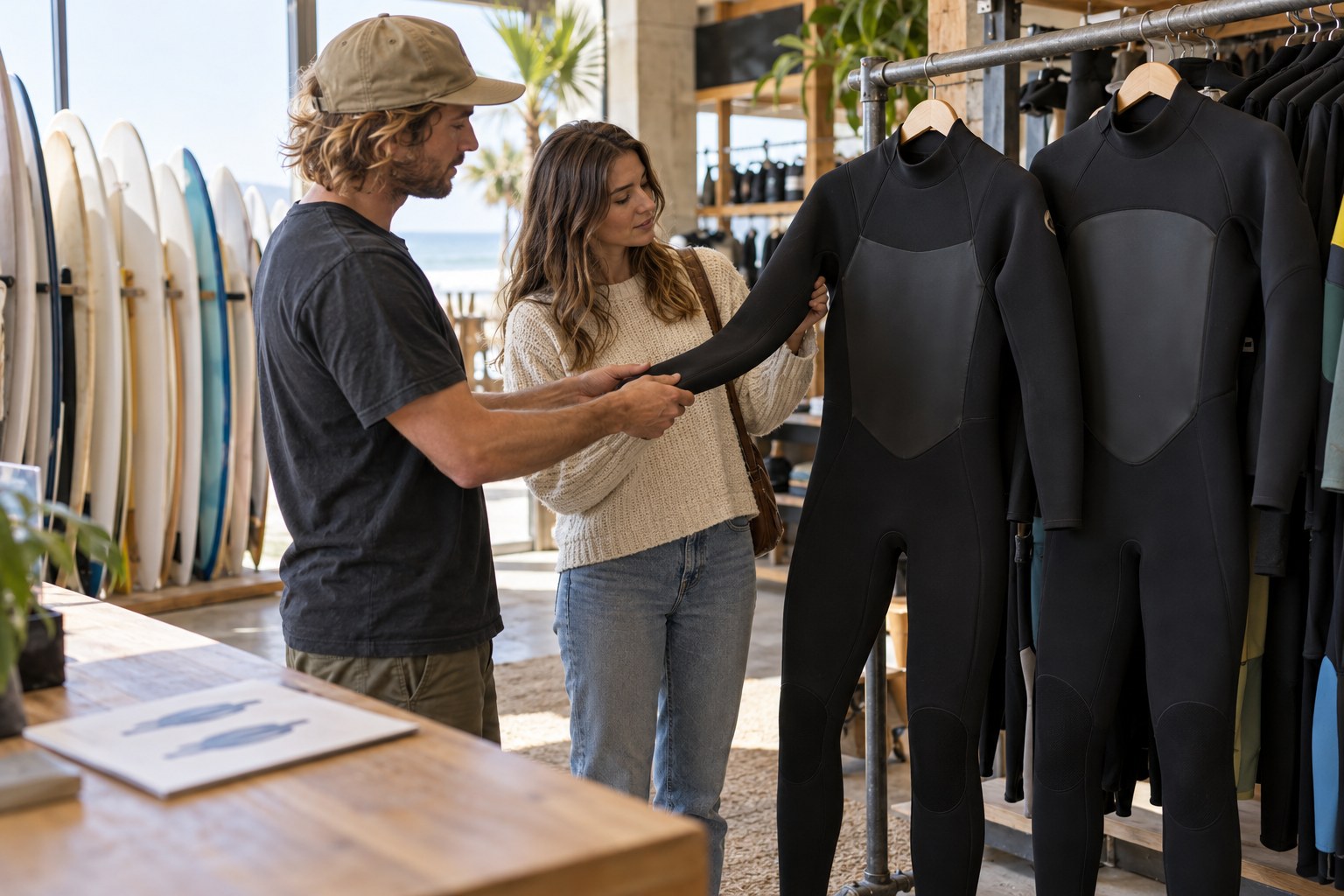
Bring the destination, season and session plan to a local shop, then compare its advice with the manufacturer guidance for the actual suit.