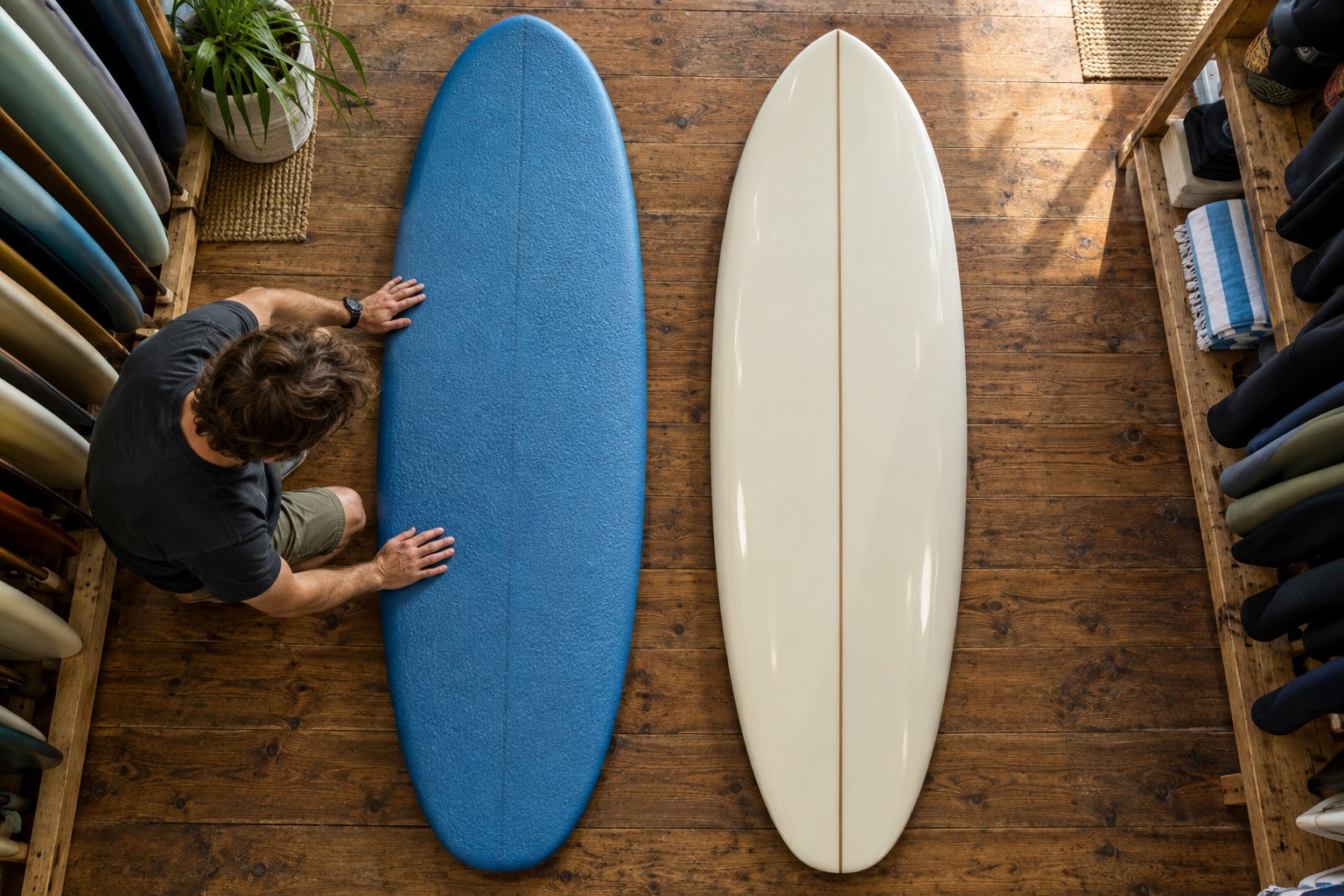
Boards & equipment
Soft top or hard board for your first purchase
Choose construction alongside shape, condition and the way you will use the board, rather than treating a hard board as an automatic upgrade.
Boards & equipment
Longboards and midlengths cover varied designs. Decide what you want from the sessions before choosing the label on the rack.
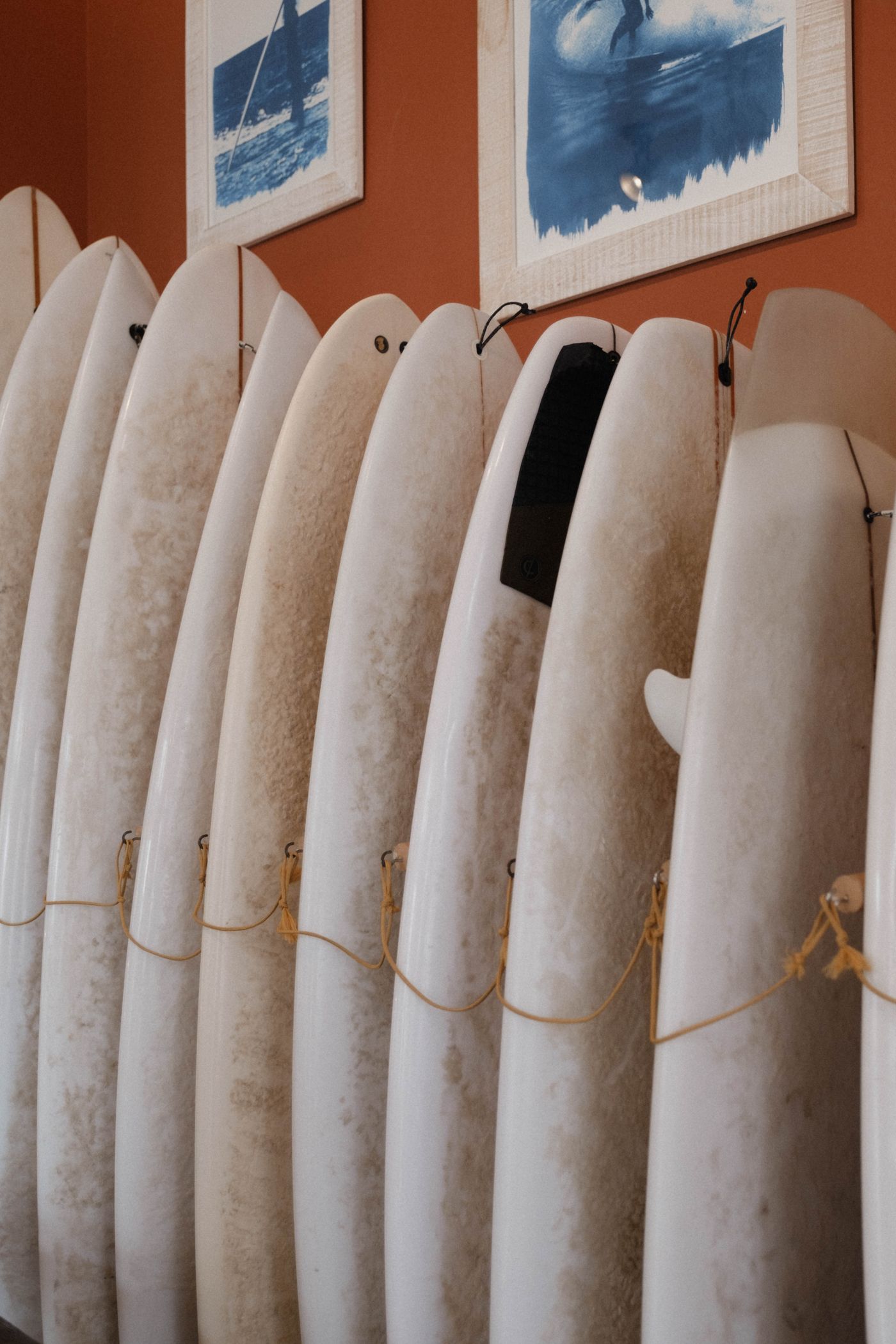
Longboard and midlength are useful shop categories, but neither describes one uniform design. A board within either group can have a different outline, rocker, construction and fin arrangement from its neighbour. Begin by describing the surfing you want to do and the level you are currently ready for, then compare specific models.
If your only reference is a lesson board, bring its details and ask the instructor which features were helping you. Do not assume that a midlength is automatically the sensible halfway step between a large learner board and a shortboard. The shape and intended use matter more than the position of a label between two other labels.
Perhaps you want a board for regular supervised practice, or you already have experience and want a different feel in suitable sessions. Write that purpose plainly. Add practical constraints such as home storage, transport and the distance you carry equipment on foot.
Then separate requirements from preferences. Fitting through your staircase is a requirement. Preferring a particular graphic is a preference. Wanting a board that will remain useful for certain sessions is a purpose that needs a discussion of actual designs.
Ask the shop what each candidate gives up as well as what it offers. If one is shorter and easier to store, does its design still suit your current practice? If another is longer, can you handle and transport it consistently? A realistic comparison includes these ordinary consequences rather than only descriptions of ideal rides.
A single-fin board, a two-plus-one setup and a multi-fin design may all appear in this comparison. Identify the intended configuration and what is supplied. A price without the required fins is not directly comparable with a complete package.
Check bag availability for the actual outline. Length alone does not establish whether a narrow travel bag accommodates a broad nose or tail. Consider the packed size when measuring your vehicle and storage route.
If buying used, include the condition assessment and likely cost of any work in the decision. A familiar category name does not compensate for uncertain repairs or damaged fittings. Ask a competent repairer to assess concerns before payment rather than treating them as a small project you will solve later.
A rental or demo is most useful when the model is relevant to your needs and the session is appropriate for your experience. Record its dimensions and fins so your impression can be linked to the actual setup.
Discuss the result with the instructor or shop. One board that felt unsuitable does not condemn every midlength or longboard, just as one enjoyable session does not prove a model works in every situation. Choose the board whose role you can explain clearly, and leave room for experience to refine your preferences over time.
Before ordering, walk through the journey from storage to transport with the proposed dimensions in mind. A long straight garage wall can make a board look easy to accommodate, while a turn between two doorways creates the real limit. Ask whether a display board can be handled in the shop so you understand its size without putting it at risk.
Think about the destination too. A parking place close to one beach may conceal a carrying problem that becomes apparent at another entrance. If you rely on public transport, confirm the operator's current equipment policy and the practical space available; a shorter category name does not guarantee admission.
These constraints should inform the shortlist rather than force an inappropriate compromise. If the board best suited to your lessons is difficult to keep at home, a school storage arrangement or continued rental may solve the actual problem. Buying a different design solely to fit a cupboard can leave you with equipment that is convenient everywhere except the session it was bought for.
Finally, decide whether this is intended as your only board or a second option. The only-board question asks for a useful fit with the sessions you regularly take. A second-board choice can have a narrower role. Keeping those purposes separate makes the longboard-versus-midlength discussion much less abstract.
Boards & equipment
Choose construction alongside shape, condition and the way you will use the board, rather than treating a hard board as an automatic upgrade.

Boards & equipment
Bring a record of the boards you have used and the sessions you want to your sizing conversation.