Surf travel
Choose a surf camp by its daily schedule
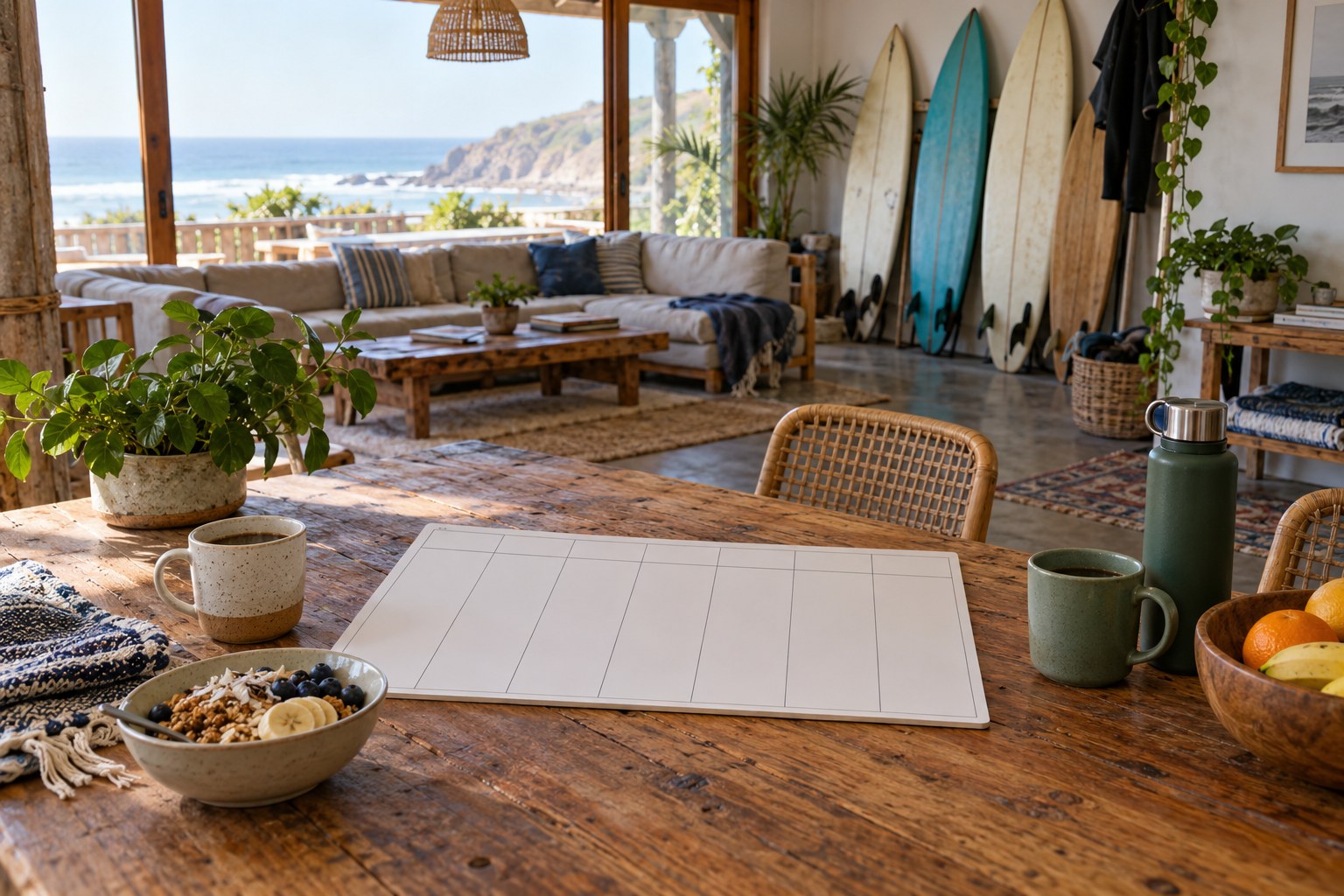
Read a sample day as a sequence of travel, instruction, meals and rest. The advertised number of lessons does not describe the whole holiday.
Surf travel
Work backwards from the accommodation door: the final transfer, check-in and board storage often determine how manageable arrival feels.
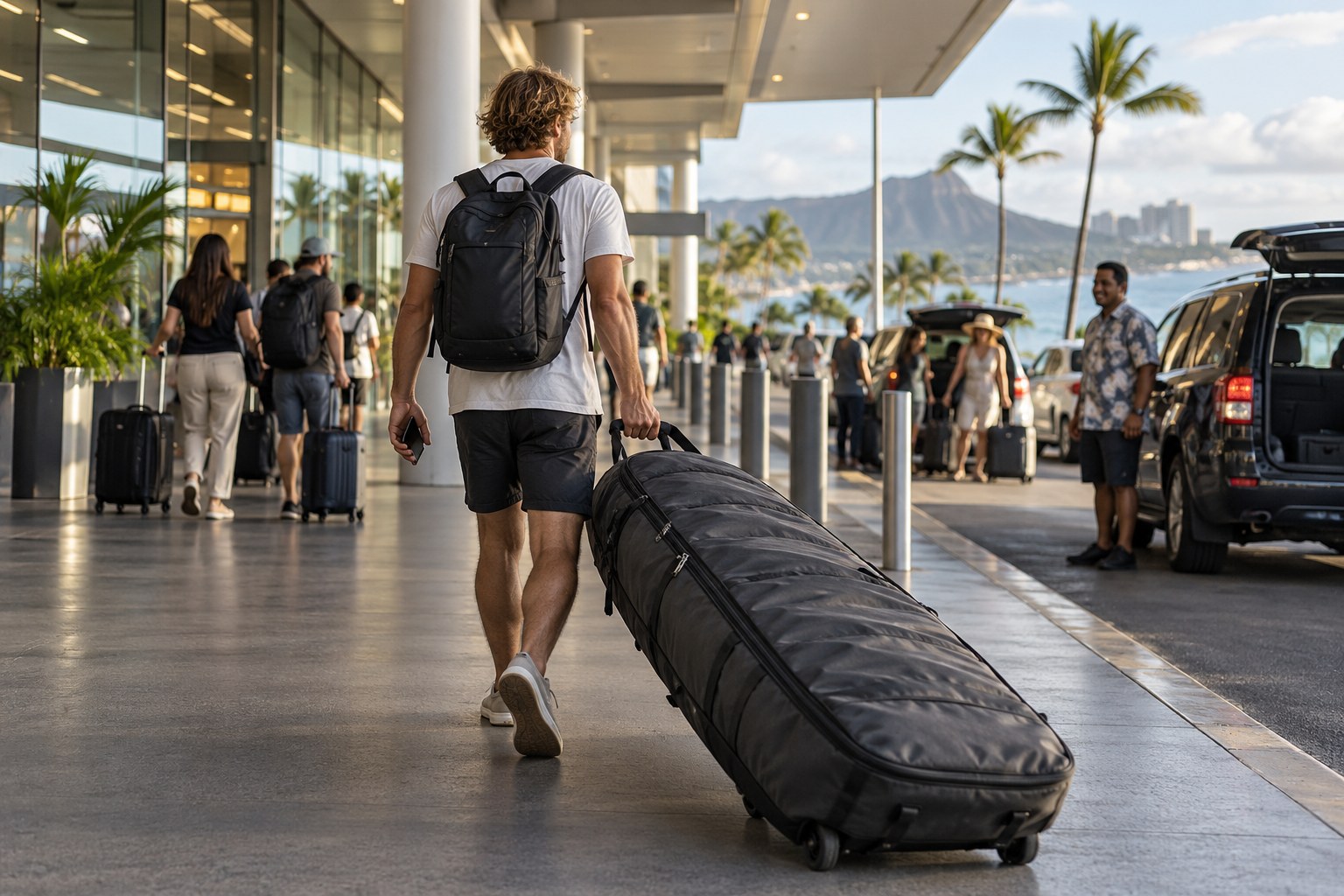
AI-generated illustration. Equipment details are illustrative; follow the instructions for your own item.
A flight arrival time is not the time you will be standing outside with a board. Collection of an oversized bag, border formalities and the walk to the transfer point all take time. Avoid making the first booked lesson depend on an unusually fast journey through the airport. Give arrival its own plan rather than treating it as the first half of a surf session.
Start with the destination address and the accommodation's check-in arrangements. Ask where you can leave a large board bag if you arrive before the room is available. A staffed reception, a locked store and an unattended entrance are different situations. Get a direct answer about equipment rather than assuming ordinary luggage storage includes long bags.
Send the transfer provider the number of passengers, ordinary bags and packed board dimensions. 'Two people with surfing gear' is easy to misunderstand. Ask whether the quoted vehicle and equipment arrangement are confirmed, and what happens if the flight is delayed.
Save the meeting point as written directions as well as a map. Airport exits and pickup zones may be separated by barriers or several levels. Include a contact method that works without relying entirely on airport Wi-Fi. Keep the booking confirmation outside the checked bag.
If you are collecting a rental car, allow time to inspect the agreed carrying system before leaving. Do not make the onward journey depend on improvising a rack at the rental desk. A different car model can change the usable space even when it belongs to the same rental category.
The essential tasks are modest: reach the accommodation, check the board's condition, find where wet equipment can go and confirm the next day's meeting arrangements. Buy or obtain food before local shops close if that is relevant to your arrival time. Leave unpacking decorative accessories and comparing every nearby beach until later.
Keep an alternative for a delayed arrival. That might mean a later transfer, a message to the host or moving the first lesson to another day under its booking terms. A useful arrival plan still works when it is slower than expected, and does not require a tired traveller to solve transport and equipment storage at the same time.
Surf travel
Read a sample day as a sequence of travel, instruction, meals and rest. The advertised number of lessons does not describe the whole holiday.
Surf travel
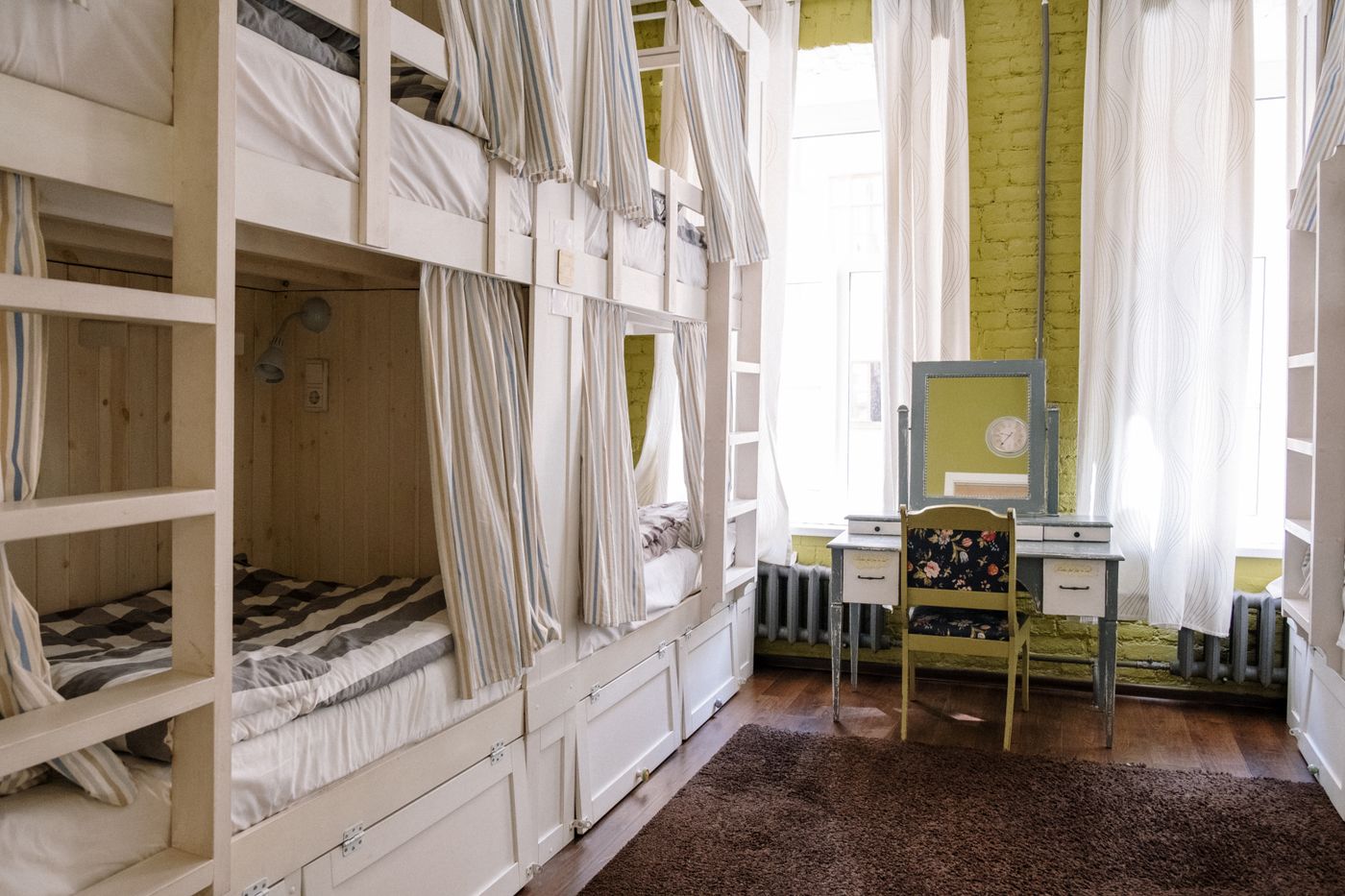
Compare the room you will actually book, the shared facilities and the distance to the camp's meeting point rather than relying on a few attractive photographs.