Wetsuits & clothing
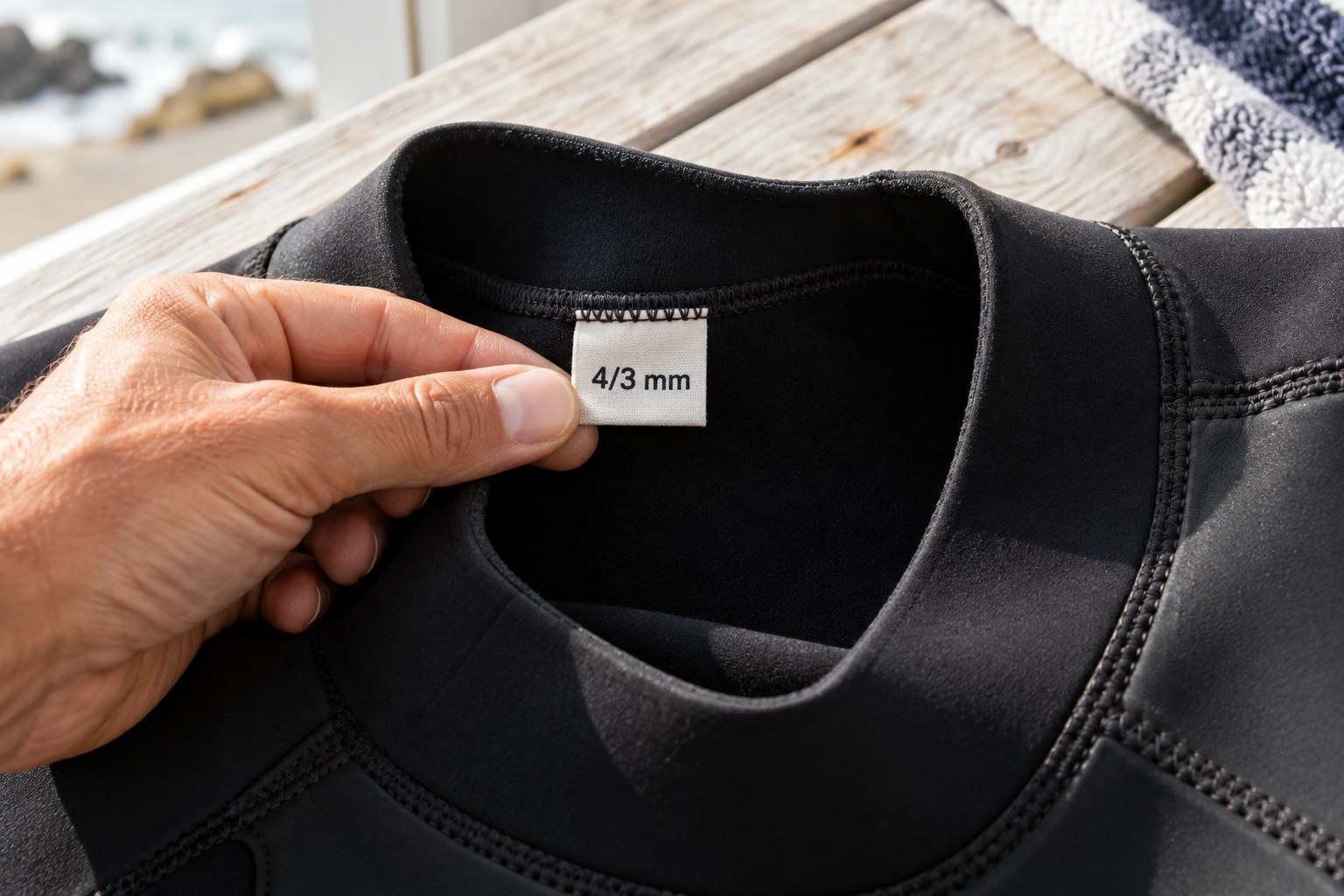
Read a wetsuit thickness label before comparing suits
Those slash-separated numbers describe material thickness, not a complete verdict on warmth. Read them alongside the suit's construction, fit and intended conditions.
Wetsuits & clothing
Reserve space for the suit before filling the bag with optional clothing, and use the maker's packing guidance rather than forcing it into a tight bundle.
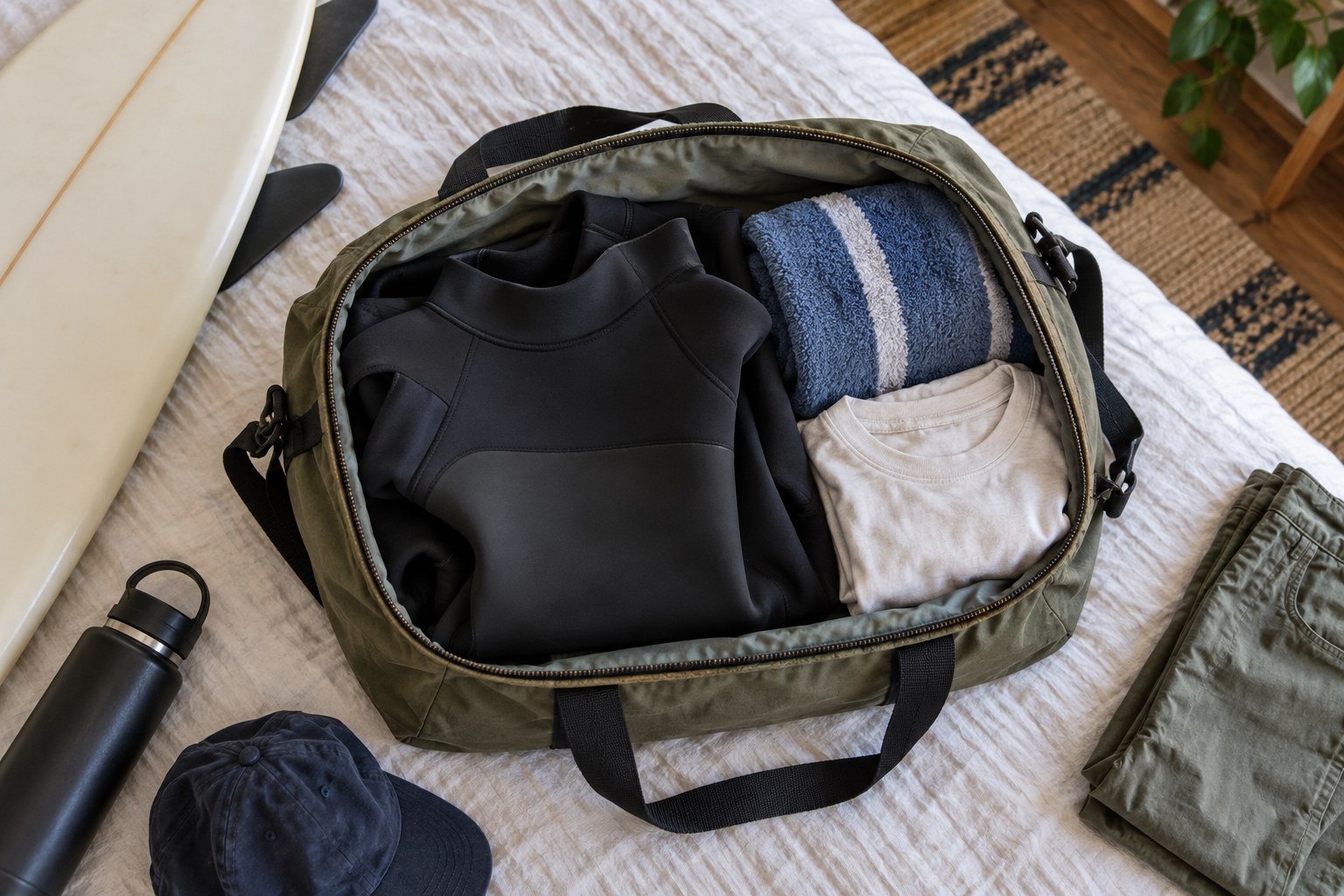
AI-generated illustration. Equipment details are illustrative; follow the instructions for your own item.
A wetsuit is often one of the largest soft items in a surf travel bag. Pack it early in the trial layout instead of trying to squeeze it into the last gap. Read the manufacturer's transport and storage guidance, then choose a bag arrangement that accommodates the garment without forcing tight folds or pressure from hard objects.
Begin with a clean, appropriately dried suit. Keep its closure and any delicate panels away from tools, buckles and exposed hardware. If the maker recommends a particular folding method, follow that rather than rolling it as tightly as possible to save space.
Lay out the suit, essential clothing and required accessories before adding optional items. Compare their volume with the actual bag, including internal dividers that reduce usable space. A bag's advertised capacity does not tell you how conveniently a bulky garment fits through its opening.
Place small soft items where they remain easy to identify, but do not use every hollow in the suit as storage for loose objects. Keep fin tools, chargers and other hard pieces in protective containers away from the garment. You should be able to remove the suit without searching through a hidden collection of accessories.
The outward journey is only half the packing problem. Reserve an appropriate wet-gear bag or other separation method for the trip home, and understand its limits. Give the suit time to rinse and dry as directed before departure whenever possible. Do not assume it will occupy the same space or weigh exactly the same when returned damp.
If the itinerary includes several stops, unpack the suit promptly at each suitable accommodation. Ask in advance about drying space rather than leaving it compressed in luggage throughout the trip. A smaller clothing selection may be more useful than a second bag filled with garments you never wear.
When the trial pack is complete, close the bag without using the zip to compress the contents by force. Check its weight and dimensions against the relevant transport rules. If it does not fit, remove optional items or reconsider the luggage plan; the suit's care requirements should not become the variable you ignore.
Wetsuits & clothing
Those slash-separated numbers describe material thickness, not a complete verdict on warmth. Read them alongside the suit's construction, fit and intended conditions.
Wetsuits & clothing
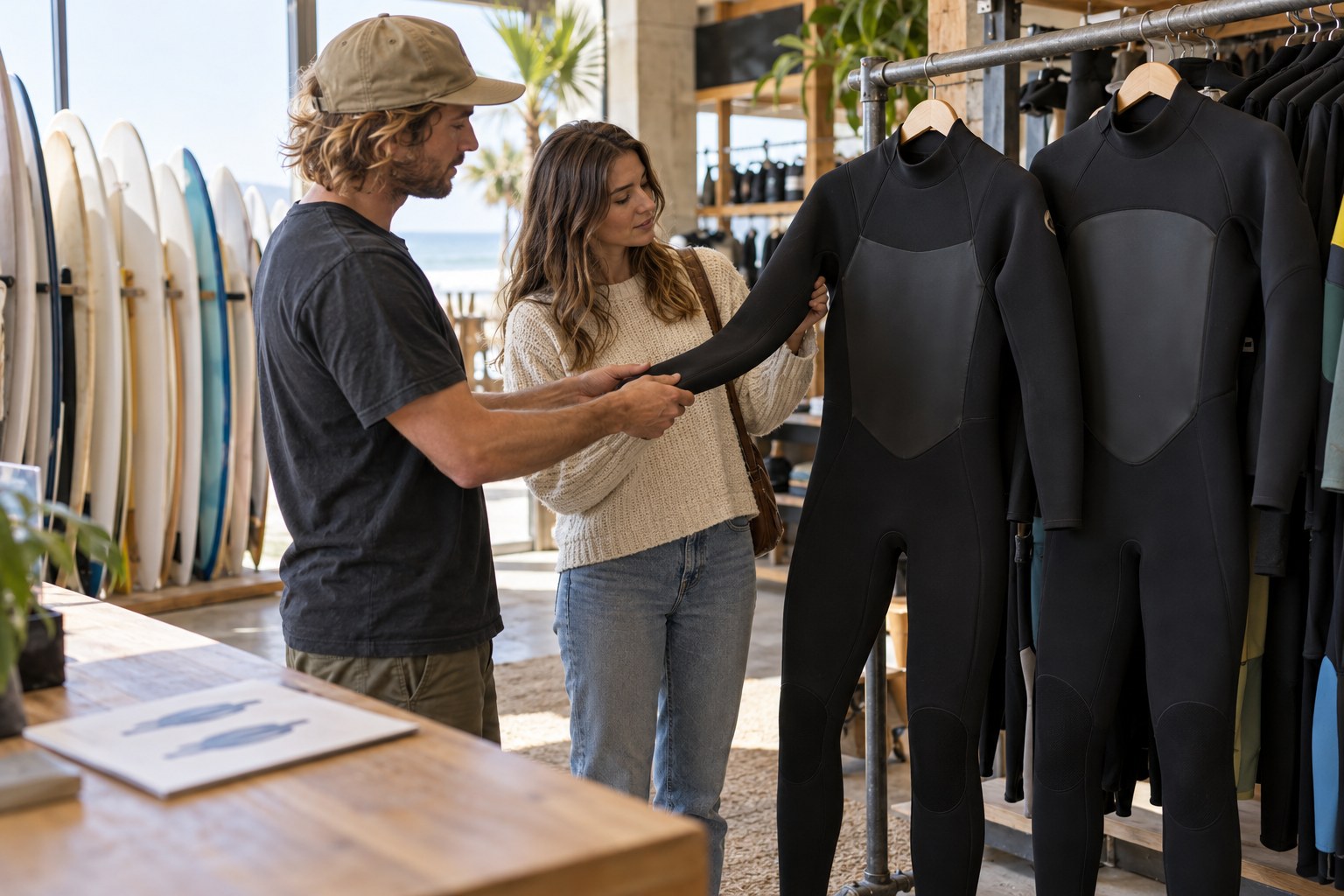
Bring the destination, season and session plan to a local shop, then compare its advice with the manufacturer guidance for the actual suit.