Boards & equipment
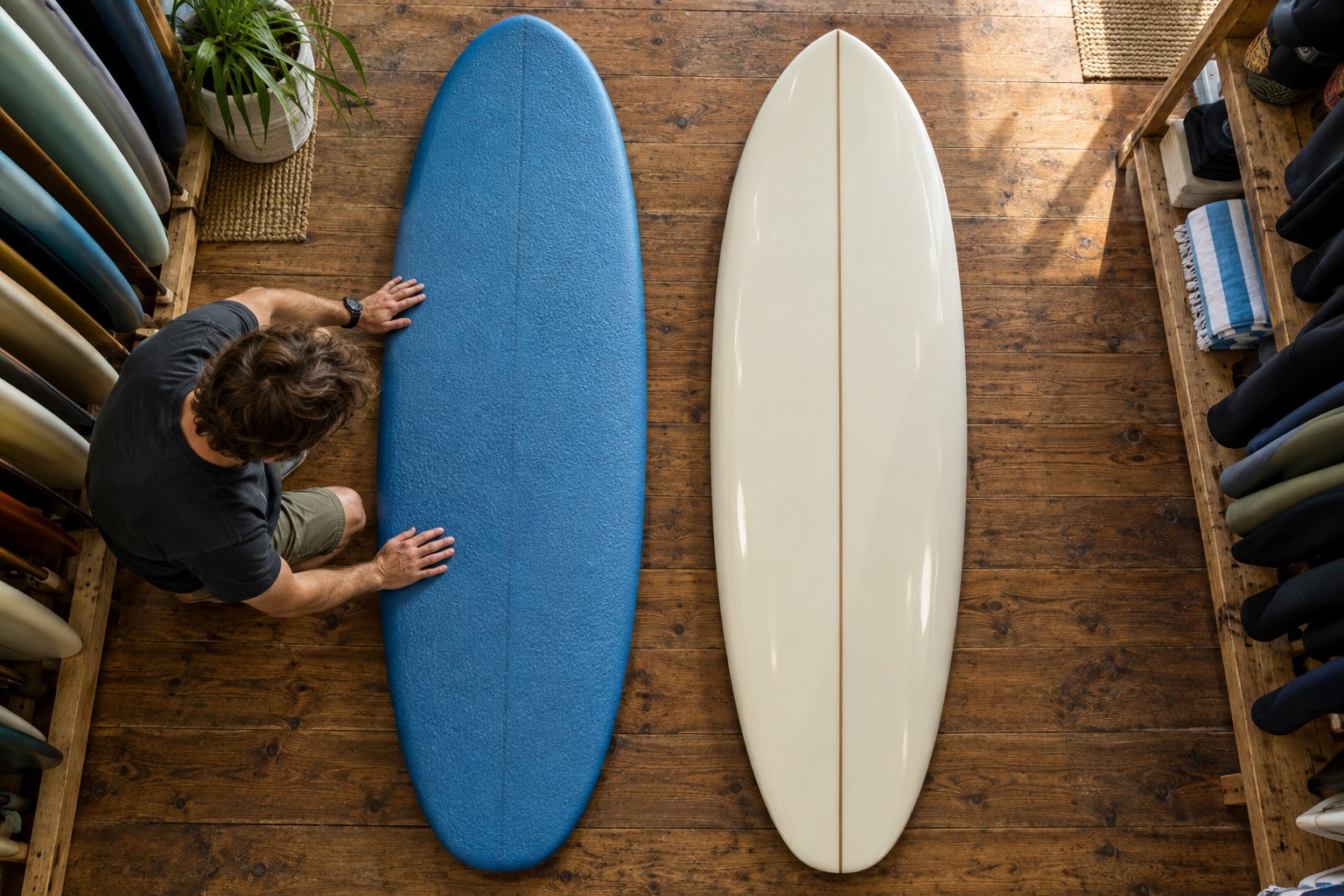
Soft top or hard board for your first purchase
Choose construction alongside shape, condition and the way you will use the board, rather than treating a hard board as an automatic upgrade.
Boards & equipment
Build a travel kit around identifiable equipment and manufacturer-approved products. A compact kit should help organise a repair decision, not encourage an unsuitable repair.
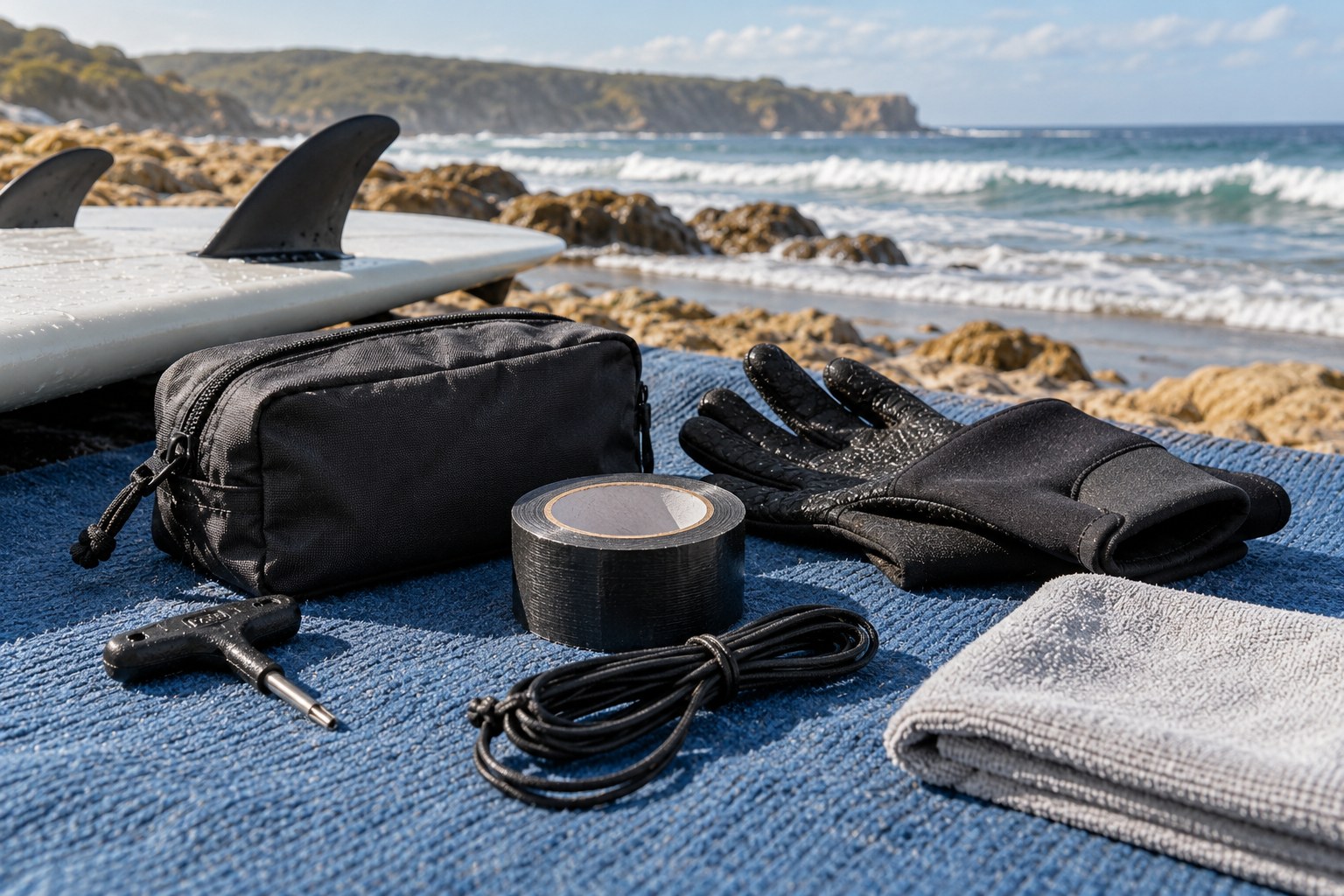
AI-generated illustration. Equipment details are illustrative; follow the instructions for your own item.
Start a surf repair kit with information: the board's construction, its model, photographs of the undamaged equipment and contact details for a repairer. These details can be more useful than carrying several unidentified tubes. A product suitable for one board construction may be unsuitable for another, so confirm compatibility before buying anything to take abroad.
Decide what you are actually prepared and able to do. A travelling beginner may need a fin tool and spare compatible hardware, while structural board damage calls for professional assessment. Packing a repair product does not make every damaged board ready for another session.
Keep small hardware in labelled compartments that identify the board or fin system. Include only the tool specified for those parts. An assortment of nearly matching screws can create confusion when you are tired or working in poor light. Photograph the original assembly before travel if it will help you identify the correct parts later.
For any adhesive, resin or cleaner, read the product instructions and safety information in advance. Check transport restrictions with the airline or other carrier for the exact product; do not assume a small container is automatically allowed. Leave chemicals in their labelled original packaging and avoid decanting them into an unmarked bottle.
A clean cloth and a phone camera can help you prepare a clear enquiry without attempting a repair. Take an overall photograph and closer views that show the location and extent of damage. Tell the repairer what happened and whether the board has been in the water since. Do not hide uncertainty about the construction or previous repairs.
Allow for the possibility that the board needs to stay out of use. Save a local rental contact or ask your accommodation about nearby repair services before departure. That backup reduces the temptation to improvise merely because the next lesson is booked.
At the end of the trip, inspect the kit and replace missing labelled parts. Remove products that have expired, leaked or become illegible, following their disposal guidance. A small, understood kit is easier to use than a crowded pouch whose contents no longer match the equipment you own.
Boards & equipment
Choose construction alongside shape, condition and the way you will use the board, rather than treating a hard board as an automatic upgrade.

Boards & equipment
Bring a record of the boards you have used and the sessions you want to your sizing conversation.