Surf travel
Choose a surf camp by its daily schedule
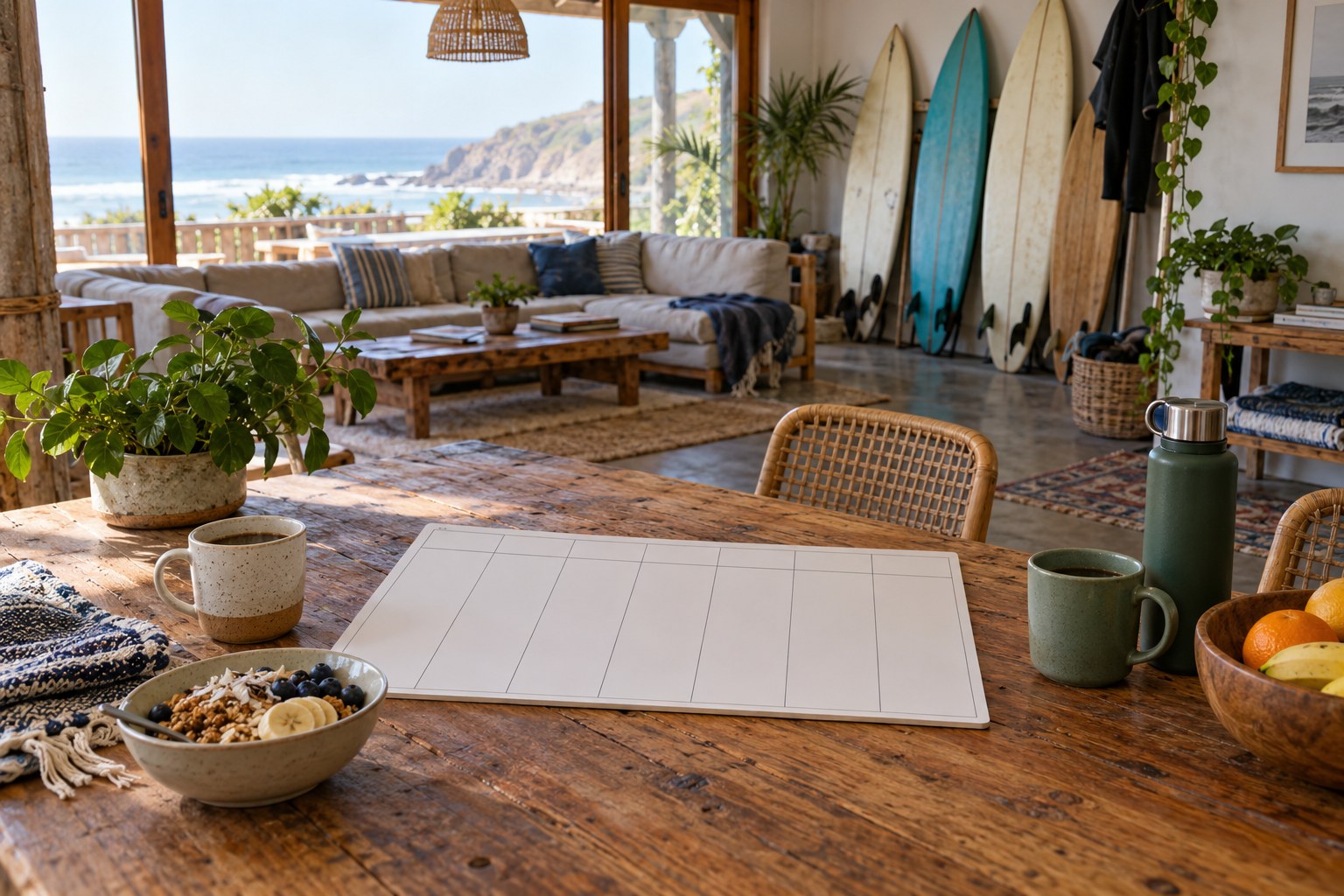
Read a sample day as a sequence of travel, instruction, meals and rest. The advertised number of lessons does not describe the whole holiday.
Surf travel
Give wet equipment a temporary transport zone and a drying routine at every stop, instead of allowing one damp compartment to spread through the whole bag.
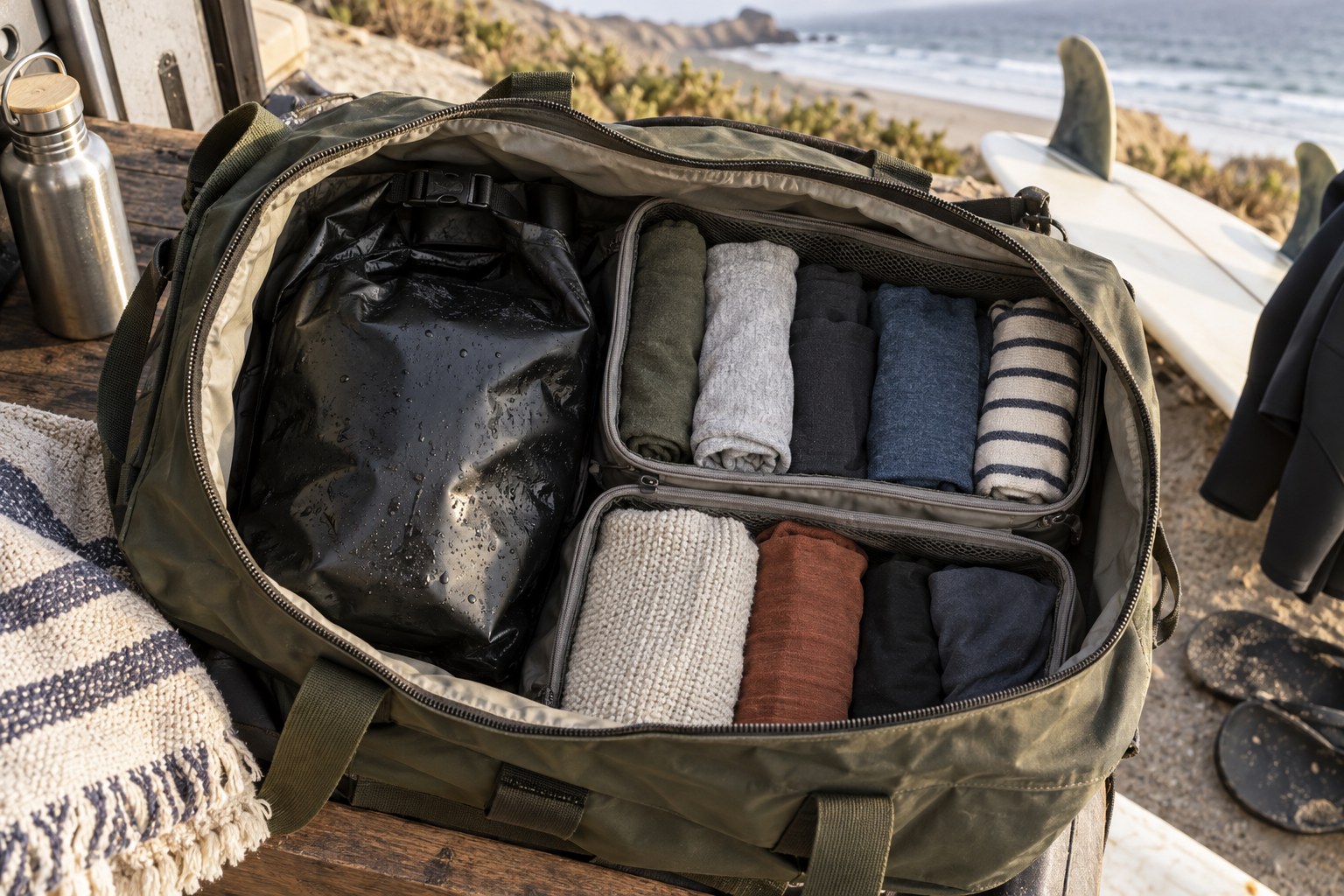
AI-generated illustration. Equipment details are illustrative; follow the instructions for your own item.
On a multi-stop trip, the difficult item is often the one that is not ready to pack when the transfer leaves. A wetsuit, towel or pair of boots may still be damp even though everything else is organised. Plan for that state rather than assuming each departure follows a perfect drying day.
Separate three groups: items that must stay dry, items that can travel damp temporarily and items that need attention before being put away. Travel documents and electronics belong in the first group. A freshly rinsed suit may belong in the second. A damaged closure or dirty bag lining belongs in the third, because moving it repeatedly does not resolve the problem.
Use a suitable bag or container that fits the load and can be carried without leaking onto other luggage. Check its seams and closure before the trip. A roll-top style, a zippered wet bag and an ordinary tote do not all have the same intended use. Do not infer immersion protection for valuables from a bag's ability to carry a damp suit.
Put wet items together only for the necessary transport period. On arrival, take them out before settling into the room. Open the container and arrange care and drying according to each item's instructions. A neat closed bag in a corner can conceal the very task that needs to happen next.
Keep small loose objects out of the wet bundle. Fin screws, keys and receipts become harder to find when tucked among sleeves and towels. Use a separate accessible place for them so that unpacking a suit does not scatter important items across an unfamiliar bathroom.
After emptying the wet area, wipe or rinse the container as appropriate and allow it to dry too. Check the dry clothing compartment for moisture before returning clean garments to it. If something became wet accidentally, separate it instead of hiding it under the next day's clothes.
Review the next departure time against the available drying space. When a stop is very short, reduce what you take out and use only the equipment you can manage afterwards. A travelling system does not require every item to be dry immediately; it requires you to know what is damp, keep it contained and give it the right attention at the next opportunity.
For a two-night stop followed by an early train, arrange the drying area immediately on arrival and decide which items you will use the next day. If the final session ends shortly before checkout, ask whether facilities remain available afterwards. That information can change the session time more usefully than buying a larger wet bag.
Use a visible note or a consistent position to identify equipment that is still damp. When several people pack similar items, a closed bag can be mistaken for a finished task. Agree who empties shared containers and who checks the accommodation before departure, so one person's boots are not left behind while another person assumes everything is already packed.
Surf travel
Read a sample day as a sequence of travel, instruction, meals and rest. The advertised number of lessons does not describe the whole holiday.

Surf travel
Compare the room you will actually book, the shared facilities and the distance to the camp's meeting point rather than relying on a few attractive photographs.