
Surf travel
Choose a surf camp by its daily schedule
Read a sample day as a sequence of travel, instruction, meals and rest. The advertised number of lessons does not describe the whole holiday.
Surf travel
Cabin-only packing works best when the largest equipment is hired locally and every item in the bag has a defined role.
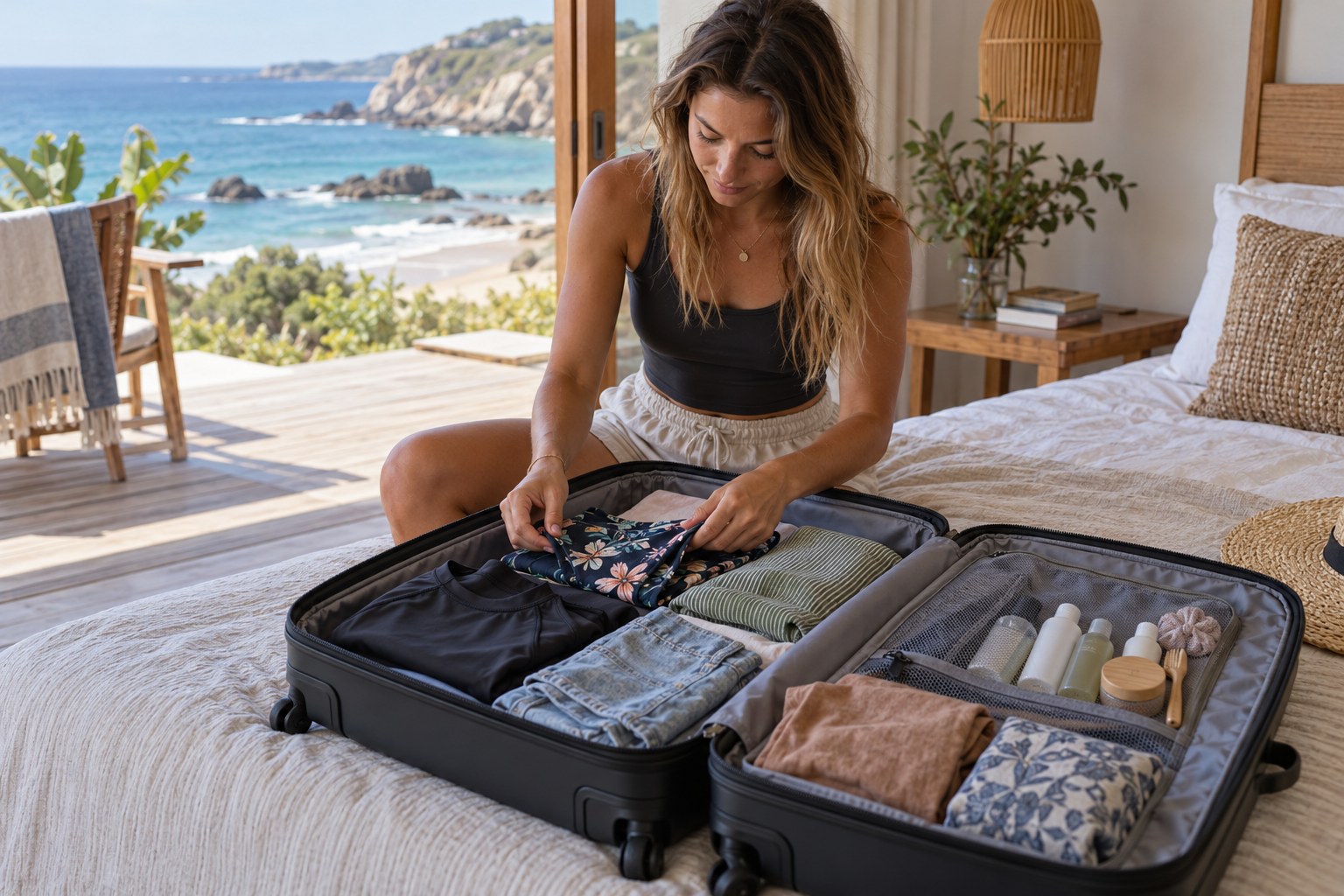
AI-generated illustration. Equipment details are illustrative; follow the instructions for your own item.
Start a cabin-baggage plan by deciding what will be waiting at the destination. Confirm the board rental, suitable wetsuit sizes and any included accessories before removing them from your packing list. A promise that a shop has 'plenty of kit' is less useful than a reservation that matches your dates and requirements.
Then read the airline's cabin allowance for the actual fare and operating carrier. Size, weight and item-count rules are separate. A bag that fits under one aircraft seat may not settle the question for a different flight. Keep airport security rules in view when considering liquids, tools or other restricted items.
Lay out one travel outfit, the clothing needed for sessions and the dry change you will want afterwards. Add ordinary clothes that combine with each other rather than packing a separate outfit for every evening. Choose the number of changes around realistic washing and drying arrangements, not an assumption that everything will dry overnight.
A compact towel and an appropriate wet bag can have clear roles, but compare them with what the accommodation supplies. A bulky changing robe may be valuable for a cold outdoor routine and unnecessary for a trip with indoor changing facilities. Let the actual routine decide which item earns its space.
Keep important documents, required personal items and the first day's essentials easy to reach. Do not bury them under tightly rolled clothes that must all be removed at security. Leave some room for the return journey when packing may be less orderly and a garment may still be damp.
Pack it fully and check the airline's measurements and weight. Walk with it, open the main compartment and retrieve the items you will need during travel. If carrying it is uncomfortable before leaving home, removing an optional item is more useful than buying another organiser to fit inside.
Write down what the rental provider is supplying and keep that confirmation accessible. Cabin-only travel is a coordination choice, not a contest to own the smallest bag. It succeeds when the equipment, clothing and destination facilities fit together without leaving an essential requirement to chance.
Try a simple packing rehearsal with the actual destination facilities in mind. If you have three nights, no laundry and only one place to hang a damp garment, a plan based on washing everything daily is unreliable. If you have a longer stay with confirmed laundry, several duplicate casual outfits may be unnecessary. The same bag can support different trips when the clothing count follows the routine.
A carry-on limit can also change which personal-care products you take. Check the departure and connecting airports' current security requirements rather than transferring liquids into unlabelled containers without a plan. Keep any required medication and documentation arranged according to the relevant travel guidance. These items deserve space before optional accessories.
On the return day, keep wet rental equipment out of the cabin bag by arranging its return before the final transfer. If you own a suit that must travel damp, check the airline weight again and use an appropriate containment arrangement. Do not solve an overweight bag by leaving an essential item behind at the accommodation without discussing retrieval or disposal.
Surf travel
Read a sample day as a sequence of travel, instruction, meals and rest. The advertised number of lessons does not describe the whole holiday.

Surf travel
Compare the room you will actually book, the shared facilities and the distance to the camp's meeting point rather than relying on a few attractive photographs.