Surf travel
Choose a surf camp by its daily schedule
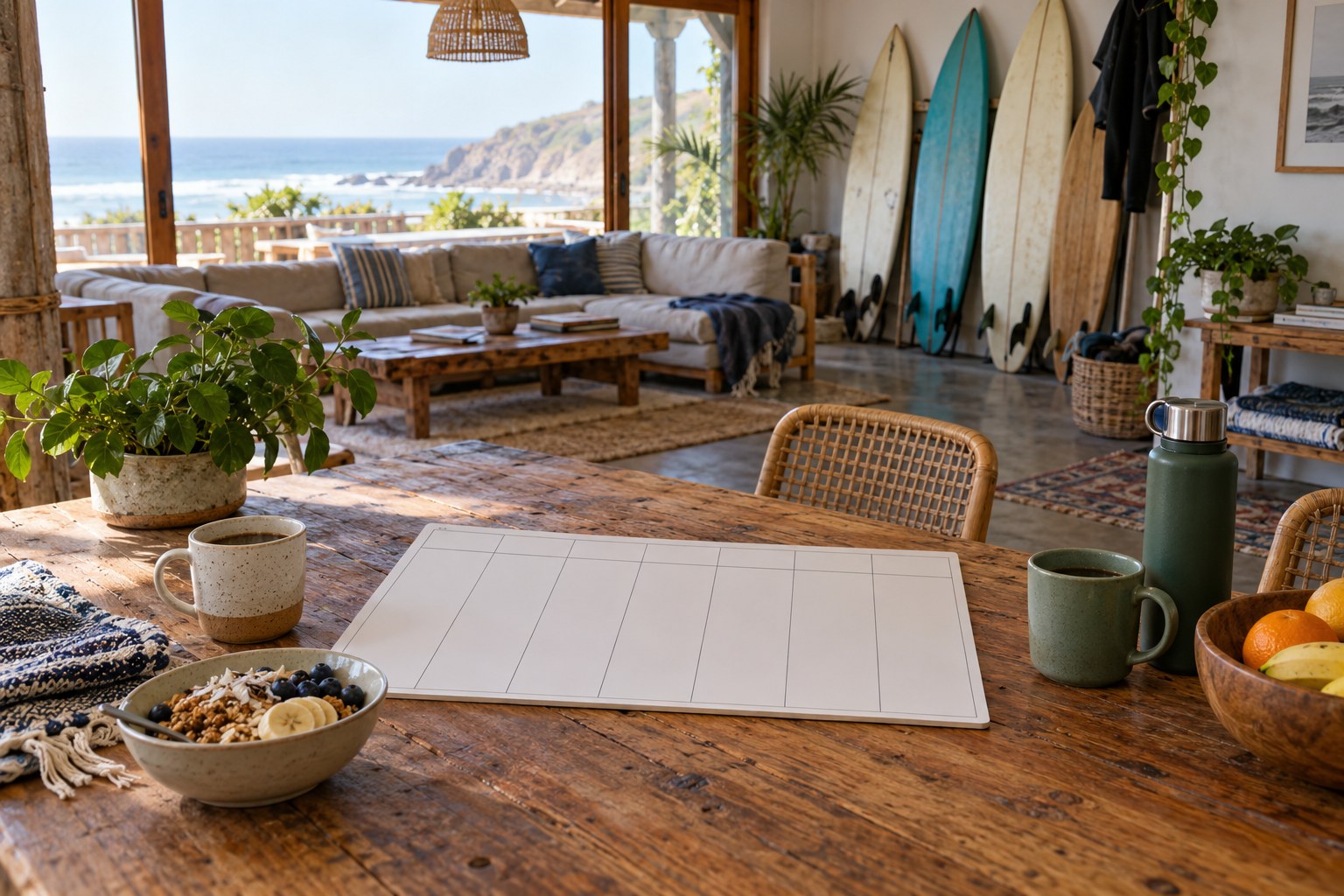
Read a sample day as a sequence of travel, instruction, meals and rest. The advertised number of lessons does not describe the whole holiday.
Surf travel
Start with the equipment and facilities at your destination, then pack fewer pieces that can be rinsed, dried and used again as their care instructions allow.
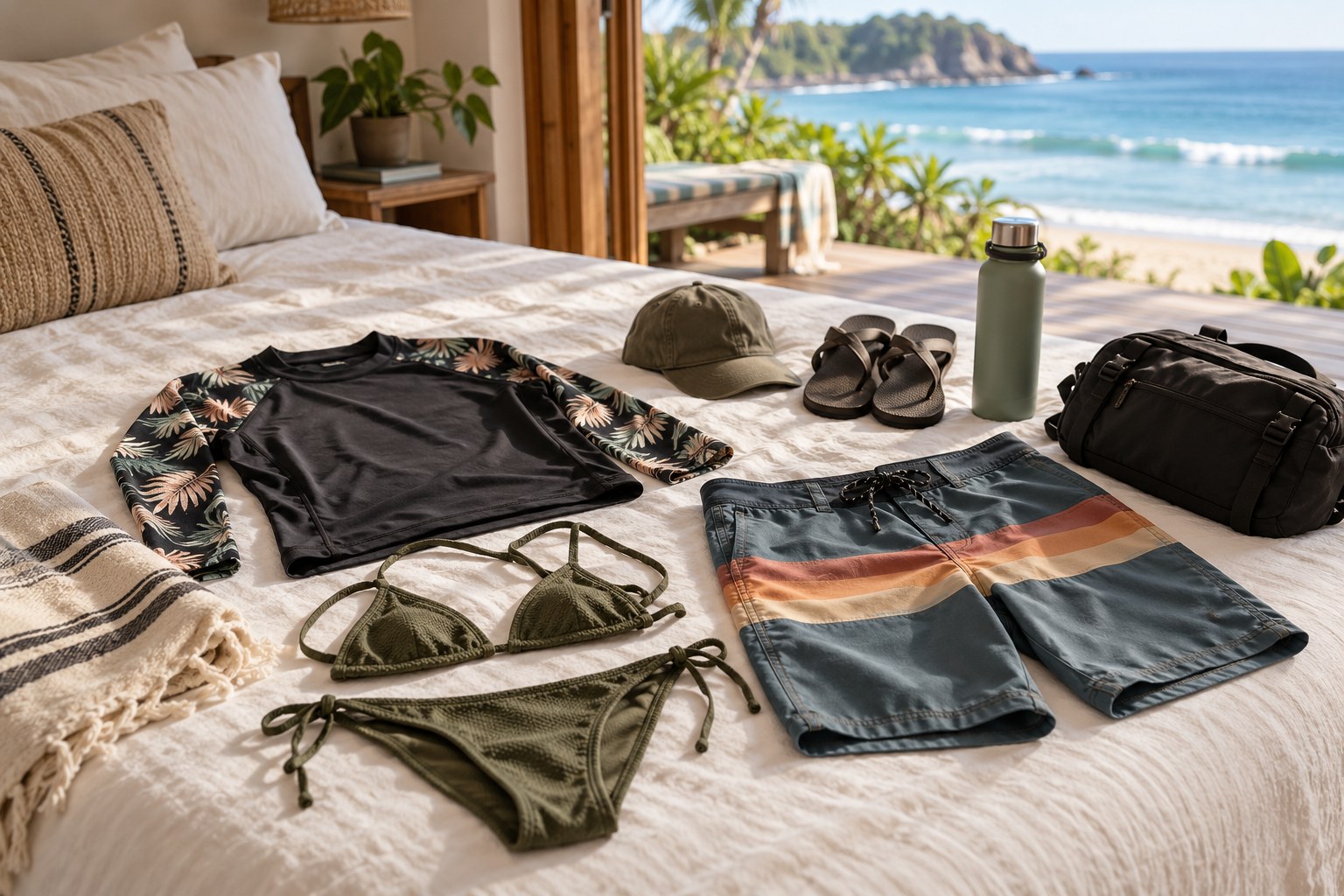
AI-generated illustration. Equipment details are illustrative; follow the instructions for your own item.
Warm air at the destination does not tell you which clothing is suitable for a surf session. Ask the lesson provider about local water conditions and recommended coverage before choosing session wear. Separate that decision from the ordinary clothes you will use for meals, transfers and rest days.
Begin with the booking details. Does the school supply the board and any required clothing? Does the accommodation provide towels? Is laundry available, and is there a permitted drying place? Confirm these points before filling a suitcase with substitutes for facilities that may already exist.
Choose travel clothes that can be worn in more than one combination. A separate outfit for each evening is rarely useful if several pieces do the same job. Include enough changes for the washing routine you actually have, allowing for a day when items remain damp.
For session clothing, check fit and movement before departure. A garment that feels secure while standing may behave differently when bending or sitting. Follow the maker's care instructions and test the closure arrangement in an appropriate setting. This is a reason to prepare early, rather than discovering a fit problem at the beach.
Carry a dry change separately from wet equipment. Even on a warm trip, sitting in a transfer vehicle with damp clothes may be uncomfortable and can wet the seat. A suitable wet bag contains the journey's moisture; it still needs to be opened, cleaned and dried afterwards.
Avoid packing the bag so tightly that every item must be perfectly dry and folded to fit. The last session may finish shortly before departure. Plan where wet equipment goes and whether you can use rinse facilities after checkout.
A small repair or care item should have a clear use and comply with transport rules. Do not add unfamiliar adhesives, solvents or sharp tools merely because a generic packing list includes them. For rented equipment, report a problem to the provider rather than attempting an unapproved repair.
Once the bag is packed, remove anything that duplicates a supplied item or has no specific role in your itinerary. Keep the items that solve real transitions: getting to the lesson, changing afterwards and returning home with the kit contained.
Surf travel
Read a sample day as a sequence of travel, instruction, meals and rest. The advertised number of lessons does not describe the whole holiday.

Surf travel
Compare the room you will actually book, the shared facilities and the distance to the camp's meeting point rather than relying on a few attractive photographs.