Wetsuits & clothing
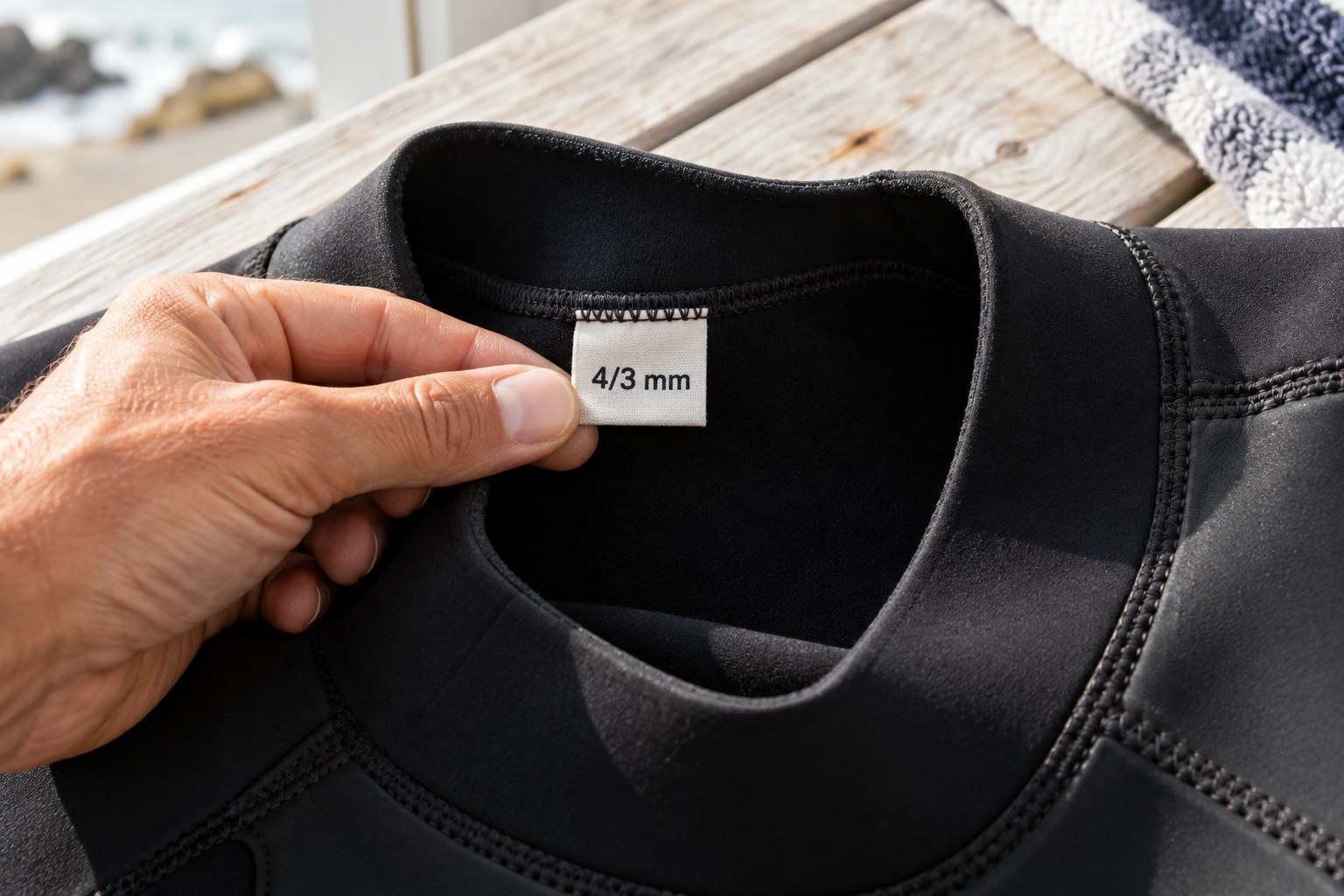
Read a wetsuit thickness label before comparing suits
Those slash-separated numbers describe material thickness, not a complete verdict on warmth. Read them alongside the suit's construction, fit and intended conditions.
Wetsuits & clothing
Pack dry layers around the waiting place, the transport and the time between sessions. Keep them separate from wet equipment until you need them.
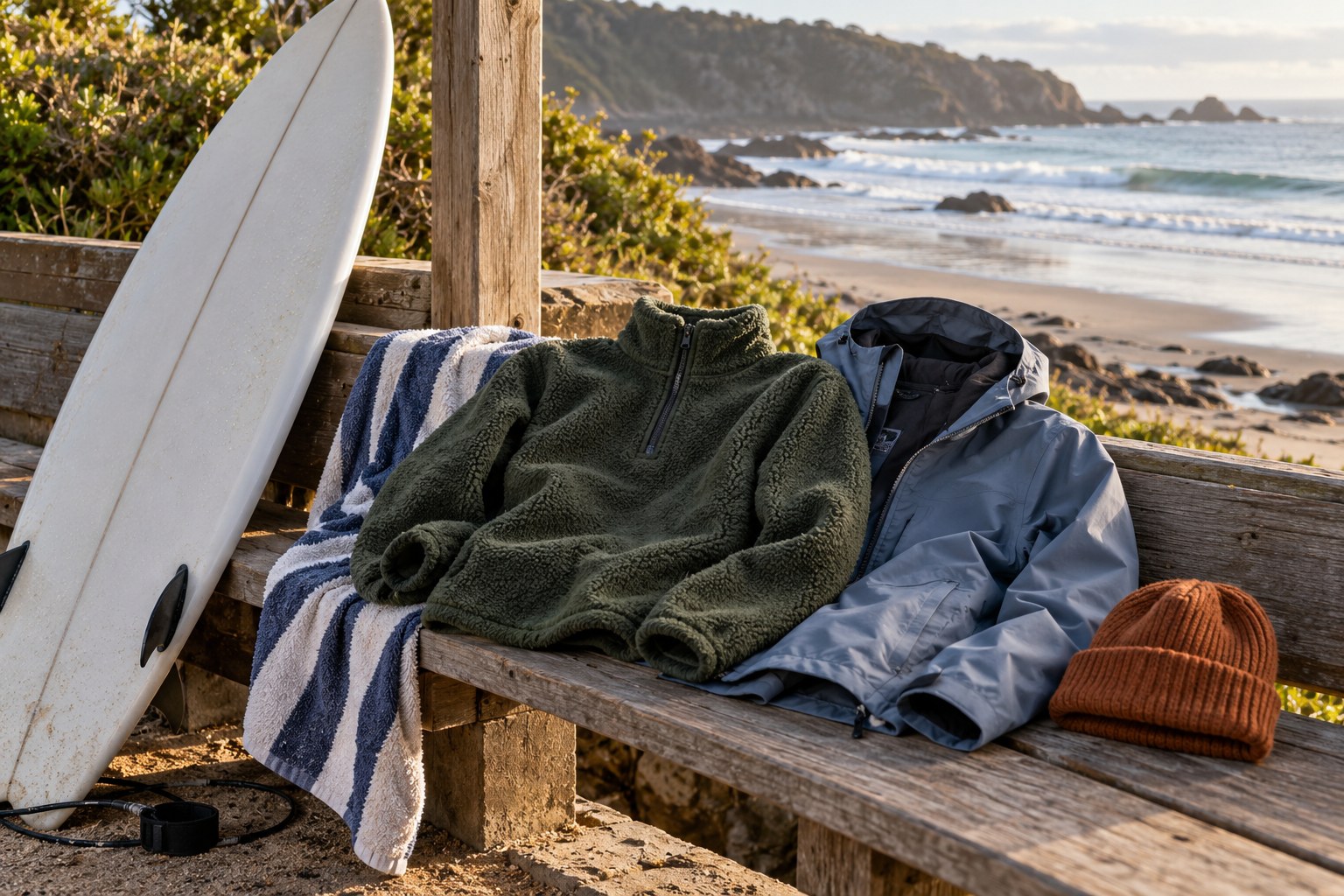
AI-generated illustration. Equipment details are illustrative; follow the instructions for your own item.
The interval between surf sessions can take several forms: a quick return to accommodation, lunch beside the beach or a longer wait for a lesson group. Pack for the actual arrangement rather than imagining that the whole day will be spent moving in the water. Ask the school where breaks happen and whether there is shelter or a changing room.
Choose dry clothing that you can put on comfortably after changing. Consider the weather forecast and local advice, but also the seating and transport you will use. A bulky outer layer that is awkward in a small vehicle may need a different packing plan from a compact garment carried in a day bag.
Place the waiting clothes in a dedicated dry compartment or appropriate protective bag, following that bag's limits. Do not store them beside a loosely wrapped wetsuit and assume they will remain dry. Keep footwear and any used towel in their own place so they cannot dampen the clothing by contact.
Pack in the order of use. The layer you will reach for first should not be buried beneath lunch and spare equipment. If you will change at a shared facility, organise the items into one accessible bundle rather than carrying several loose pieces across the floor.
Ask whether the school expects you to change completely between sessions or follow another routine. Do not invent a schedule that conflicts with the supplied equipment or the available facilities. Leave enough time to change without rushing the next briefing.
Avoid wearing every spare item during the first break if that leaves nothing dry for the journey home. Separate the waiting outfit from the final travel outfit when the day's arrangement requires both. This is a useful reason for a second set, rather than packing duplicates without a purpose.
After the day, unpack promptly and sort used layers from untouched ones. Note which items were actually useful and what remained unnecessary. A short record of the waiting conditions will make the next packing list more accurate than adding another layer each time just in case.
Wetsuits & clothing
Those slash-separated numbers describe material thickness, not a complete verdict on warmth. Read them alongside the suit's construction, fit and intended conditions.
Wetsuits & clothing
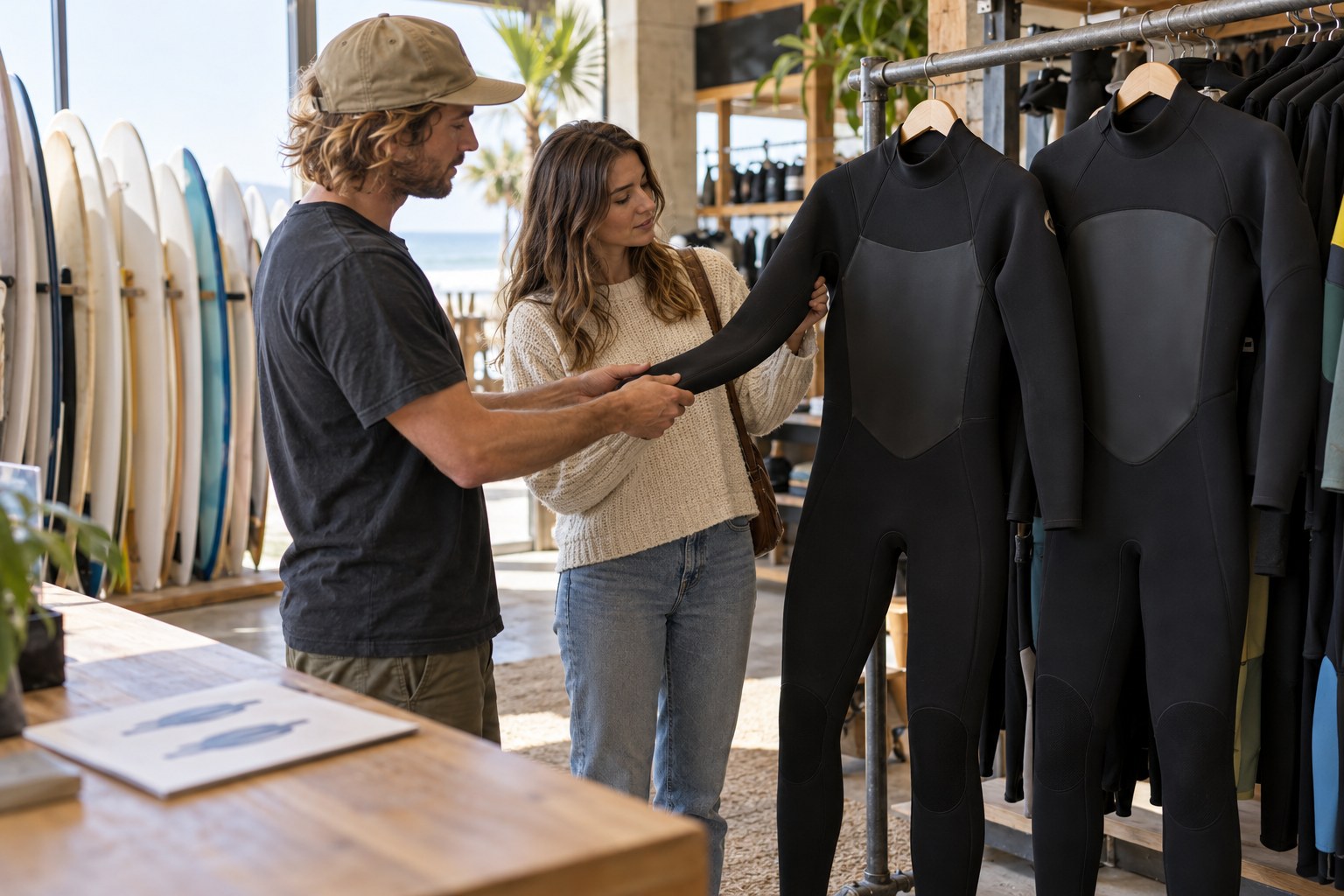
Bring the destination, season and session plan to a local shop, then compare its advice with the manufacturer guidance for the actual suit.