Surf travel
Choose a surf camp by its daily schedule
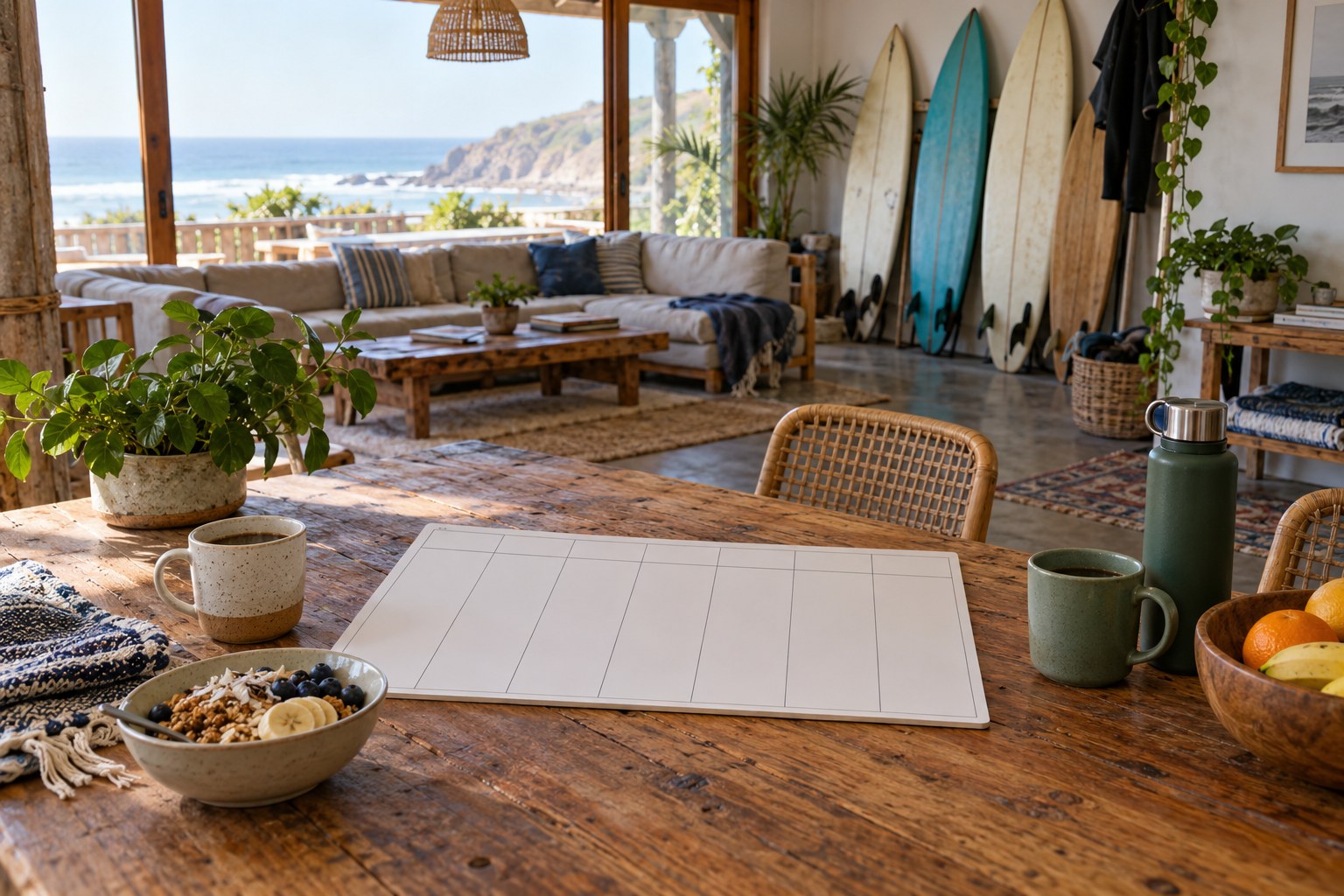
Read a sample day as a sequence of travel, instruction, meals and rest. The advertised number of lessons does not describe the whole holiday.
Surf travel
Judge a beach kit by the return walk as well as the outward trip, when clothes are damp and every loose item still needs a place.
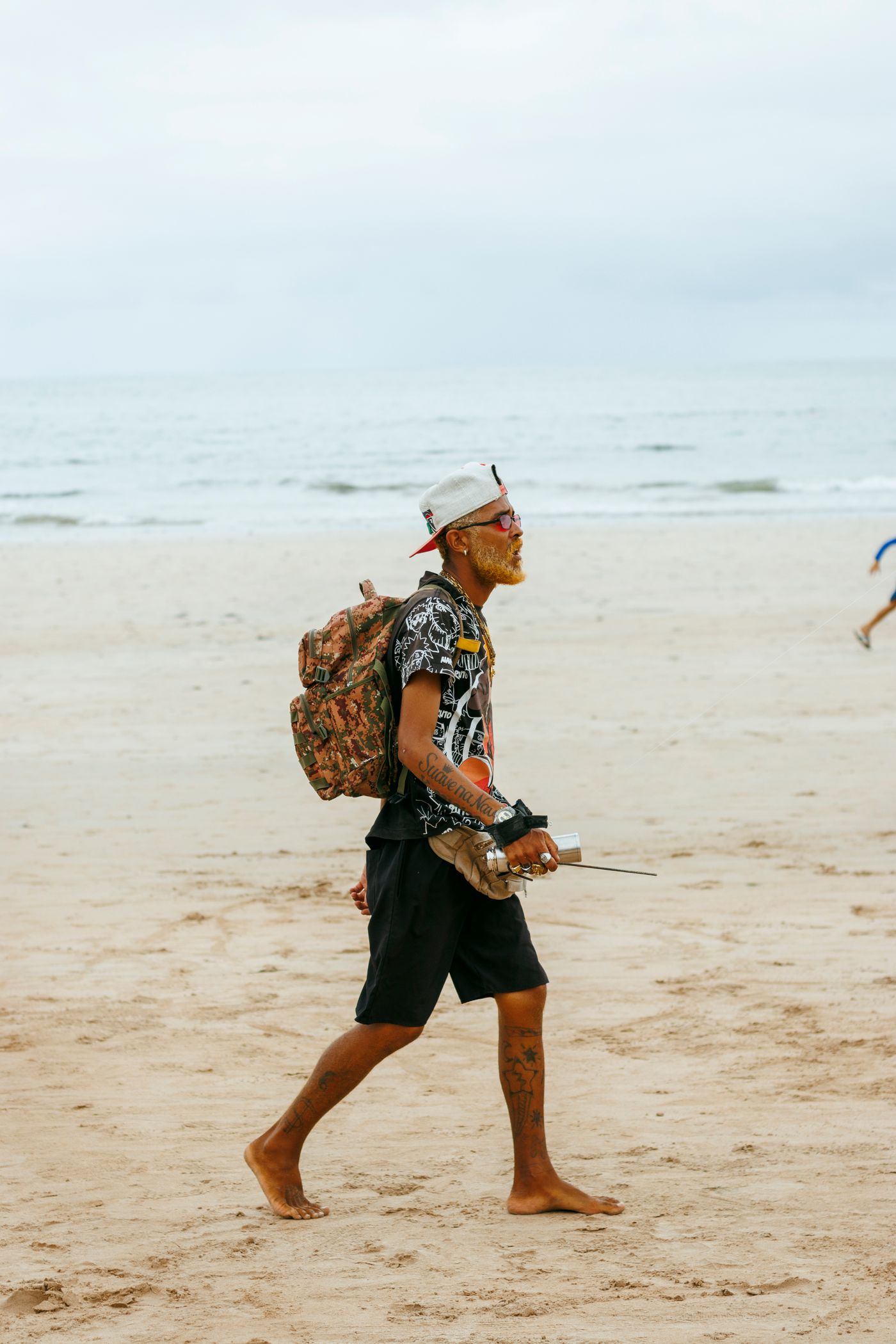
A bag that feels manageable on the way to the beach can become awkward after a session. The towel is damp, footwear is sandy and the carefully folded suit no longer fits the same space. Pack with that return state in mind. Leave room for items to be contained without requiring a perfect folding routine in a windy car park.
Lay out the kit by purpose: session equipment, dry change, food and water, and small personal items. Remove objects that duplicate something already supplied by the school or accommodation. Keep any essential item, but question accessories that have no clear role in the day's arrangements.
Choose a bag whose handles or straps work with the board-carrying method you will use. Test the combination on a short walk before the trip. If one hand must constantly catch a slipping strap, the setup needs adjustment even if each item is comfortable on its own.
Give small pieces a consistent place. A fin key, reusable tag or bottle cap should not be dropped into a large compartment where it becomes difficult to find among sand and clothing. At the same time, avoid adding so many pouches that locating an item requires opening several identical containers.
Pack a suitable way to contain wet gear and any waste you generate. Public bins may be absent or full, and reusable food containers can help keep wrappers and remains together for the journey back. Check the surrounding area before leaving, including the place where you changed and any spot used to rest the board.
At home, rearrange the bag as if the session has ended. Put the dry change in use, place the session clothing in its transport container and see whether everything still fits. This exposes problems that a tidy departure photograph can hide.
After the first outing, note what was difficult to carry or repeatedly misplaced. Change the placement or remove an unnecessary item rather than automatically choosing a larger bag. A kit is successful when you can bring all of it back without a trail of loose accessories or a final walk that requires several trips.
Surf travel
Read a sample day as a sequence of travel, instruction, meals and rest. The advertised number of lessons does not describe the whole holiday.

Surf travel
Compare the room you will actually book, the shared facilities and the distance to the camp's meeting point rather than relying on a few attractive photographs.