Surf travel
Choose a surf camp by its daily schedule
Read a sample day as a sequence of travel, instruction, meals and rest. The advertised number of lessons does not describe the whole holiday.
Surf travel
Confirm the rental board, wetsuit and collection arrangements before designing the rest of the trip around equipment you will not bring.
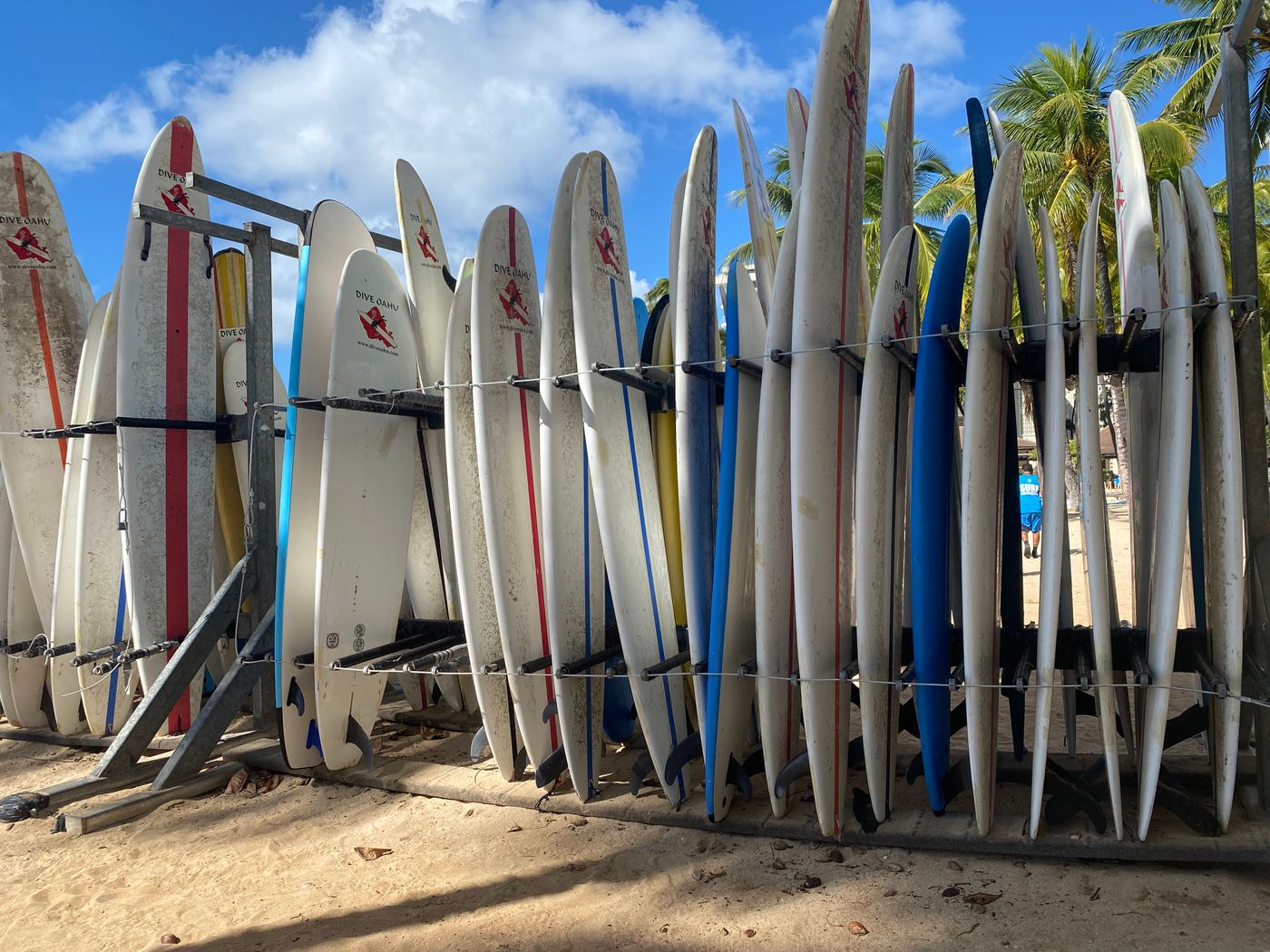
Renting equipment can simplify travel, but it moves several decisions to the destination. You still need suitable sizing, a reliable collection arrangement and clear terms for use and return. Begin with the lessons or sessions you have planned and ask the operator what equipment is included before reserving a separate rental.
Describe your experience honestly and obtain guidance on the board type. Ask about the actual range available for your dates rather than choosing from a photograph of the shop's entire fleet. If a particular size or model is essential, find out whether it is guaranteed or only subject to availability.
Confirm whether the rental includes fins, a leash, a wetsuit or other necessary items. Ask about wetsuit sizing and the fitting process. Do not assume your ordinary clothing size will identify the correct suit, and leave time at collection to resolve a poor fit.
Find out what you must bring yourself, including any swimwear, towel or changing items. This lets you reduce luggage deliberately instead of discovering that an omitted basic item must be purchased on arrival.
Check opening hours, the collection address and the time needed for paperwork and fitting. If your flight arrives late, ask whether collection the next morning works with the first lesson. Avoid scheduling a session that depends on a shop opening earlier than it actually does.
Plan how the equipment reaches the beach and where it is kept overnight. A rental arranged near accommodation may still require transport to the lesson location. Ask whether boards must remain at the shop or can be taken away, and follow the agreed storage rules.
Read the hire duration and return deadline, then compare them with your departure transport. Ask about deposits, condition records and the process if equipment is damaged or unsuitable. These details should come from the rental agreement, not assumptions based on another trip.
Inspect the equipment with staff at collection and record existing marks as agreed. If something appears damaged or the fit is wrong, resolve it before leaving. Keep the shop's contact details available during the hire.
For a multi-stop trip, consider separate rentals at each base rather than assuming one shop permits equipment to travel everywhere. Confirm any restrictions and the practical return route. A rental plan is complete when the equipment, collection, transport, storage and return all fit the itinerary without an unverified gap.
Surf travel
Read a sample day as a sequence of travel, instruction, meals and rest. The advertised number of lessons does not describe the whole holiday.

Surf travel
Compare the room you will actually book, the shared facilities and the distance to the camp's meeting point rather than relying on a few attractive photographs.