Surf travel
Choose a surf camp by its daily schedule
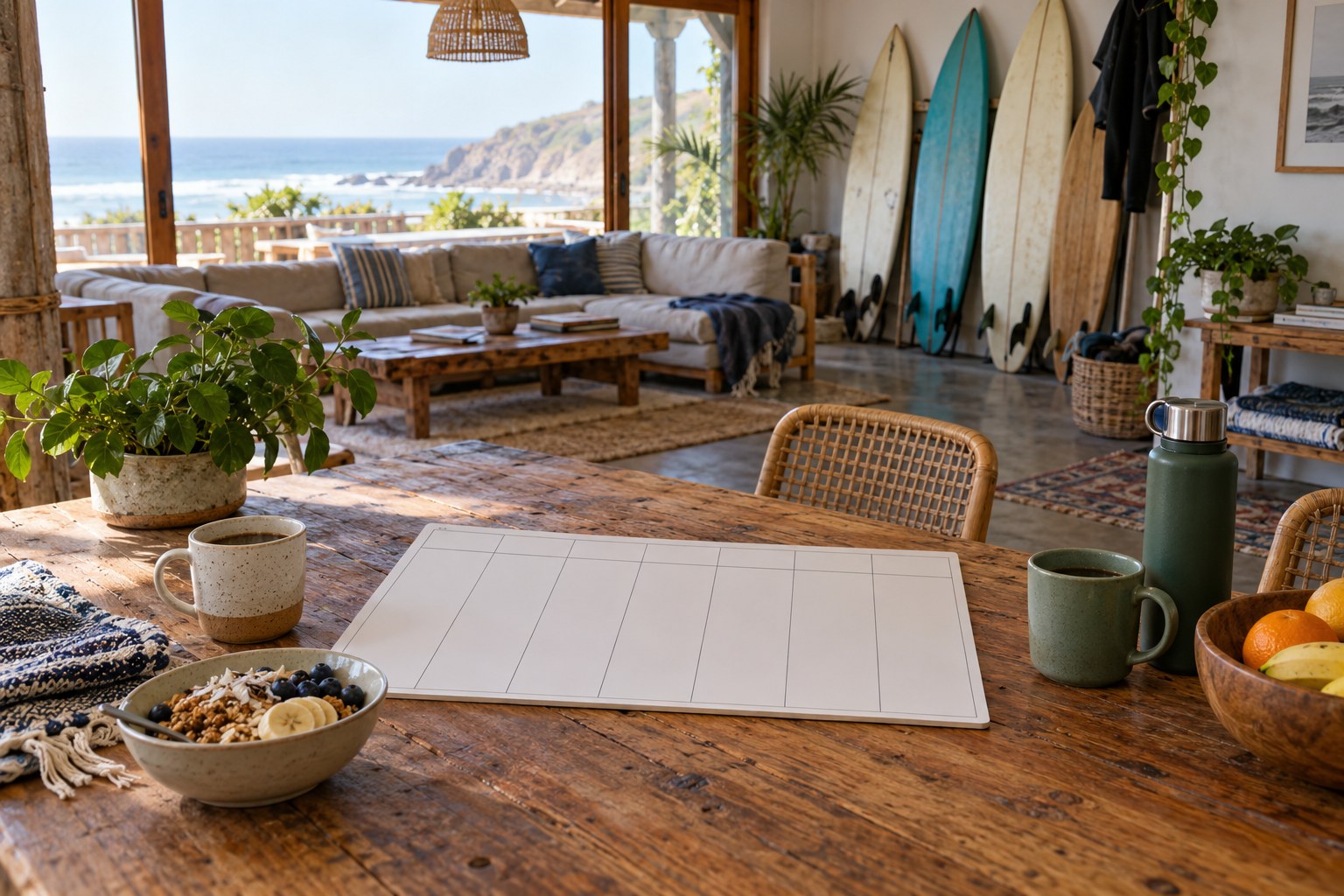
Read a sample day as a sequence of travel, instruction, meals and rest. The advertised number of lessons does not describe the whole holiday.
Surf travel
Match padding and packing choices to the board, bag and carrier instructions, with particular attention to the nose, tail and loose components.
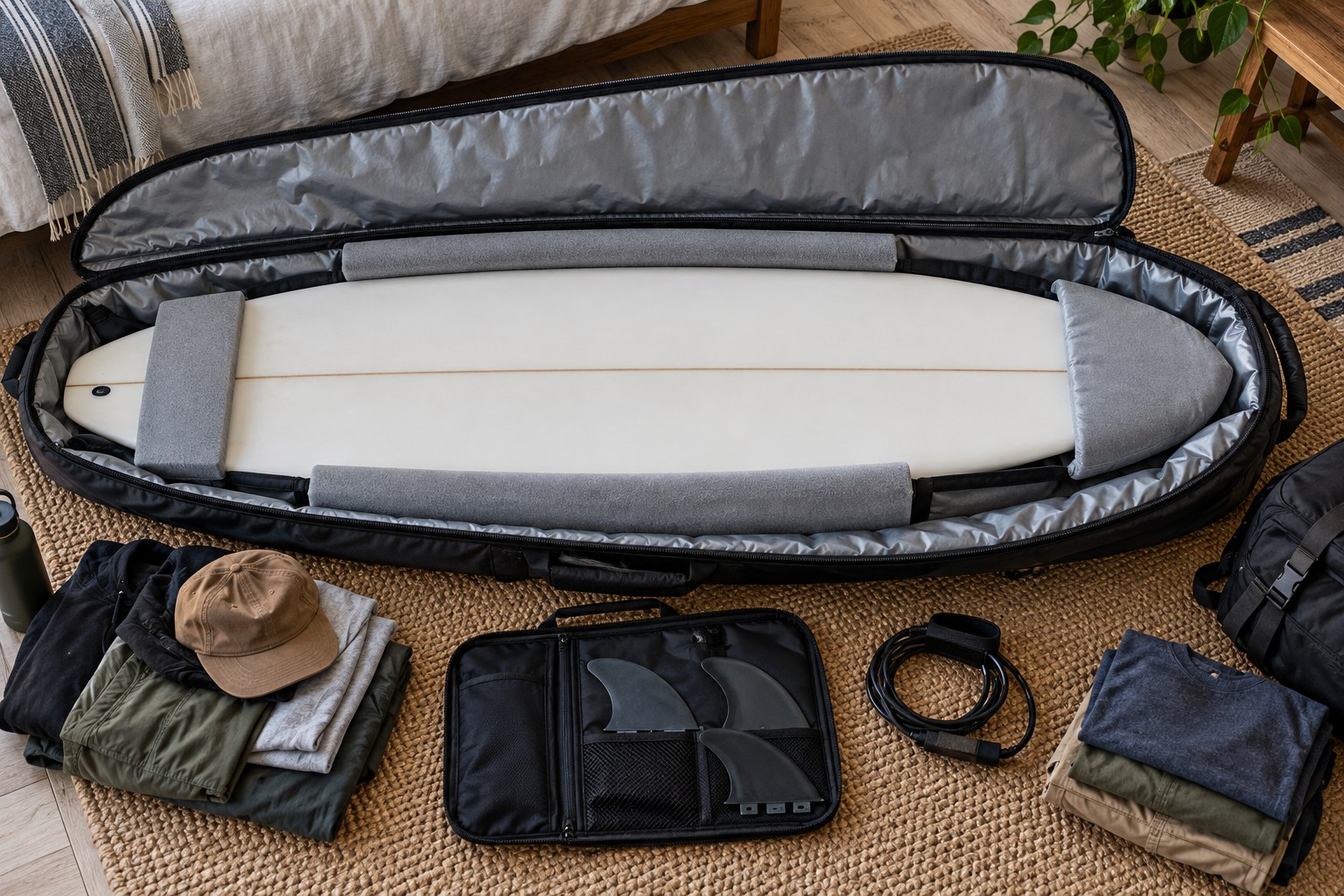
AI-generated illustration. Equipment details are illustrative; follow the instructions for your own item.
Preparing a board for a flight starts with the bag's design. Open it fully and identify its padding, internal straps, dividers and any instructions supplied by the manufacturer. A day bag and a multi-board travel bag may hold similar-looking objects while offering different construction and intended use. Do not assume that adding miscellaneous padding turns one into the other.
Place the board beside the open bag and identify anything that could catch, move or create a concentrated pressure point. The nose, tail, rails and fin area deserve separate attention. If the board has removable fins, consult the fin-system instructions about removal and storage. Fixed fins need a packing arrangement designed to accommodate them; they should not simply be pressed against a flat bag wall.
Use protection compatible with the board's finish and the bag's instructions. Avoid putting adhesive directly on a board unless its manufacturer allows it. Loose scraps that look reassuring while the bag is open may slide away during handling. Internal straps should hold the intended arrangement without being pulled so tightly that they distort the board or padding.
Separate fins, screws and tools into appropriate protected compartments so they cannot scratch the board. Check airline and security rules for anything packed alongside it. A bag's unused space is not permission to add clothing, liquids or unrelated equipment if the carrier prohibits that arrangement.
Close the bag slowly and check where the zip meets the rail and nose. The closure should not depend on forcing a bulge flat. If a second board changes the fit substantially, reassess the bag rather than assuming its advertised capacity covers every combination of shapes.
Photograph the board before packing and record existing marks. Take another picture of the packing arrangement, especially if you will need to reproduce it during the trip. Keep identification on the bag and retain the baggage receipt separately.
No packing method can promise undamaged delivery. Plan enough time at arrival to collect and inspect the bag in accordance with the airline's reporting process. Carrying a well-organised bag helps you check what happened; it does not replace the carrier's conditions or any separate insurance arrangements.
Surf travel
Read a sample day as a sequence of travel, instruction, meals and rest. The advertised number of lessons does not describe the whole holiday.

Surf travel
Compare the room you will actually book, the shared facilities and the distance to the camp's meeting point rather than relying on a few attractive photographs.