
Boards & equipment
Soft top or hard board for your first purchase
Choose construction alongside shape, condition and the way you will use the board, rather than treating a hard board as an automatic upgrade.
Boards & equipment
A repair can be perfectly relevant to a buying decision, but its location, method and history need more explanation than “professionally fixed”.

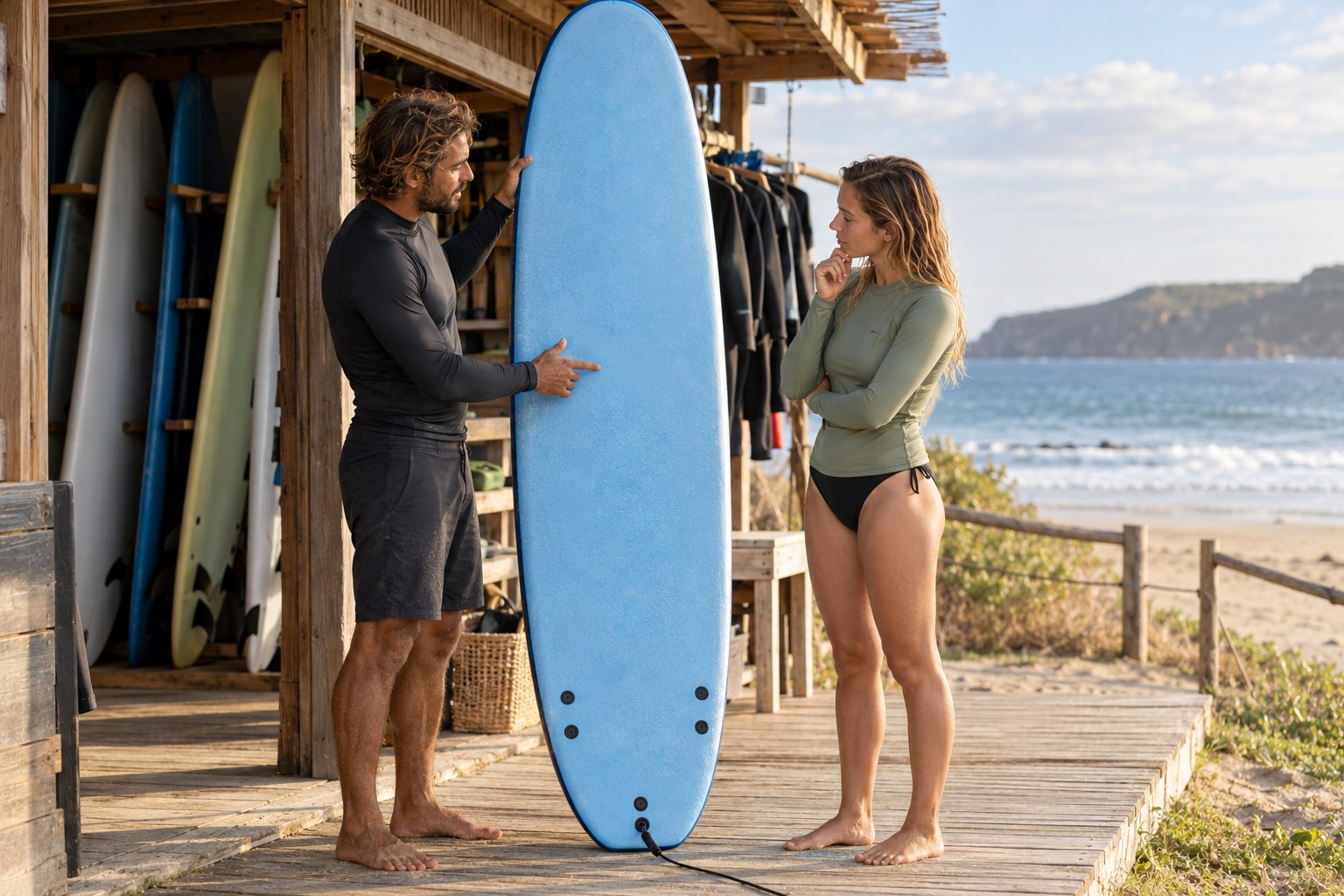
AI-generated illustration. Equipment details are illustrative; follow the instructions for your own item.
When a used surfboard has been repaired, ask what originally happened. An impact at the nose, a damaged fin box and a broad area of surface separation are different issues. The words repaired board do not describe the scale of the work or whether it suits your intended use.
Request photographs from before, during and after the repair if they exist. An invoice or repairer's note may identify the construction and materials used. These records do not replace an inspection, but they make the conversation more specific than judging a painted patch from a distance.
Ask when the damage occurred, whether the board was used while damaged and how long it was out of service before repair. Then ask who carried out the work and whether any later change has appeared around it. A clear timeline helps a repairer assess the history if you seek a second opinion.
Do not assume that a visually neat finish proves the underlying work is sound. Conversely, a visible repair line is not enough by itself to condemn a board. Have someone competent assess uncertain areas in the context of the board's construction.
If the seller says the work carries a warranty, ask to see the actual terms and whether they apply to a new owner. Avoid treating a verbal description as a transferable promise. You can factor documented support into the purchase only after understanding what it covers.
Check whether the repaired area has remained unchanged and whether any fittings were replaced. For a fin-box repair, confirm the current box type and compatible components. For a tail repair, inspect the leash attachment as well as the outer shape.
Discuss the intended sessions with the person assessing the board. The question is not merely whether the repair looks acceptable on a rack, but whether the board is appropriate for the use you are considering. Do not take it into the water as an informal test of an unresolved defect.
Compare the full price with an alternative whose condition is easier to establish. A repair history can be manageable when it is clear and the board has been assessed. Unanswered questions should remain a reason to pause the purchase, rather than becoming assumptions you inherit because the seller is ready to leave.
For a remote assessment, photograph the whole board first, then the repair at close range from several angles. Include an image that shows where the repair sits relative to the fins, rail or nose. A very tight close-up can show texture while concealing the location that makes the damage significant. Ask the repairer what additional information they need instead of sending many nearly identical pictures.
Keep the repairer's uncertainty in the record. If they say a photograph is insufficient, do not paraphrase that as approval when discussing the price. An estimate may also change after inspection, so leave room for that possibility before committing your entire budget. The most useful outcome of the conversation is a clearer decision about whether to proceed, inspect further or choose another board.
Boards & equipment
Choose construction alongside shape, condition and the way you will use the board, rather than treating a hard board as an automatic upgrade.
Boards & equipment
Bring a record of the boards you have used and the sessions you want to your sizing conversation.