Boards & equipment
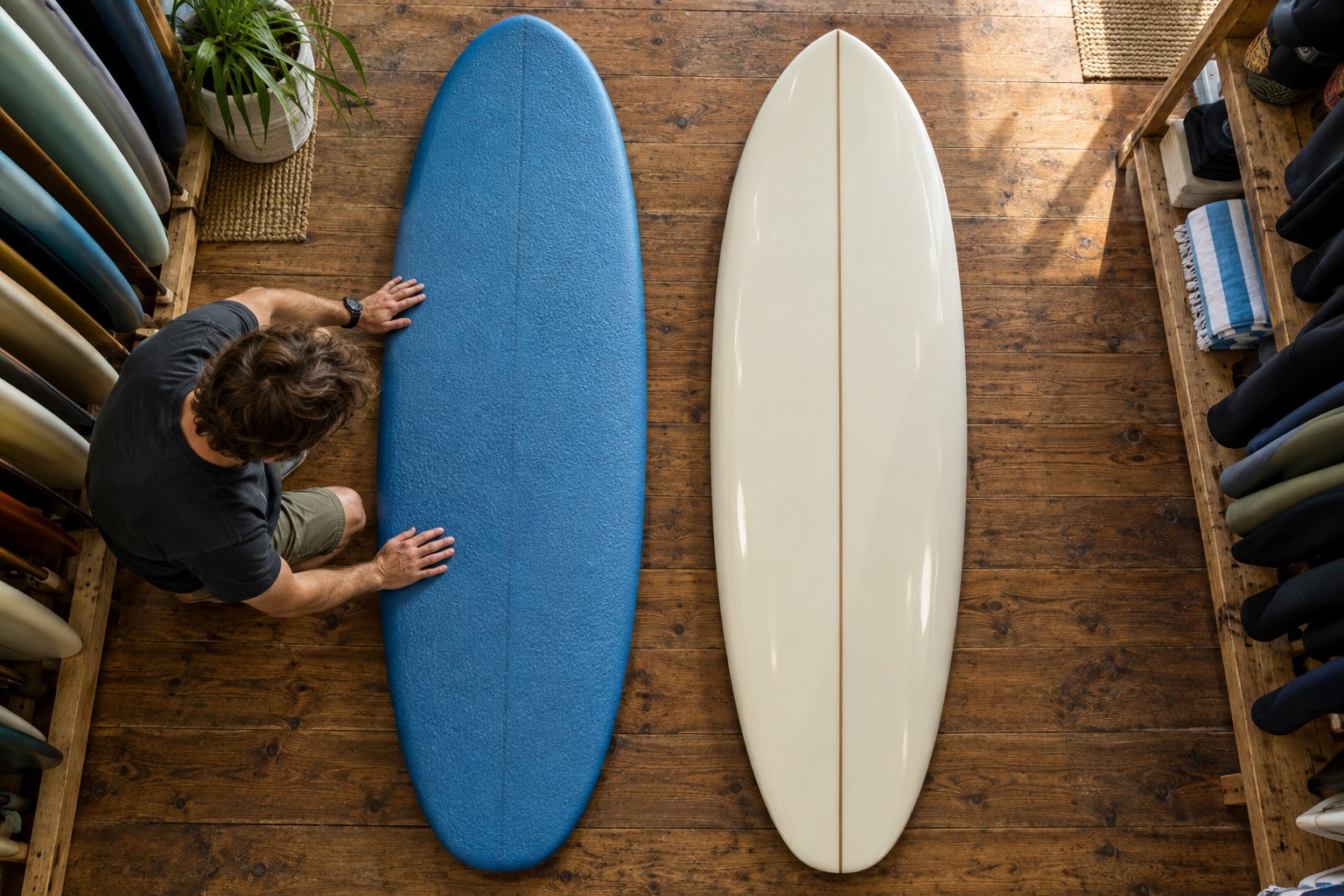
Soft top or hard board for your first purchase
Choose construction alongside shape, condition and the way you will use the board, rather than treating a hard board as an automatic upgrade.
Boards & equipment
A soft rack needs a vehicle-specific answer. Ask about roof shape, door arrangement, restrictions and the exact fitting instructions before buying.
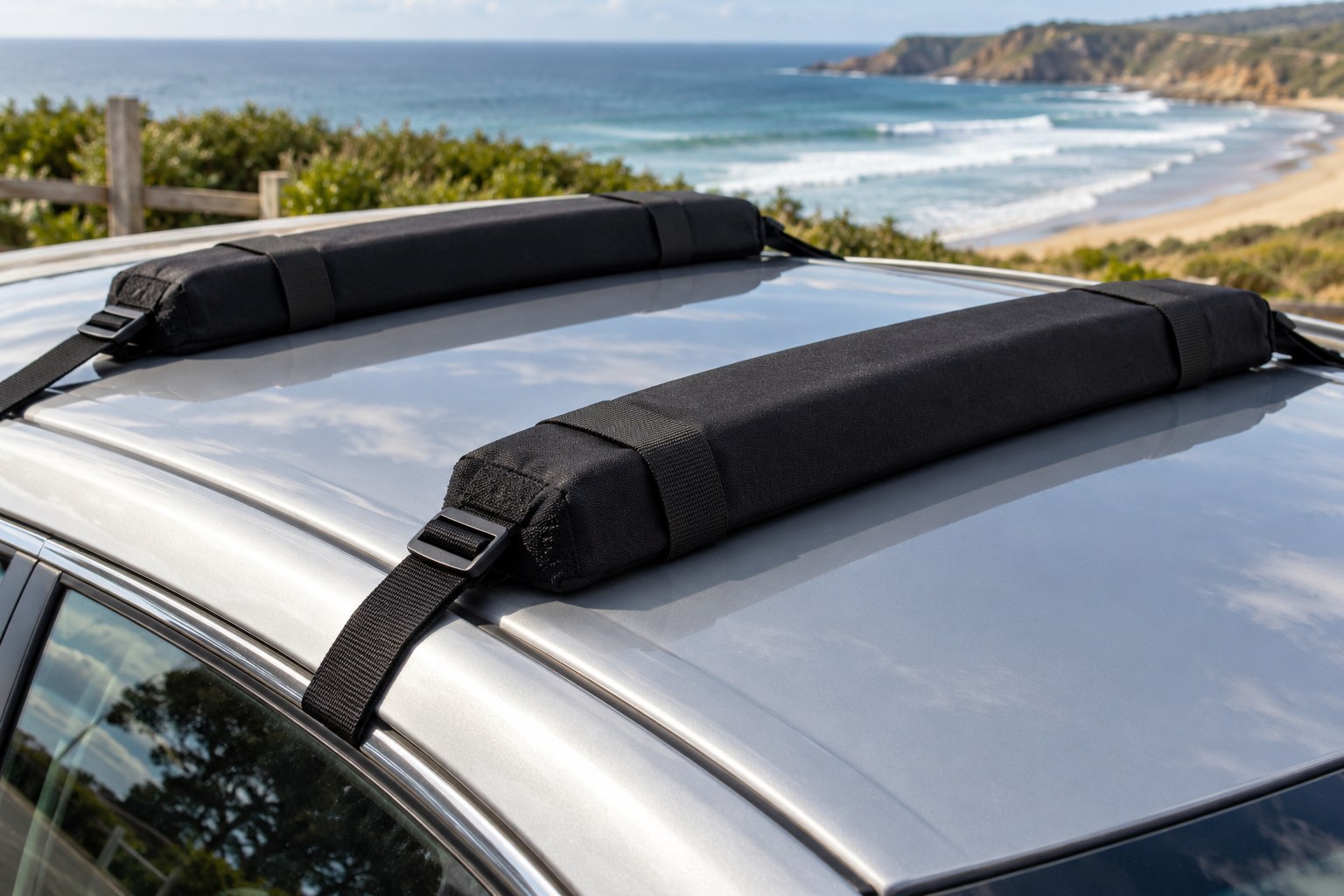
AI-generated illustration. Equipment details are illustrative; follow the instructions for your own item.
Soft roof racks can look simple in a product photograph: padded sections, webbing and a board above the roof. The photograph usually leaves out the vehicle details that decide whether the product can be used. Treat compatibility as the first purchasing question, particularly for rental cars, panoramic roofs or unusual door layouts.
A useful enquiry names the vehicle model, year, number of doors and roof type, then names the proposed rack. Include the number and dimensions of the boards. Ask the rack maker whether that combination is supported and where to find the current fitting instructions. A retailer's statement that a product fits 'most cars' leaves too much unresolved.
Northcore sells a dedicated three-door soft-rack design, which illustrates why door configuration cannot be ignored. Do not assume instructions for a conventional four-door car apply to a three-door hatchback. Follow the instructions for the precise product and vehicle combination rather than adapting a diagram yourself.
Ask how the straps interact with doors, seals and the interior. If you cannot confirm the permitted routing, do not install the rack by trial and error. The vehicle maker's restrictions also matter. A rack manufacturer can describe its product, but it cannot override a vehicle limitation.
For a hired vehicle, obtain the rental company's permission before relying on any roof-mounted equipment. A compatible physical arrangement and a permitted use under the hire agreement are separate questions. If approval is uncertain, compare a transfer that carries boards or equipment rental near the beach.
Request the load and driving restrictions in the actual instructions. Avoid borrowing a speed figure, board count or strap tension from a review of another rack. Ask what checks are required before setting off and during the journey. If those checks would be difficult at your planned stops, reconsider the transport plan while it is still easy to change.
Find out whether the equipment must be removed when parked or when not carrying a load, and how it should be dried and stored. These are routine ownership questions, but they affect a trip where the car is used for sightseeing as well as surfing. A wet rack packed with clean clothing may also complicate the next stage of travel.
Do not leave installation until a rushed airport departure. Read the instructions with the car present and ask the supplier to clarify anything you cannot identify. Inspect the roof and all equipment beforehand. Photograph the vehicle's condition for your own record, especially with a rental, without treating photographs as permission to use the rack.
Plan who will help lift the board and where the loading can happen. If the load cannot be positioned and checked without improvised access or obstructing traffic, another carrying method may be more suitable. The benefit of a compact rack is only useful when the complete routine works with the particular vehicle, equipment and journey.
Boards & equipment
Choose construction alongside shape, condition and the way you will use the board, rather than treating a hard board as an automatic upgrade.
Boards & equipment
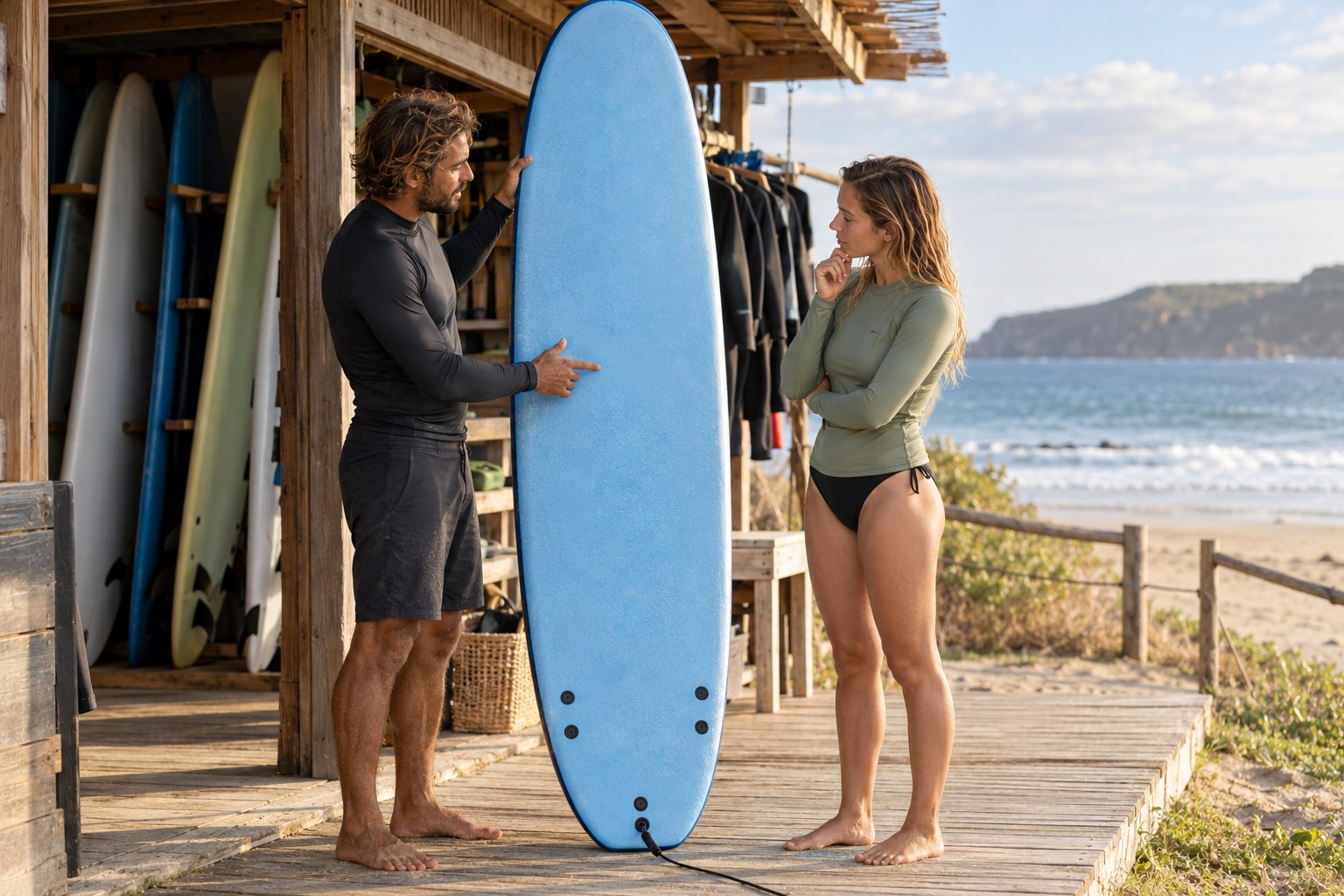
Bring a record of the boards you have used and the sessions you want to your sizing conversation.