Wetsuits & clothing
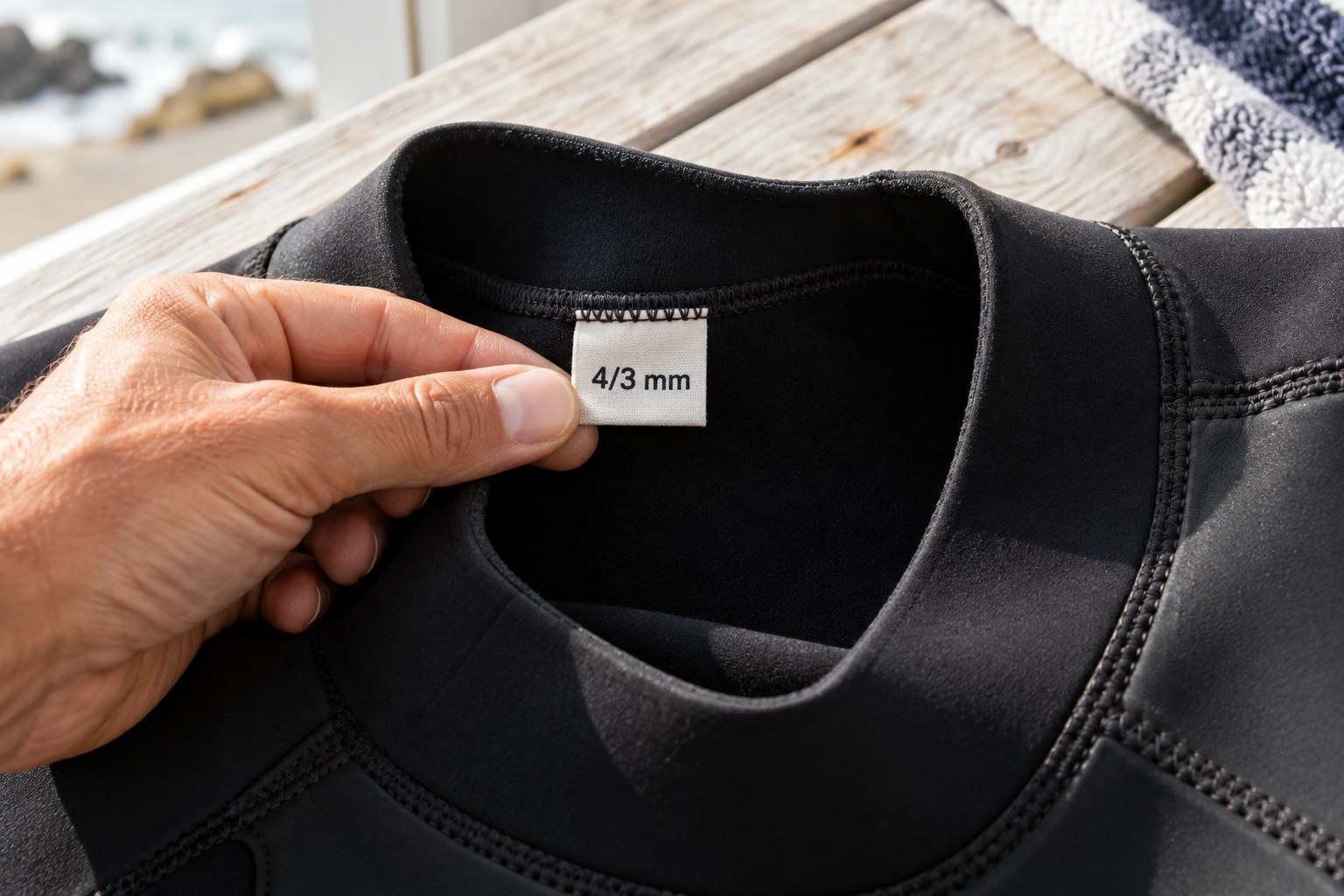
Read a wetsuit thickness label before comparing suits
Those slash-separated numbers describe material thickness, not a complete verdict on warmth. Read them alongside the suit's construction, fit and intended conditions.
Wetsuits & clothing
When height, chest and other measurements point to different rows, investigate the mismatch instead of averaging the sizes.
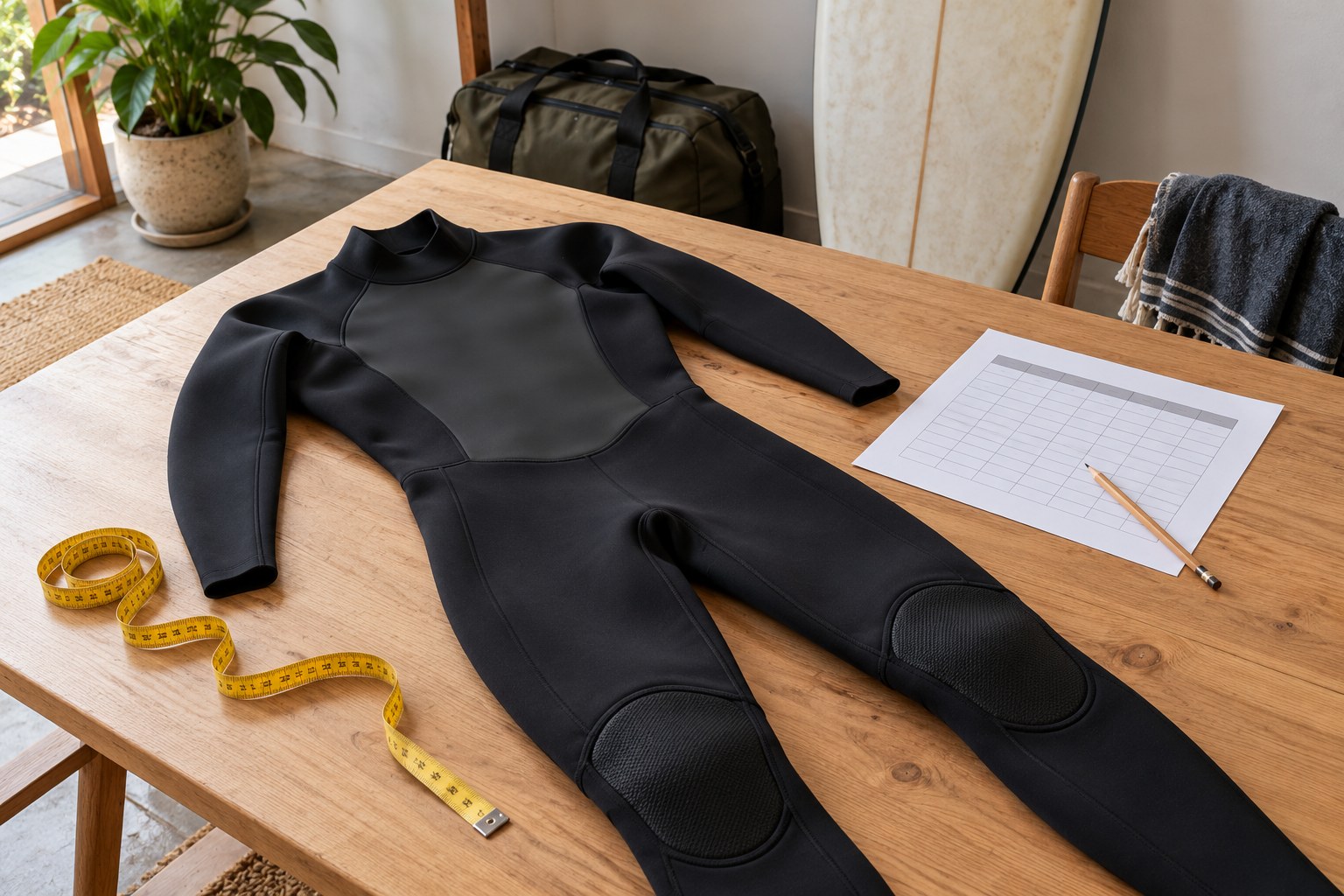
AI-generated illustration. Equipment details are illustrative; follow the instructions for your own item.
A wetsuit size chart is a set of proportions, not a voting system. If your height points to one size and your chest to another, choosing the row that wins the most measurements may still produce a poor fit. Begin by checking the measurements themselves, then ask the maker or retailer how its particular chart should be interpreted.
Confirm that you are using the chart for the correct garment category, region and model. Clothing charts and wetsuit charts may sit close together on the same website. Units can also change between pages. Copy the column headings along with the numbers so that a note such as '38' does not lose its meaning.
Repeat any measurement that appears inconsistent, following the manufacturer's instructions. Use a suitable flexible tape for circumferences and avoid measuring over bulky clothes. Ask someone to help with measurements that are difficult to take accurately alone. Do not tighten the tape to make a number fall neatly into the size you hope to buy.
Record your actual measurements rather than rounding them all toward one row. If the chart uses a range, note where you sit within it. This gives the retailer a clearer starting point than 'I am usually a medium but sometimes a large'.
Read any explanation of priority measurements, but keep it attached to that manufacturer's advice. Do not take one brand's recommendation about which measurement matters most and apply it automatically to every other brand. Different patterns and size ranges can lead to different fitting options.
Rip Curl's fit guide describes tall variants within its range. Other ranges may organise their proportions differently. Where a chart offers such alternatives, compare their complete measurements rather than assuming a suffix only changes sleeve length. Ask the retailer to explain the intended difference if the chart is unclear.
A person with a longer torso may find that simply moving to a larger overall size adds room where it is not wanted. Conversely, choosing a smaller size to remove folds may create restriction elsewhere. These are reasons to compare another cut, not reasons to force the nearest numerical match.
Consider a hypothetical chart where your height fits a tall variant but your chest fits the standard version of the same nominal size. Compare all the columns for those two rows and ask which differences the pattern introduces. Do not average the measurements into an imaginary size between them. If neither combination appears plausible, ask whether another model has a more appropriate proportion before ordering. This turns a confusing chart into a specific fitting question rather than a guess about whether to size up.
Include the model, proposed size, full measurement set and the rows that conflict. If you have tried the garment, describe where it feels wrong after being positioned correctly. For example, explain that the torso feels short while material gathers at the lower back, rather than reporting only that the suit is uncomfortable.
Ask what alternative the retailer recommends and whether you can try it under the return policy. Keep the reply, especially if ordering before travel. Give yourself enough time for a second fitting instead of making the first delivery the day before departure.
Once the suit is on correctly, check comfortable breathing and the movements recommended by the fitter. Note obvious folds, gaps or pressure points. A chart match does not require you to accept a garment that clearly restricts you, and a prestigious brand does not make its proportions suitable for every body.
If several sizes in the same cut fail in different ways, compare another model or maker. That may be a more efficient next step than ordering each adjacent size. Keep a short record of what you tried so the next fitting builds on useful information.
When you find a suitable garment, save the model version, size and measurement date. Use that record as a starting point for a replacement, then verify the new product again. Charts and cuts can change, and an old successful size should not become a rule you feel obliged to repeat.
Wetsuits & clothing
Those slash-separated numbers describe material thickness, not a complete verdict on warmth. Read them alongside the suit's construction, fit and intended conditions.
Wetsuits & clothing
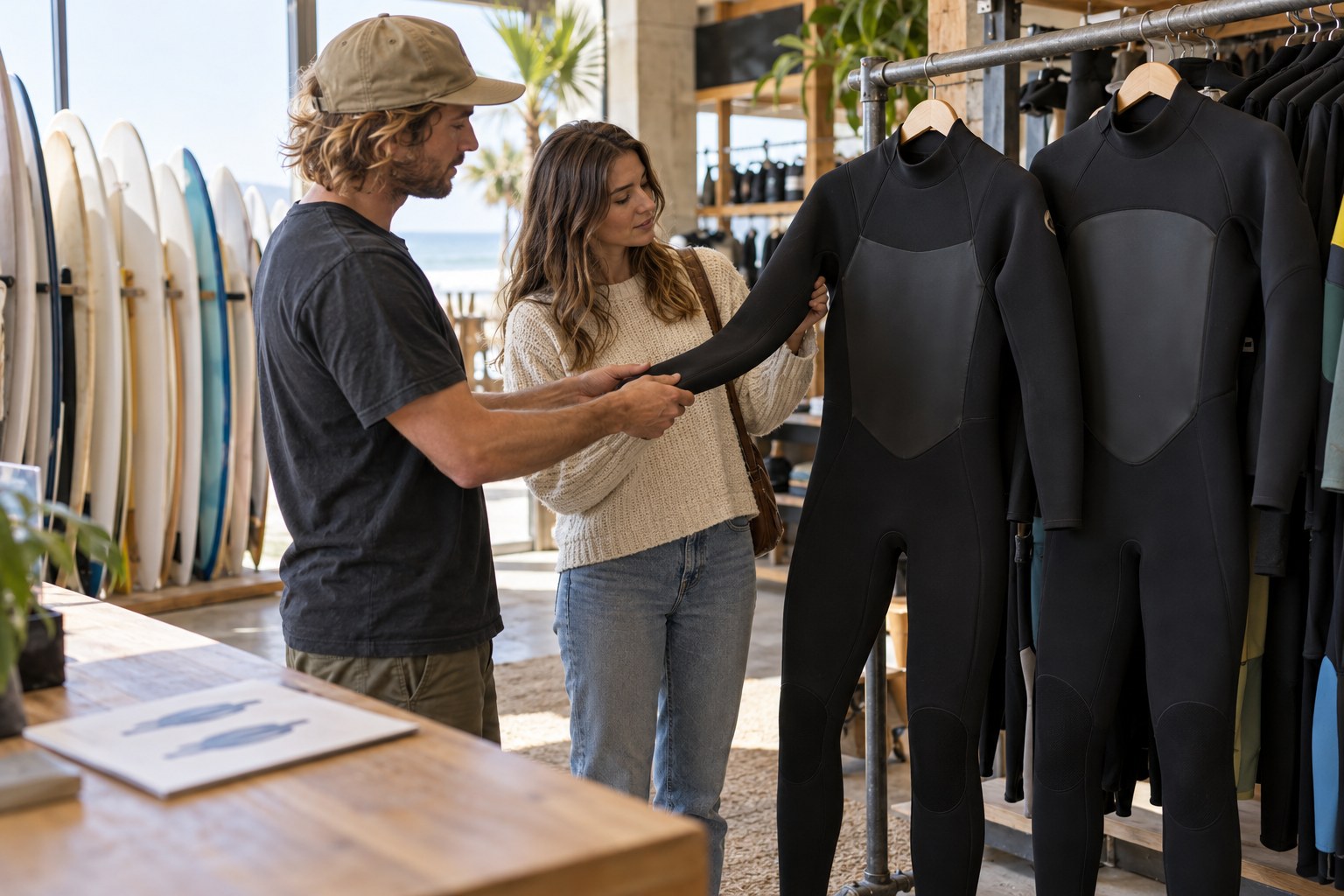
Bring the destination, season and session plan to a local shop, then compare its advice with the manufacturer guidance for the actual suit.