Boards & equipment
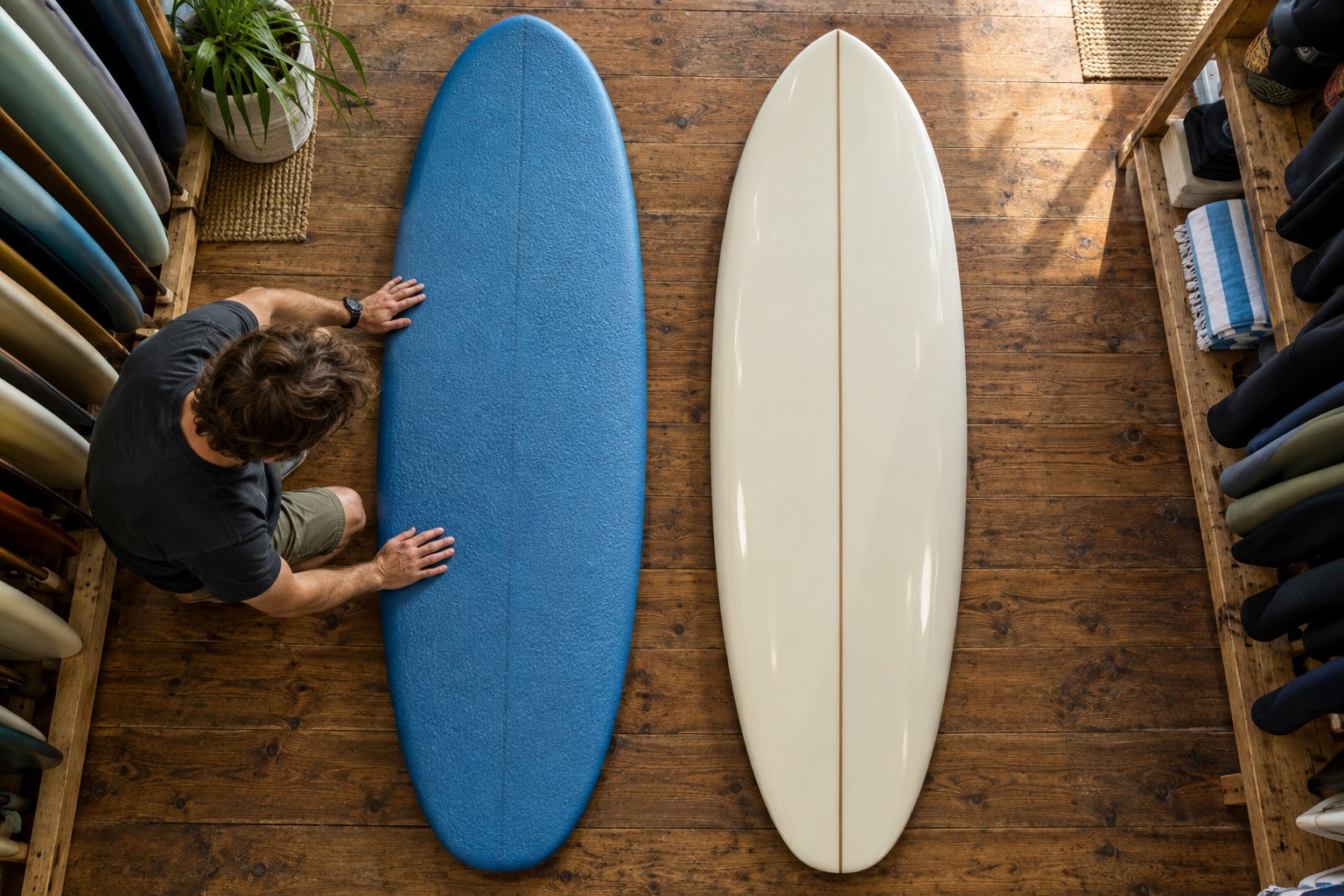
Soft top or hard board for your first purchase
Choose construction alongside shape, condition and the way you will use the board, rather than treating a hard board as an automatic upgrade.
Boards & equipment
Make a rental trial answer a specific equipment question instead of treating one unfamiliar session as a verdict on a whole category.
Renting can help you understand a board before buying, provided the model is suitable for your current experience and the session. Start by explaining what you already use and why you are considering a change. If you are learning, arrange the comparison through appropriate instruction rather than selecting unfamiliar equipment for independent practice.
Choose one main question. You might want to know whether a particular board is manageable to carry and use in a lesson, or whether a proposed size feels appropriate after an instructor's recommendation. A vague search for the perfect board makes every ordinary difficulty feel like evidence against the model.
Write down the model, construction, dimensions and fins. A rental shop may hold several boards with similar graphics but different sizes. Photograph the identifying information with permission so the experience can be linked to the right specification later.
Inspect the condition with staff and record existing damage according to the rental process. Ask what to do if you notice a problem during the hire. You want to evaluate a sound board, not confuse a damaged fitting or unsuitable accessory with the design itself.
Confirm the return time and whether a swap is possible. If the shop recommends another option after hearing your feedback, understand whether that changes the fee or rental period before taking it away.
Conditions, instruction and your own familiarity influence the experience. If several things change at once, avoid attributing the whole difference to one feature such as length or tail shape. Describe what happened and ask the instructor which observations are meaningful.
Give yourself time to understand the board within the agreed lesson plan. Do not escalate the session to prove that a purchase would be worthwhile. A trial is successful if it answers a question, including the answer that the model is not currently appropriate.
After returning the board, separate practical observations from preferences. Could you transport it? Did the bag fit? What did the instructor observe? What simply felt unfamiliar? Keep those points together when discussing the purchase with a shop.
If uncertainty remains, another suitable trial may cost less than buying and quickly reselling the wrong board. Equally, you may discover that the board you already use still serves the intended purpose. Rental information is useful because it makes either conclusion better grounded.
If a shop offers to deduct a rental fee from a later purchase, read the conditions before treating the trial as free. Check the eligible models, deadline and whether the deduction applies to the exact board you tested. A credit is useful only if you would choose that purchase anyway.
For a demo event, ask how long you can keep a board and who checks that the model and session are appropriate. A short queue-based trial may provide less time to understand a new shape than a dedicated lesson. Keep your conclusion proportionate to the opportunity: you can record an initial impression without declaring the model definitively right or wrong. Preserve the useful uncertainty instead of converting a hurried test into an expensive commitment.
Boards & equipment
Choose construction alongside shape, condition and the way you will use the board, rather than treating a hard board as an automatic upgrade.

Boards & equipment
Bring a record of the boards you have used and the sessions you want to your sizing conversation.