Boards & equipment
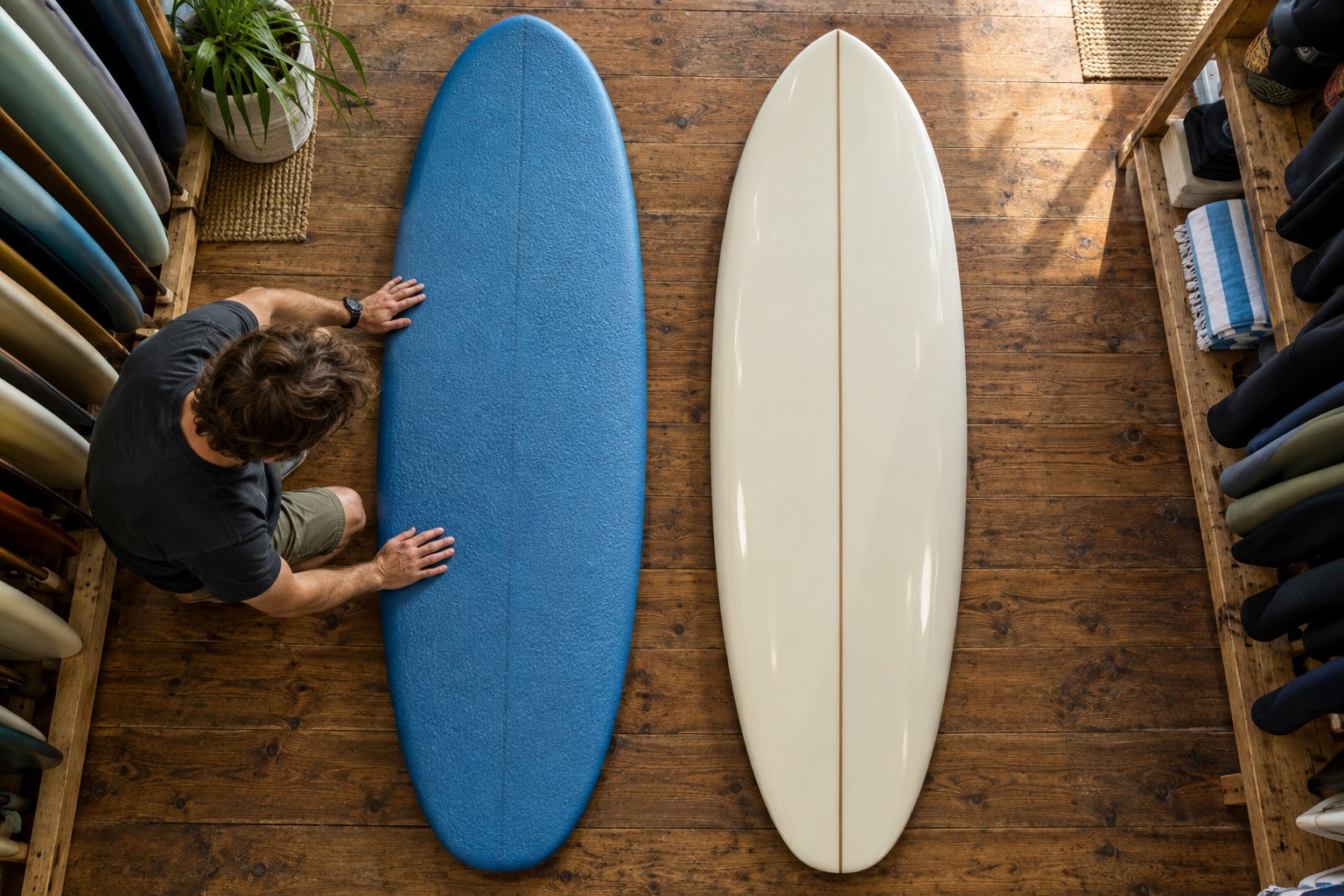
Soft top or hard board for your first purchase
Choose construction alongside shape, condition and the way you will use the board, rather than treating a hard board as an automatic upgrade.
Boards & equipment
The small connection at the board deserves the correct replacement part and installation instructions, rather than a piece of cord chosen by eye.
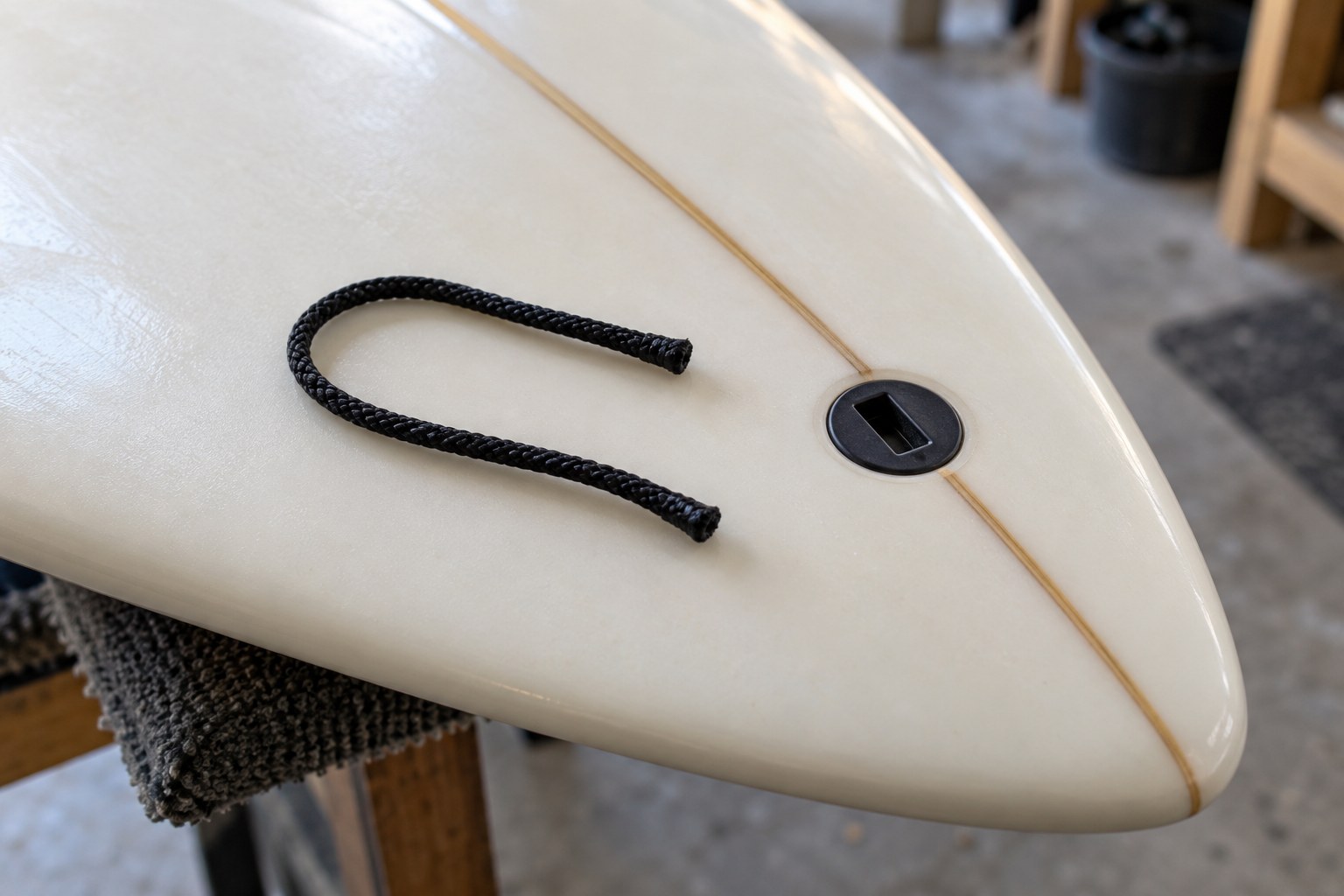
AI-generated illustration. Equipment details are illustrative; follow the instructions for your own item.
A leash string may look like a simple loop, but it is part of the connection between the board and the leash. When it is worn or its history is uncertain, identify the board attachment and leash requirements before replacing it. Do not assume that any strong-looking cord will fit and function correctly.
Photograph the current arrangement before removal if it helps a shop identify the system, but do not copy an installation merely because it was already there. A previous owner may have fitted the wrong component or left an unsuitable loop length. Compare the setup with the maker's directions.
Check the board model and any documentation supplied with it. Some equipment uses a conventional string arrangement, while other products have a specified loop or proprietary connector. FCS, for example, describes a continuous Uni-Loop component in its newer system. That variation is a reason to identify the actual product rather than assume every replacement is tied in the same way.
Ask the manufacturer or a knowledgeable shop for the correct replacement specification and installation procedure. Include photographs of the plug, leash end and rail saver if the system is unclear. A product that physically passes through an opening is not automatically the recommended part.
Inspect the board attachment itself. Cracks, movement, sharp damage or an uncertain repair need assessment. Replacing the string alone will not resolve a problem with the point that holds it.
Follow the supplied instructions exactly, including any specified length or closure method. This article does not offer a universal knot or loop dimension because those details need to match the system. Do not substitute fishing line, household rope or an improvised metal fitting.
Ask a shop or instructor to check how the rail saver and connection sit on your board. The arrangement should follow the product design rather than leave the string carrying across an edge in a way the maker does not intend. If the instructions and the parts in your hand do not agree, stop and clarify the mismatch.
Keep a correctly specified spare with its packaging or identifying note if you travel. That is more useful than a loose piece of unknown cord at the bottom of a bag. When a replacement is fitted, inspect the whole leash assembly as well; a new string does not make an old cuff, cord or swivel ready for another session.
Boards & equipment
Choose construction alongside shape, condition and the way you will use the board, rather than treating a hard board as an automatic upgrade.

Boards & equipment
Bring a record of the boards you have used and the sessions you want to your sizing conversation.