Surf travel
Choose a surf camp by its daily schedule
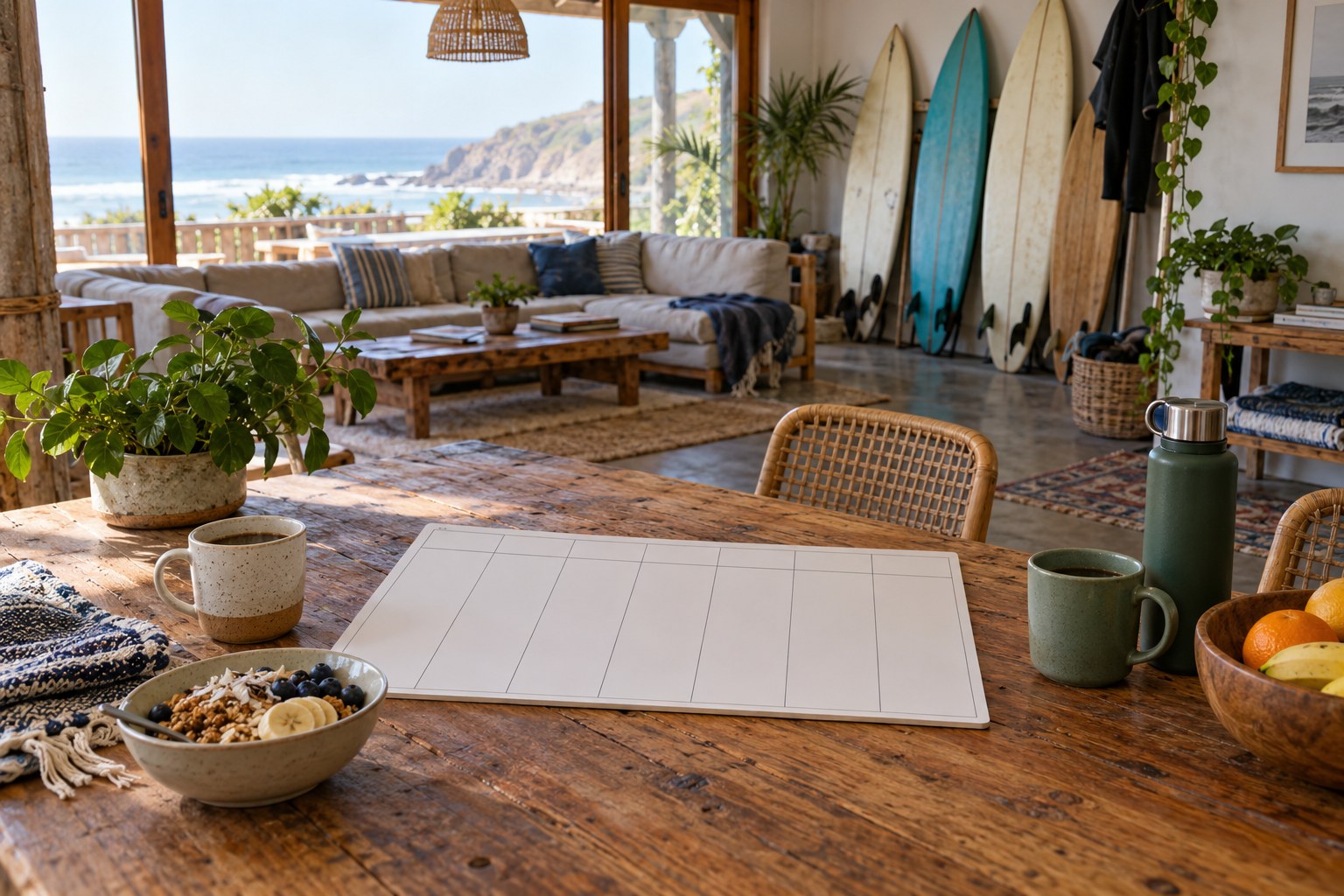
Read a sample day as a sequence of travel, instruction, meals and rest. The advertised number of lessons does not describe the whole holiday.
Surf travel
Make the first transfer and the daily contact routine straightforward, while keeping control of your own documents and booking information.
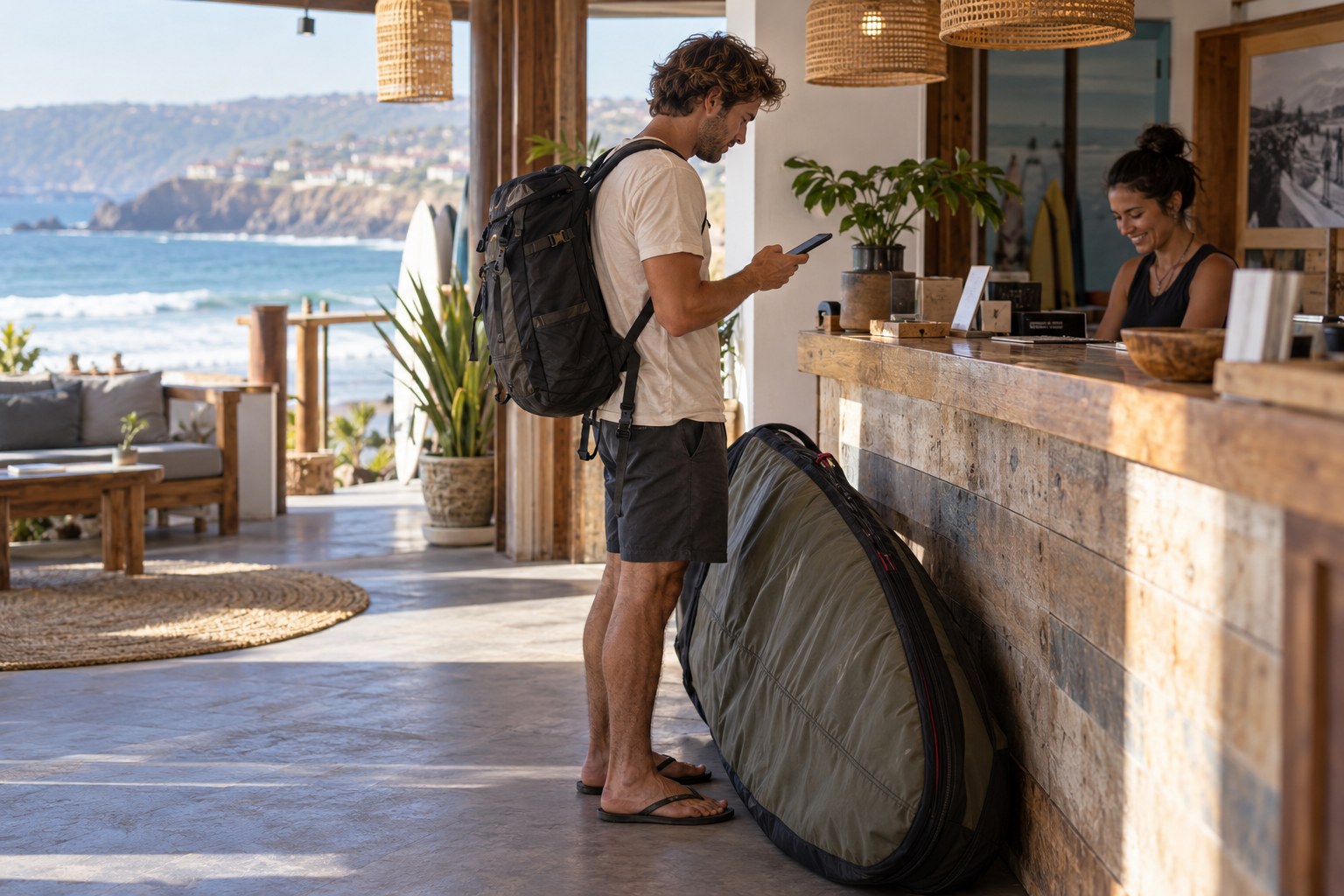
AI-generated illustration. Equipment details are illustrative; follow the instructions for your own item.
Solo travel often concentrates small administrative tasks in one person. You are carrying the bag, reading directions and replying to the host at the same time. Reduce that load by making the arrival plan specific before departure: confirmed address, transport arrangement, check-in procedure and a contact method that works at the destination.
Save essential booking details offline. Include the meeting point for any transfer and the operating hours relevant to arrival. If you are carrying a board, confirm that the vehicle can take its packed dimensions. Avoid making a late arrival depend on finding a suitable vehicle by chance outside the terminal.
Choose a person you know to receive basic itinerary information and agree a realistic check-in pattern. Decide what they should do if a message does not arrive, allowing for ordinary travel delays and loss of connectivity. A vague promise to 'keep in touch' gives neither person a clear expectation.
Keep the arrangement separate from public social posting. Sharing a beach photograph online does not necessarily tell the right person where you are staying or when you expect to return. Give useful details privately and avoid publishing sensitive travel documents or room information.
For booked lessons, provide an accurate local contact number and ask how the school communicates changes. Do not assume that joining a group session makes the provider responsible for the rest of your itinerary. Confirm the start and end points of its service.
Keep access to booking information independent of one app where possible. A written address and an offline confirmation can be helpful if a phone battery fails. Store copies of documents appropriately, with attention to the sensitivity of the information, rather than scattering them across public or shared folders.
Arrange board storage and drying at the accommodation so each outing does not require carrying all your equipment. Pack the day's essentials separately and leave enough time to return rented kit before the shop closes.
On the first day, learn the practical route between accommodation, lesson meeting point and ordinary services you need. Familiarity with those small journeys can make the rest of the stay easier. The goal is not to schedule every hour, but to make the essential arrangements clear enough that being on your own does not mean improvising all of them at once.
Surf travel
Read a sample day as a sequence of travel, instruction, meals and rest. The advertised number of lessons does not describe the whole holiday.
Surf travel
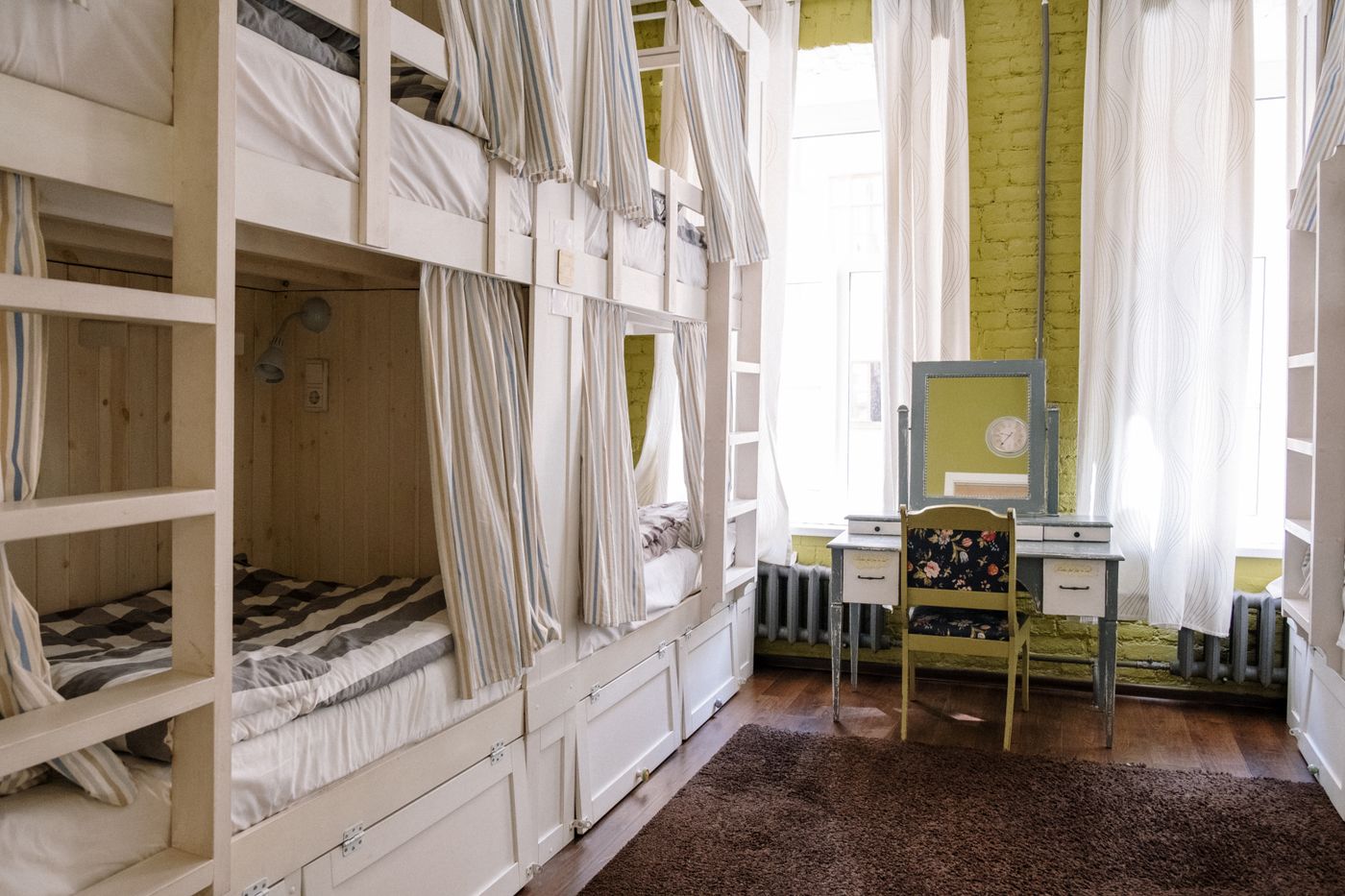
Compare the room you will actually book, the shared facilities and the distance to the camp's meeting point rather than relying on a few attractive photographs.