Boards & equipment
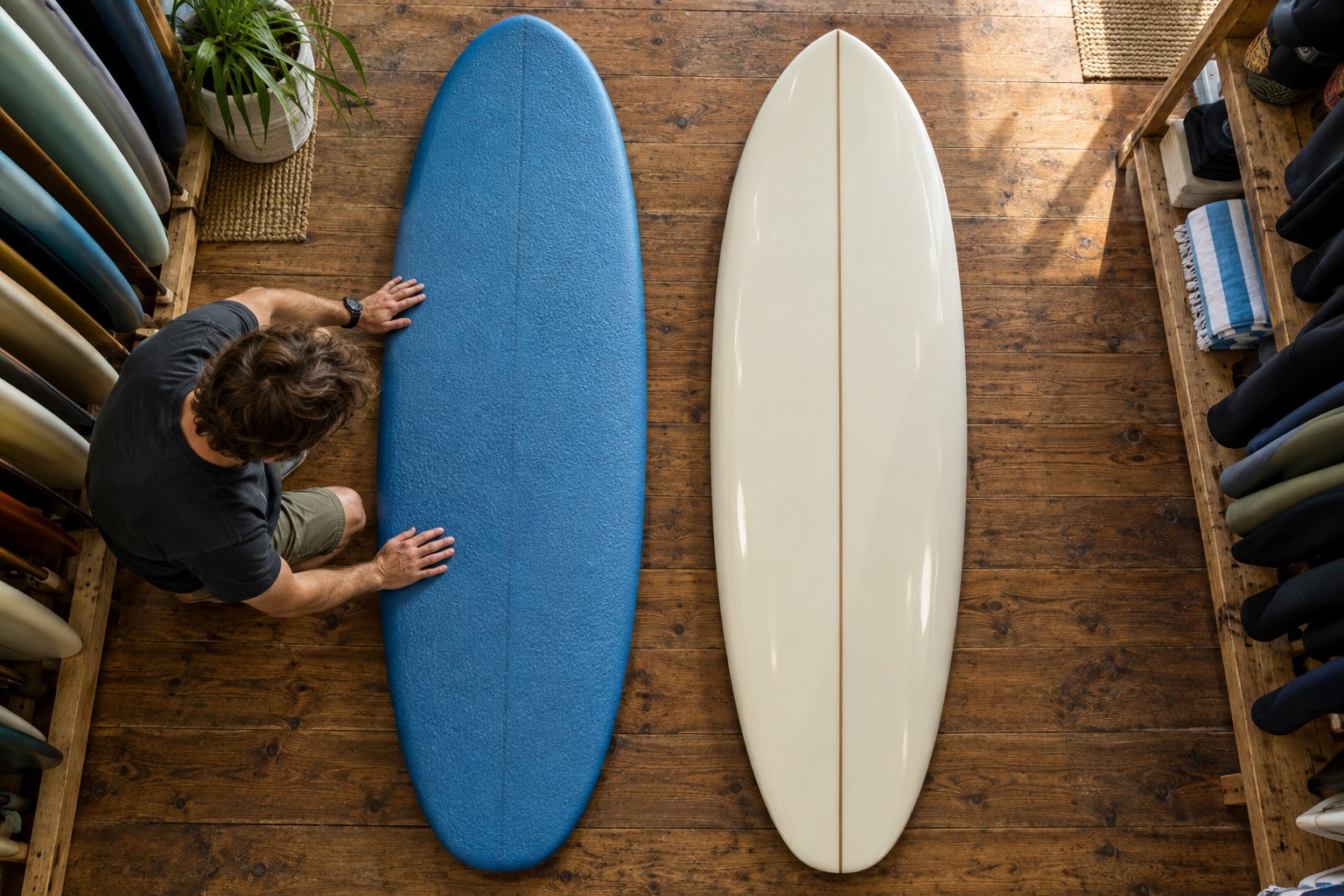
Soft top or hard board for your first purchase
Choose construction alongside shape, condition and the way you will use the board, rather than treating a hard board as an automatic upgrade.
Boards & equipment
Straight and coiled cords appear across different board sports. Match the leash to its stated activity instead of assuming the shapes are interchangeable.
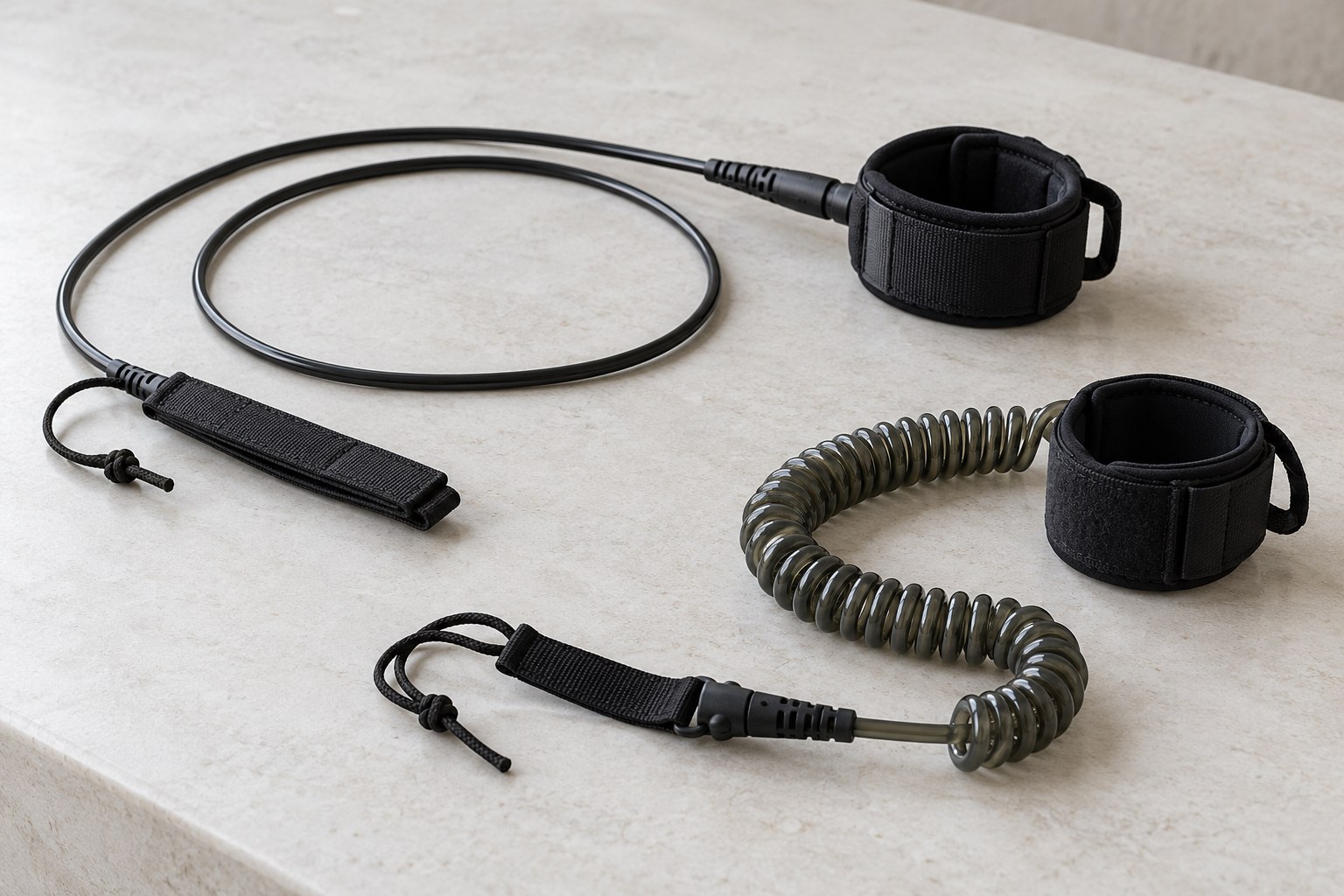
AI-generated illustration. Equipment details are illustrative; follow the instructions for your own item.
A coiled leash can look tidy in a product photograph, while a straight leash may appear to take up more space. Appearance is a poor way to choose equipment that connects a person and a board. Read the intended sport, environment and attachment arrangement before comparing either design.
Surfboard, stand-up paddleboard and bodyboard products may sit beside each other in an online search. Their cuffs, cords and intended use can differ. A result returned for the word surf does not establish that the product is suitable for conventional surfing on your board.
Tell a retailer what board you use and where the intended activity takes place. Do not reduce the question to whether a coiled cord stretches far enough. The product's design and release arrangement need to match its stated use, and requirements can differ between moving water, flat water and surf.
For conventional surfing, choose a leash specifically described and recommended for that use by the maker, with the appropriate length and specification for the board. If you also paddleboard, treat that as a separate equipment decision and consult the relevant official guidance for that activity and environment.
For example, the RNLI's paddleboarding guidance specifies a quick-release waist leash for tidal or flowing water where entrapment is a risk. That is a different question from whether the cord looks straight or coiled. Get activity-specific instruction; do not convert a surf leash into another system yourself.
Do not straighten a coil with heat, shorten a straight cord with knots or combine parts from unrelated products. A home modification changes the equipment without providing evidence that it will behave as intended. Ask for a suitable product rather than adapting an unsuitable bargain.
Look for a manufacturer, model name and usable instructions. If a listing contains many sport names but no clear intended application, ask the seller to clarify it. A return policy does not substitute for a specification.
Check the cuff and board connection as well as the cord. Confirm which components are supplied and whether they are compatible with the board. If the package differs from the listing, resolve that before using it.
Keep different sport equipment identified at home so a similar-looking cuff does not get picked by mistake. Store the instructions or a link to the maker's page with your equipment record. The useful choice is the product designed for the actual session, not the cord shape that looks most convenient when laid out on a table.
Boards & equipment
Choose construction alongside shape, condition and the way you will use the board, rather than treating a hard board as an automatic upgrade.

Boards & equipment
Bring a record of the boards you have used and the sessions you want to your sizing conversation.