Boards & equipment
Soft top or hard board for your first purchase
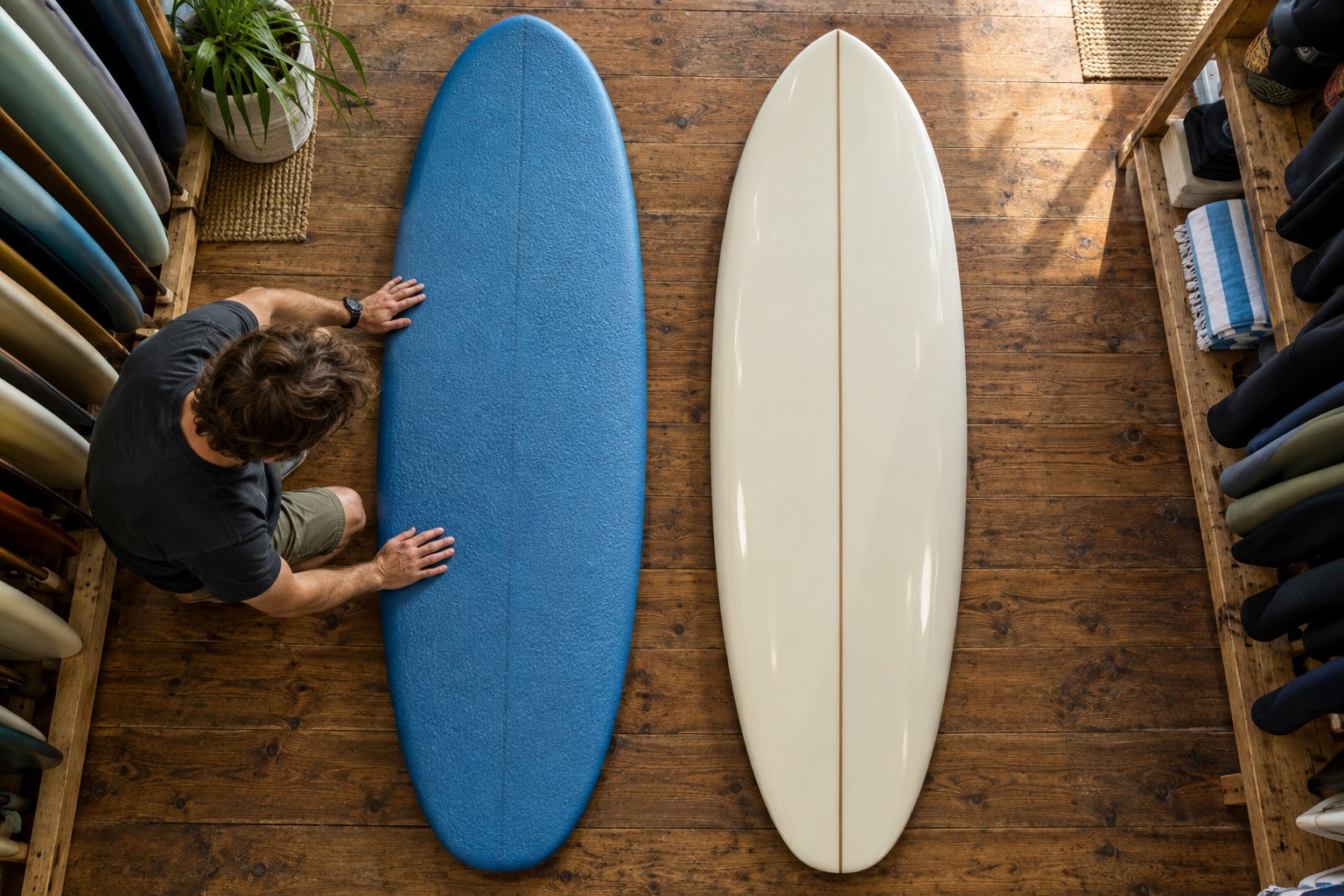
Choose construction alongside shape, condition and the way you will use the board, rather than treating a hard board as an automatic upgrade.
Boards & equipment
Compare where you need traction, how permanent the change will be and whether the board surface accepts the proposed product.
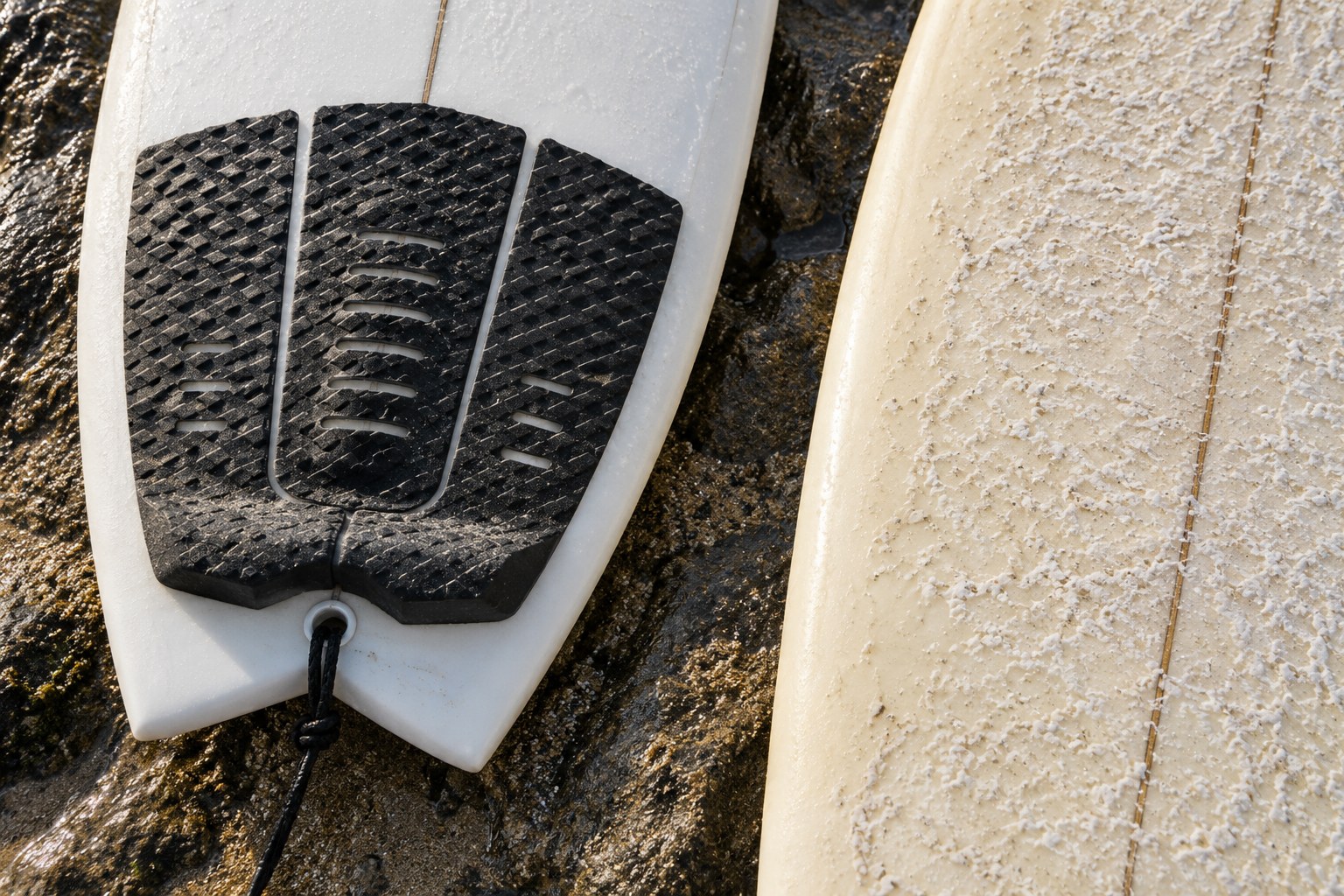
AI-generated illustration. Equipment details are illustrative; follow the instructions for your own item.
Wax and traction pads both concern contact with the deck, but they do not create the same surface or demand the same commitment. Wax is applied according to its formula and the board's instructions. A pad occupies a defined area and relies on an adhesive installation. The first question is where your feet or body actually contact the board, not which option looks more professional.
For an early-stage surfer, an instructor can help identify that contact pattern. A photograph of an advanced surfer's tail pad does not establish the right placement for your stance or board. Describe the equipment and the problem you are trying to solve before adding anything.
A tail pad does not automatically replace wax across the rest of the deck. Conversely, a board with wax already applied may not need an additional pad just because there is room for one. Look at the current surface and ask which area needs attention. Separate an equipment question from a technique issue that should be addressed during instruction.
Check the board manufacturer's compatibility guidance before attaching a pad. Surface construction matters, and an adhesive product should not be assumed suitable for every foam or coated deck. If the maker does not approve the proposed installation, choose a supported option rather than adding a stronger adhesive yourself.
Before a pad is installed, you can examine its outline, raised sections and position with the backing intact. After it is bonded, moving it may involve removal and further surface preparation. Include that commitment in the decision, especially if you are still learning where your back foot settles.
Wax also requires maintenance and an appropriate formula, but its purchase does not define a fixed raised shape on the deck. Think about whether you want to make a permanent placement decision now or continue using the board as its maker recommends while your preferences become clearer.
For a rental board, ask permission before changing its surface. The shop may require a particular wax or prohibit adhesive modifications altogether. Even a well-intended addition can create a return problem if it was not agreed.
Choose based on the board, the contact area and an understood installation process. There is no requirement to add every accessory associated with surfing, and no pad or wax can guarantee that your feet will never slip.
Boards & equipment
Choose construction alongside shape, condition and the way you will use the board, rather than treating a hard board as an automatic upgrade.

Boards & equipment
Bring a record of the boards you have used and the sessions you want to your sizing conversation.