
Boards & equipment
Soft top or hard board for your first purchase
Choose construction alongside shape, condition and the way you will use the board, rather than treating a hard board as an automatic upgrade.
Boards & equipment
Tail names describe recognisable shapes, while the way they work depends on the board around them.
AI-generated illustration. Equipment details are illustrative; follow the instructions for your own item.
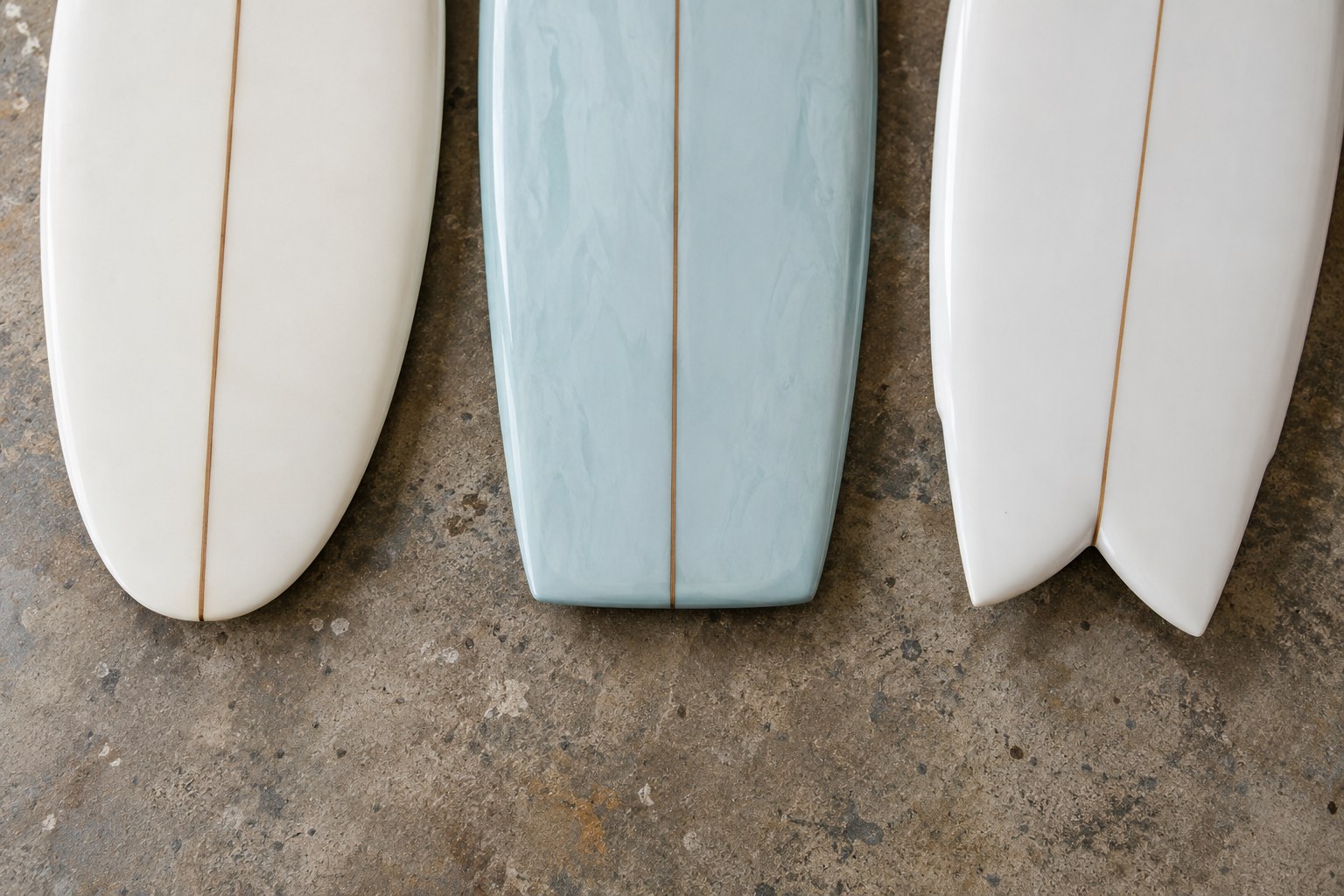
The tail is the rear end of the board, and its outline is one of the easiest design features to name. A squash tail has a broad end with rounded corners; a rounded pin narrows towards a rounded point; a swallow tail has two points separated by a cut-in section. These names help you follow a shop conversation, but they do not rank boards from easiest to hardest.
Degree 33's tail discussion links broader tails with more area and narrower tails with hold in steeper waves. Treat that as a broad design tendency. Tail width, thickness, rails, rocker and fins work together, so the shape name alone cannot predict a particular board's response.
When a retailer offers a choice of tails, ask why the maker offers each one and whether the rest of the design changes. A tail option on a custom order can involve a different intended use rather than a cosmetic variation. Give the shaper an honest account of your experience and usual sessions.
For an early purchase, do not let a debate about small tail differences displace more basic suitability. A board of the wrong overall size or intended ability level does not become appropriate because it has a familiar tail. Start with a relevant model and use the tail discussion to understand the remaining options.
If possible, compare boards in person from the same angle. A product image taken at a slight diagonal can hide the width or depth of a swallow cut-out. Keep the exact model and size attached to any photograph you save.
Inspect the tail carefully when buying used. Corners, tips and the area around the leash attachment deserve attention because damage can be difficult to judge in a small listing photograph. Ask a repairer to assess cracks, questionable repairs or changes in the surface before agreeing to buy.
Check that a board bag accommodates the tail without compressing it against the zip or seam. During transport and storage, use the maker's guidance rather than letting the tail take the board's weight on a hard surface.
Your preference may develop after using several suitable boards. Until then, a clear explanation from the maker and observations from supervised practice are more useful than collecting tail-shape rules. Choose the whole board for its role, then understand the tail as part of that design.
Boards & equipment
Choose construction alongside shape, condition and the way you will use the board, rather than treating a hard board as an automatic upgrade.

Boards & equipment
Bring a record of the boards you have used and the sessions you want to your sizing conversation.