Boards & equipment
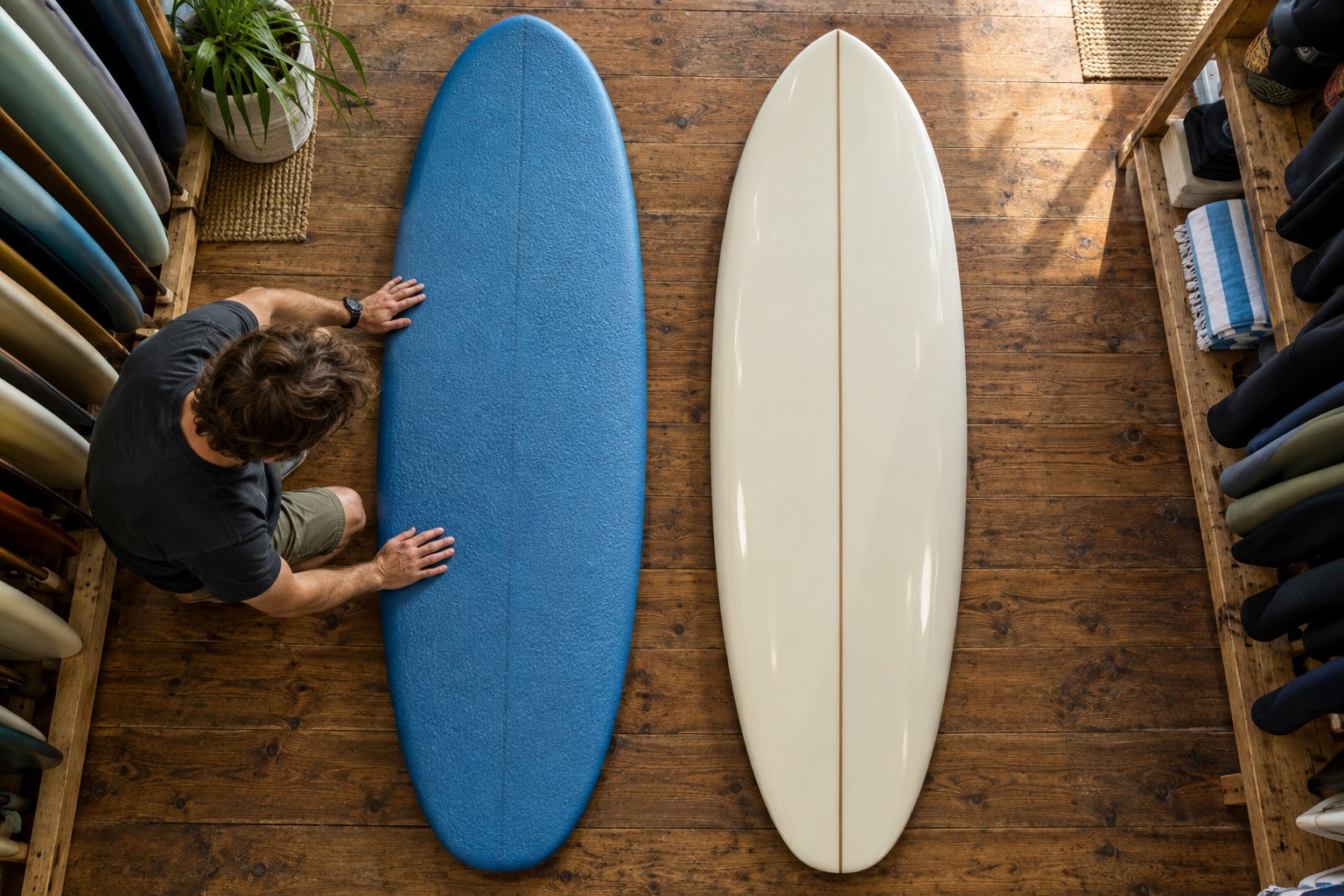
Soft top or hard board for your first purchase
Choose construction alongside shape, condition and the way you will use the board, rather than treating a hard board as an automatic upgrade.
Boards & equipment
The broad fabric section near the tail has a different purpose from the thin attachment string. Identify both before checking the connection.
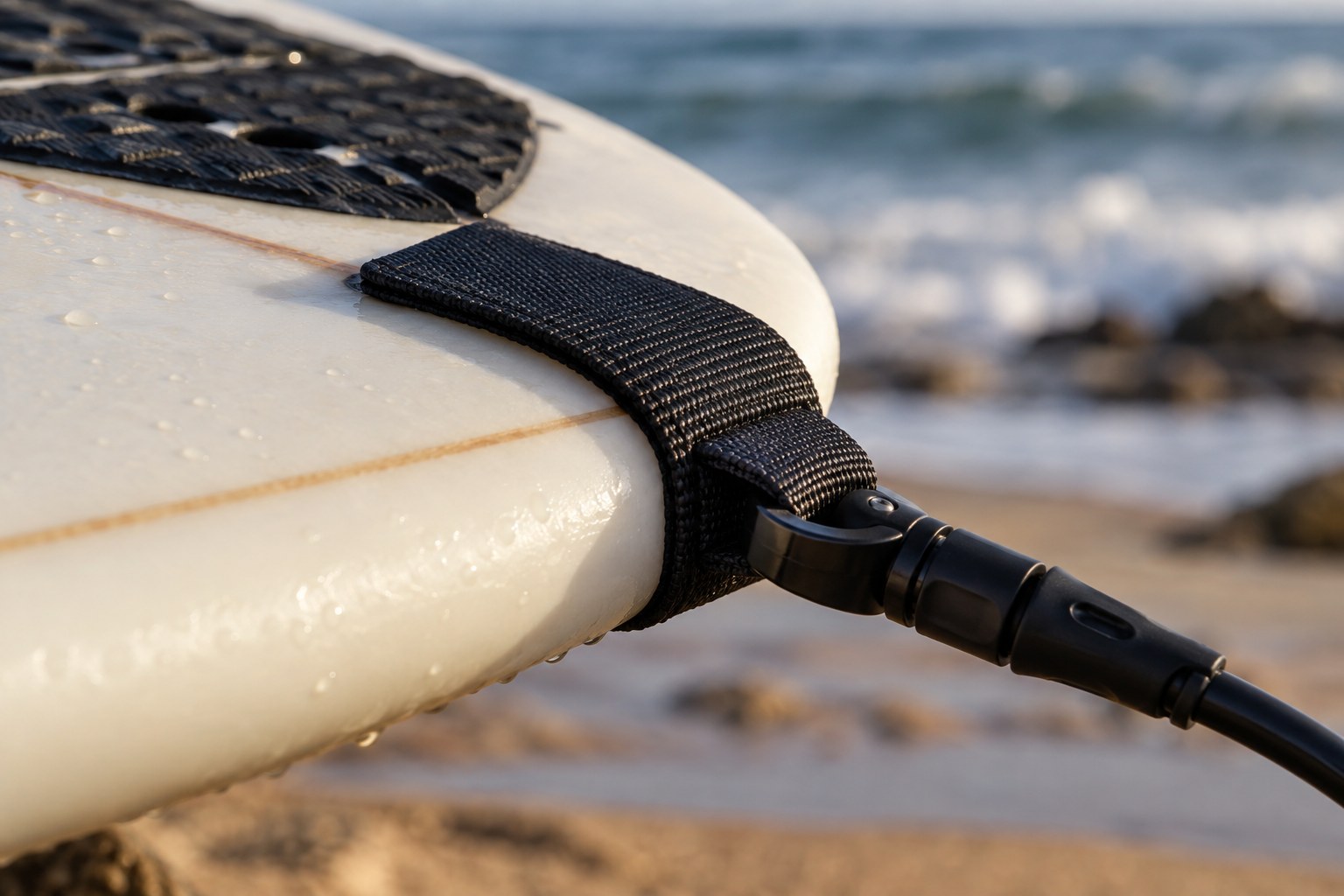
AI-generated illustration. Equipment details are illustrative; follow the instructions for your own item.
A rail saver is easy to overlook because it occupies only a small part of a leash. Look near the board end and you will usually find a broad fabric section rather than the long flexible cord. Creatures of Leisure describes its role as connecting the leash through the attachment string and protecting the board's rail when the leash is loaded. That does not make the whole assembly damage-proof.
The useful distinction is between identifying a component and knowing that it is fitted correctly. A photograph of a familiar-looking strap cannot establish whether the string, plug, closures and leash are compatible. Use the instructions for the actual equipment, particularly if it has a proprietary connection rather than a conventional string.
With the equipment on dry land, identify where the board attachment, string and rail saver meet. Ask a surf shop to demonstrate the correct arrangement if you cannot tell which section is supposed to lie against the tail. Do not simply copy a neighbouring board: its plug position, tail shape and connection system may differ from yours.
Check whether the fabric is frayed, stitching has opened or the closure contains grit and debris. Examine the neighbouring string and board attachment as well. A fresh-looking rail saver beside a worn string is not a reason to skip the string. Equally, replacing one piece does not establish that a damaged plug is sound; the board may need assessment by a repairer.
Keep any manufacturer part reference when arranging a replacement. A seller's description such as 'universal strap' is not enough evidence that the part works with your leash. Send clear photographs of the complete connection and the model label so that advice relates to the equipment you own.
Do not extend the string simply to make the closure easier to reach or replace the broad fabric with an arbitrary piece of cord. If the arrangement seems awkward, stop and ask for the correct fitting method. The question to resolve is why the specified parts are not sitting as intended, not how to force them together.
After a knock to the tail, include the connection area in the board inspection. Record any new mark before asking for advice, and avoid treating a rail saver as a substitute for checking damage. Its protective purpose is specific; it does not promise that the board will remain undamaged through every fall, collision or storage mistake.
Boards & equipment
Choose construction alongside shape, condition and the way you will use the board, rather than treating a hard board as an automatic upgrade.
Boards & equipment
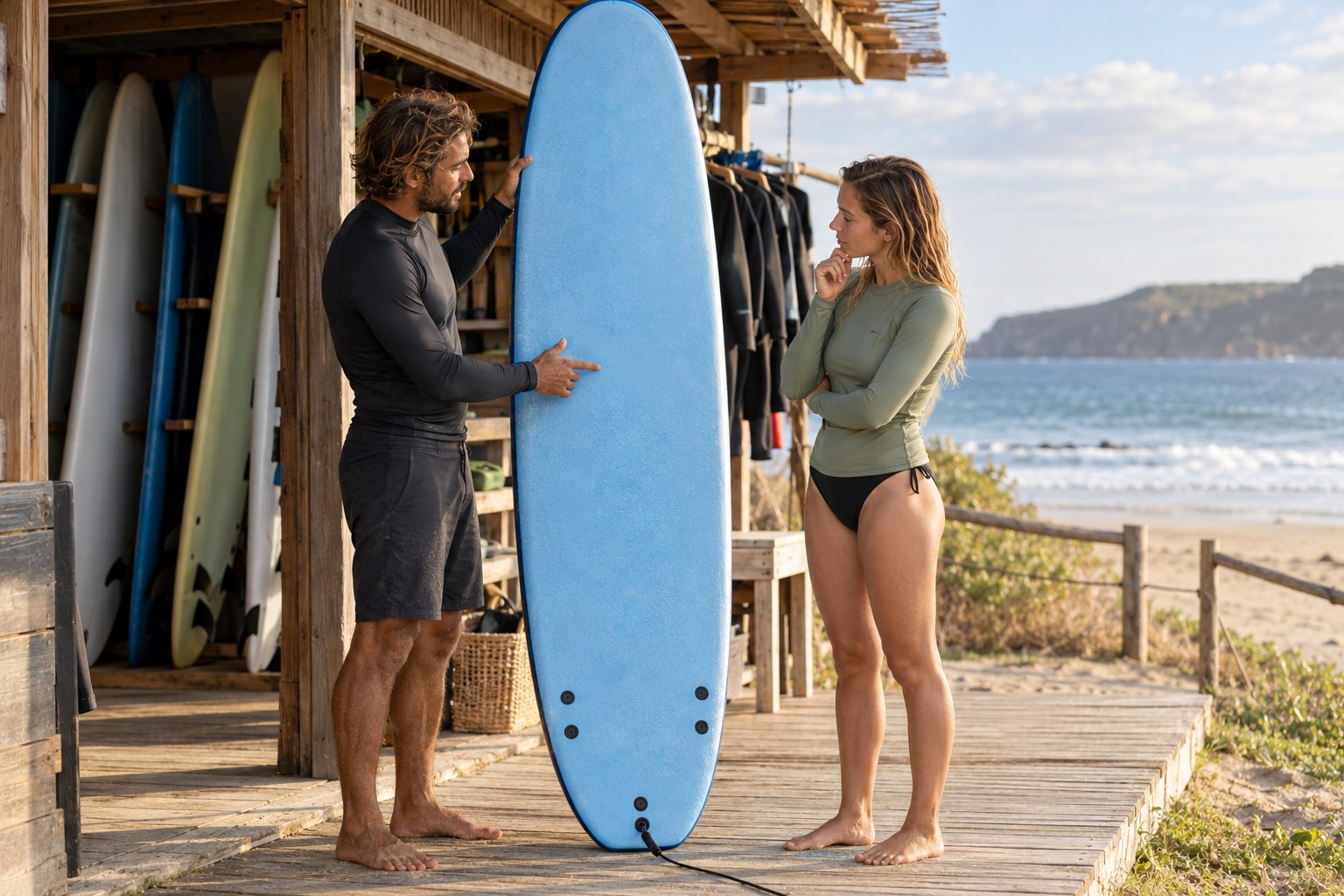
Bring a record of the boards you have used and the sessions you want to your sizing conversation.