Boards & equipment
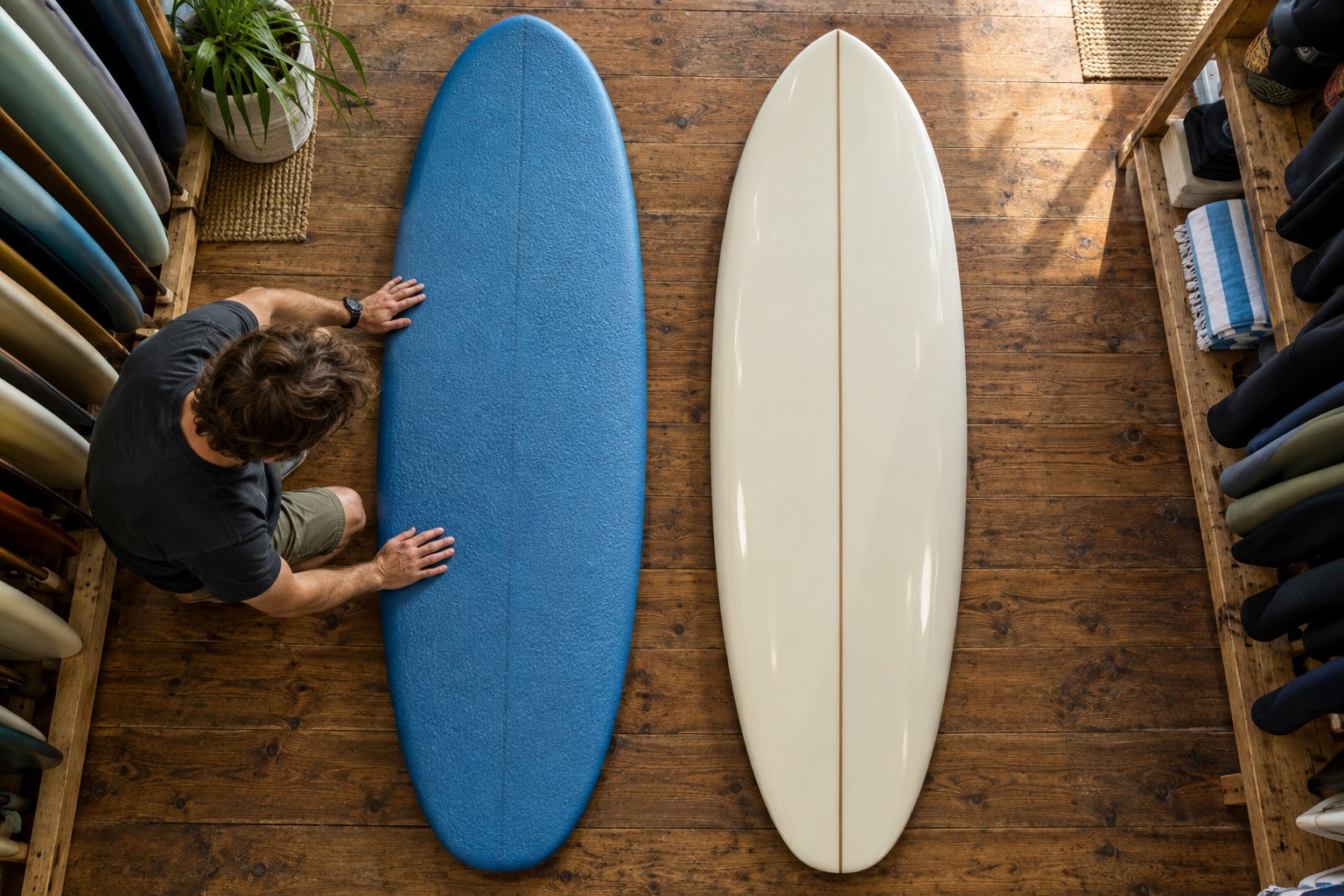
Soft top or hard board for your first purchase
Choose construction alongside shape, condition and the way you will use the board, rather than treating a hard board as an automatic upgrade.
Boards & equipment
Rocker is the board's lengthwise curve. Learn what the description means without expecting one curve measurement to predict the whole ride.
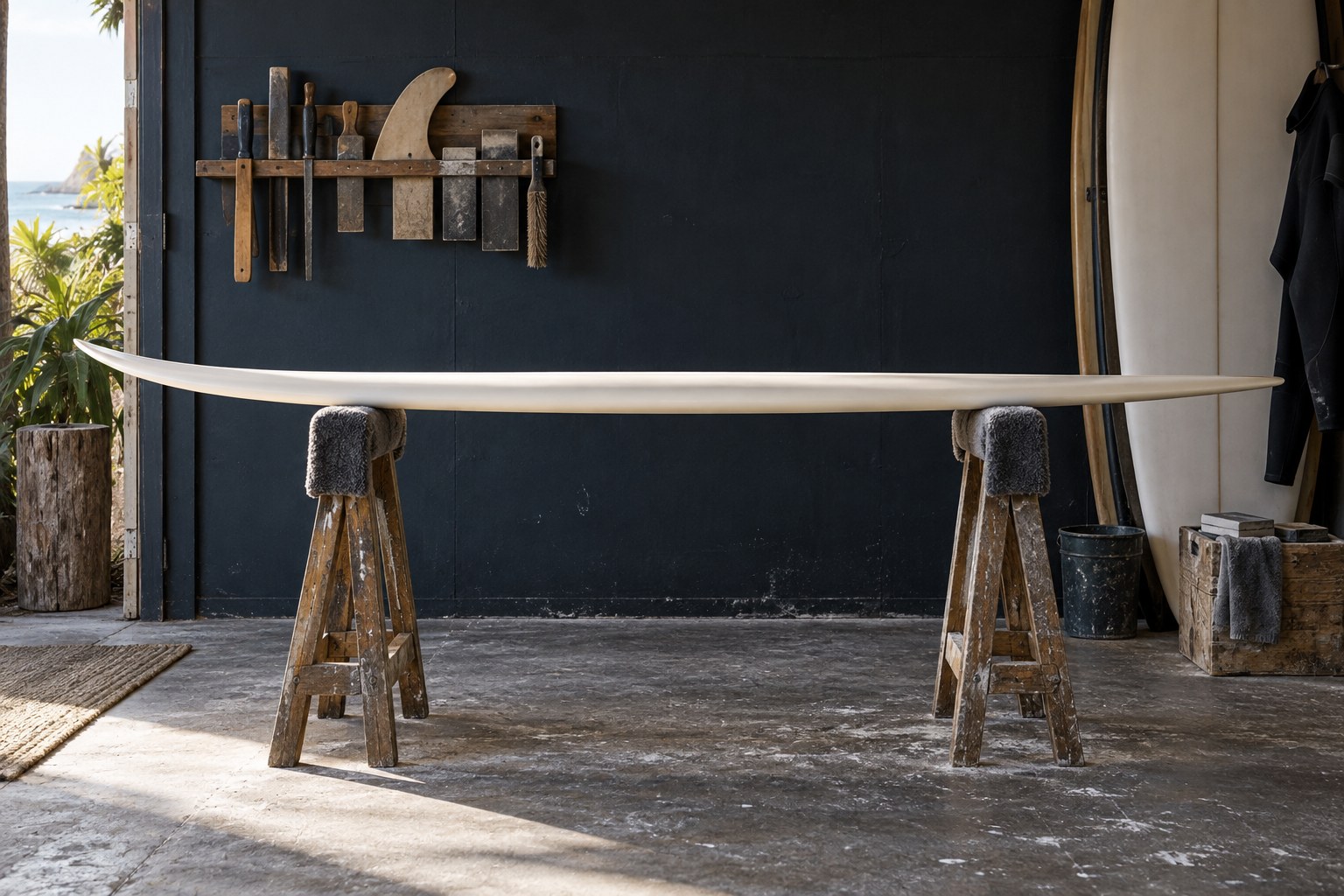
AI-generated illustration. Equipment details are illustrative; follow the instructions for your own item.
Look at a surfboard from the side and you can see its lengthwise curve, usually called rocker. The nose and tail may rise by different amounts, and the transition through the middle can vary between designs. A product description may refer separately to entry or nose rocker and exit or tail rocker.
Degree 33's rocker guide describes the general trade-off between flatter designs that can favour paddling and speed in weaker waves and more curved designs intended to fit steeper wave shapes. These are design tendencies, not a rule that lets a beginner choose a board or conditions from a side photograph.
If a maker calls a board low-rocker, ask what it is being compared with and which sessions the model is intended for. The phrase is relative. A relaxed curve in one category may not resemble the curve in a very different type of board.
Do not isolate nose lift from the rest of the shape. Outline, rails, bottom contours, length and fin setup also contribute to how a board behaves. A review praising one feature on a specific model does not establish that adding the same feature elsewhere will produce the same result.
Avoid measuring a shop board by pressing it against a floor or forcing the ends downward. Ask the staff member to show it on appropriate supports and explain the profile. You are comparing designs, not conducting a bending test.
If you are having trouble in lessons, describe what happened and let the instructor assess it. A board catching at the front during an attempt does not automatically prove that it needs more nose rocker. Position, timing, the wave and other aspects of the session may be involved.
Ask whether changing boards would help answer the question, and if so, which comparison would be meaningful. Trying two unrelated models in unrelated conditions makes it difficult to identify the role of the curve alone.
When reading a shortlist at home, keep the maker's rocker description beside the intended rider and wave description. Exclude designs that do not match your present use before becoming absorbed in small differences. The term is valuable because it helps you understand a board discussion, not because it replaces the need for one.
Boards & equipment
Choose construction alongside shape, condition and the way you will use the board, rather than treating a hard board as an automatic upgrade.

Boards & equipment
Bring a record of the boards you have used and the sessions you want to your sizing conversation.