Boards & equipment
Soft top or hard board for your first purchase
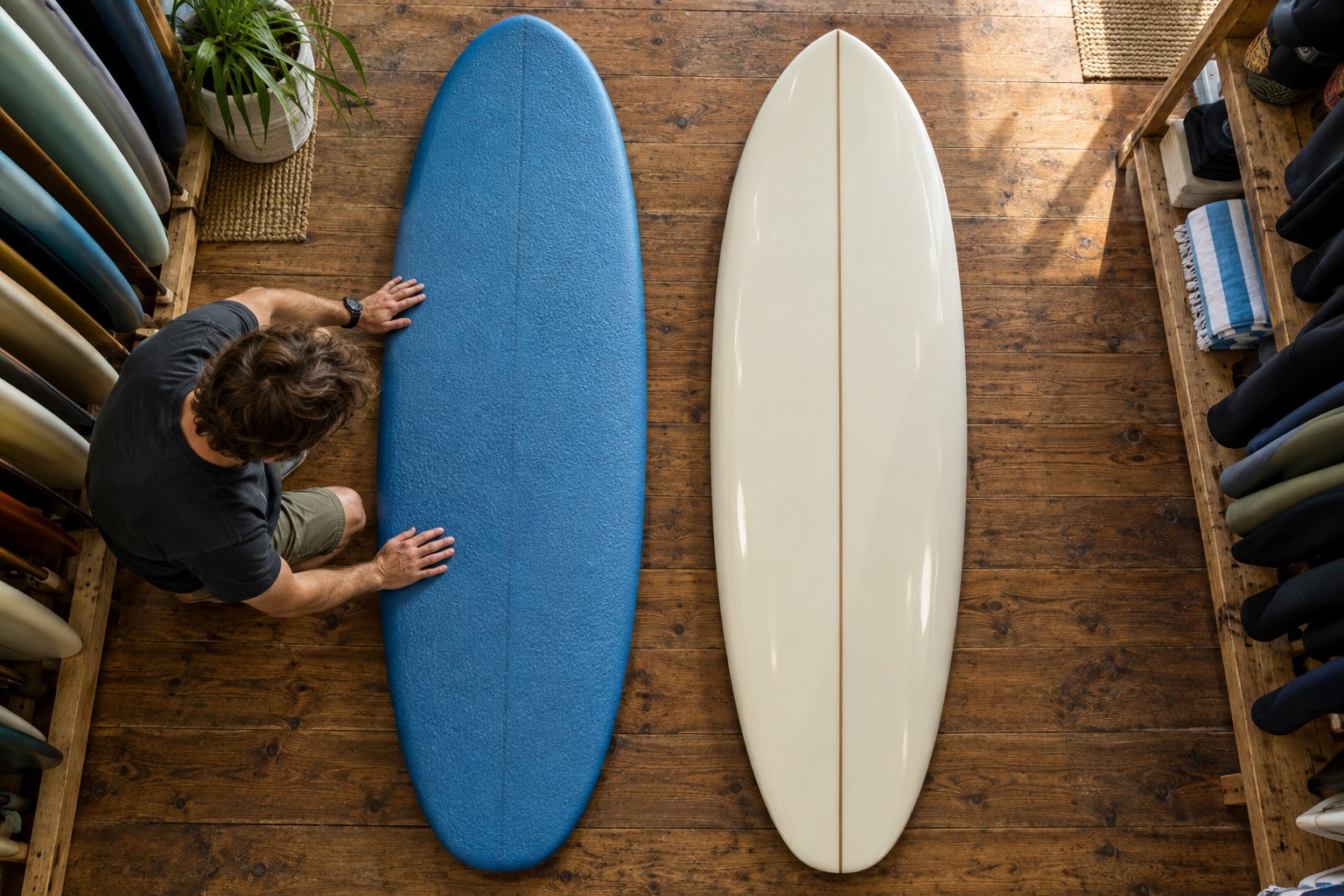
Choose construction alongside shape, condition and the way you will use the board, rather than treating a hard board as an automatic upgrade.
Boards & equipment
Assess the surface, fittings and ownership history of a used foam board before accepting a low price as good value.
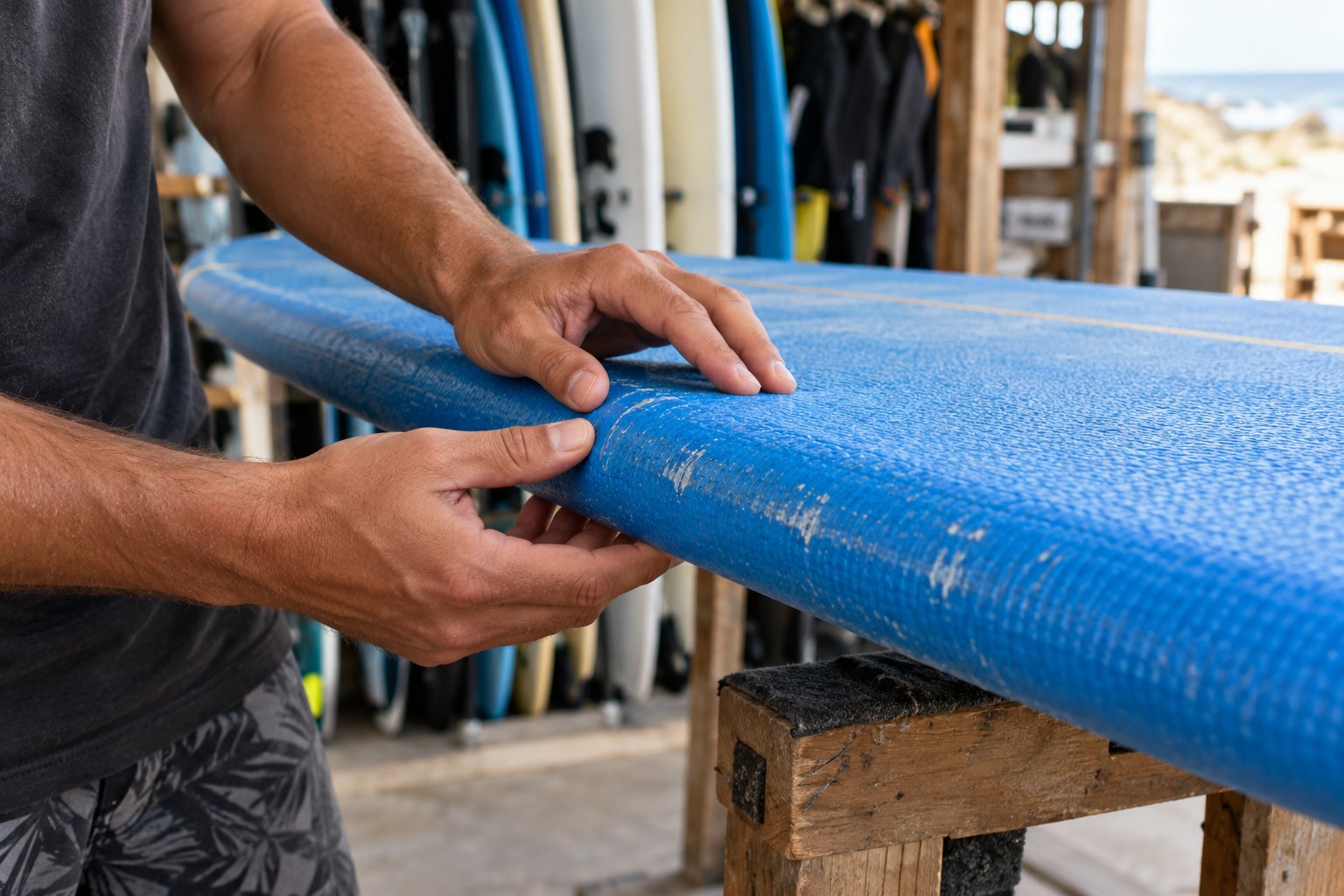
AI-generated illustration. Equipment details are illustrative; follow the instructions for your own item.
A soft deck can disguise how much a used board has been through. Arrange to inspect the board in good light, with access to the deck, bottom, rails and fittings. A listing photograph of the graphic is not enough to understand its condition.
Identify the model and size first. Check the maker's intended use and confirm that it suits your current practice. An inexpensive performance softboard is not automatically a suitable learner purchase. Bring the details of the board you have used in lessons if you need an instructor or shop to compare them.
Ask the seller to point out cuts, lifted material, bubbles, damaged seams or repairs. Inspect those areas without pressing hard or pulling at them. You are trying to understand the existing condition, not testing how far a defect will spread.
Look at the underside and rails as carefully as the deck. Ask when any damage occurred, whether the board was used afterwards and how it was repaired. Softech's guidance warns that damage exposing an EPS core can allow water in; a soft surface should not be treated as permission to ignore a puncture.
If the seller describes a repair as easy, ask why it has not been assessed or completed. Do not price a board around a repair method you have not verified for that construction. A local repairer or the maker may be able to advise from photographs, but an uncertain remote opinion is not the same as an inspection.
Identify the fin system and confirm that the correct fins and fittings are included. Look for damaged fin bases, loose attachments or missing hardware. Ask a shop to assess concerns rather than accepting an improvised fastener because it currently holds something in place.
Treat an included leash as a separate item requiring its own suitability and condition check. It should not be the reason to overlook the board's defects. The same applies to a bag that is too small or badly worn.
Add the likely costs of inspection, repair and missing parts before comparing the purchase with a sound alternative. If the condition cannot be established, walk away. A first board should give you a known starting point, not a collection of unresolved questions you carry from the seller straight to the beach.
Boards & equipment
Choose construction alongside shape, condition and the way you will use the board, rather than treating a hard board as an automatic upgrade.

Boards & equipment
Bring a record of the boards you have used and the sessions you want to your sizing conversation.