Boards & equipment
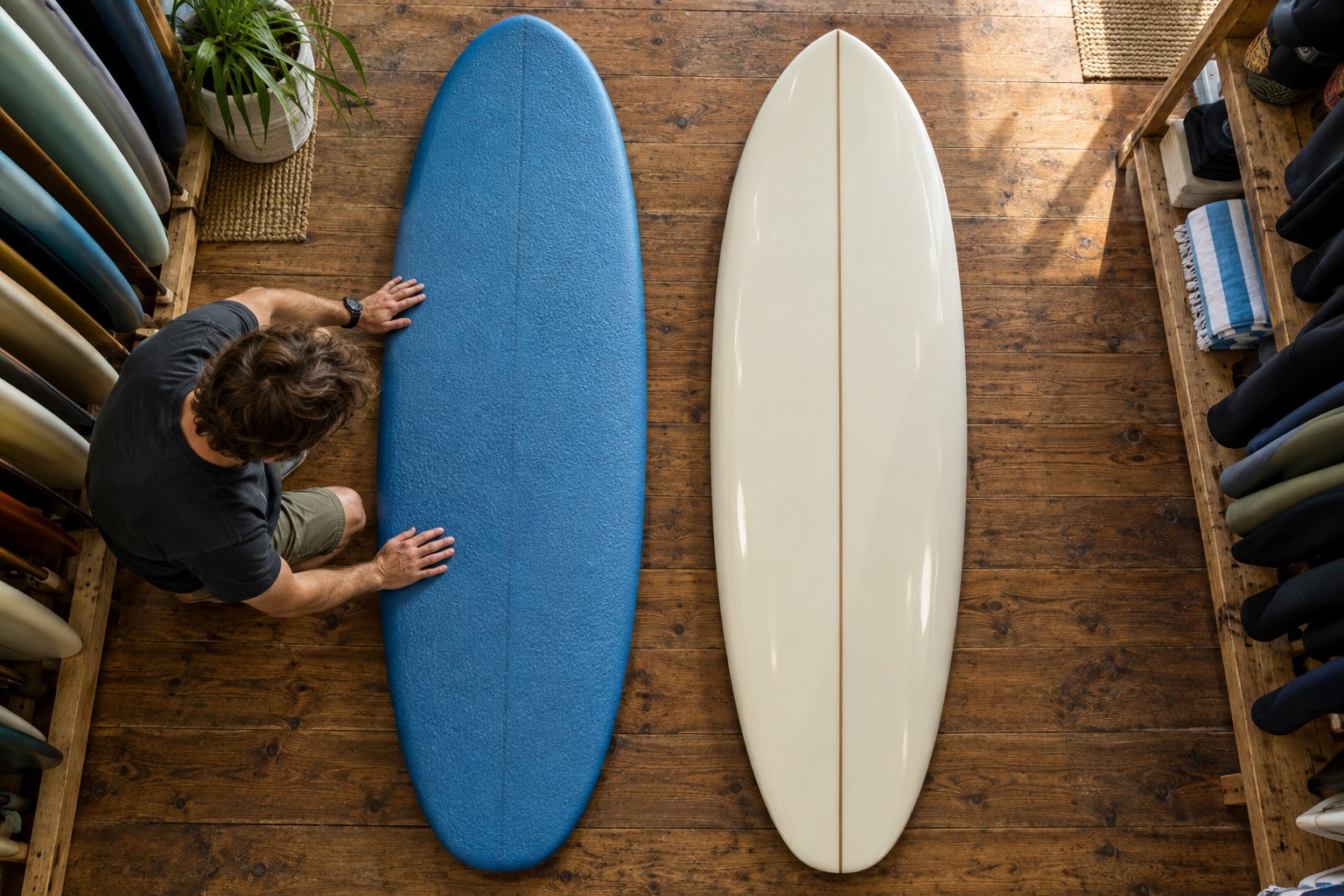
Soft top or hard board for your first purchase
Choose construction alongside shape, condition and the way you will use the board, rather than treating a hard board as an automatic upgrade.
Boards & equipment
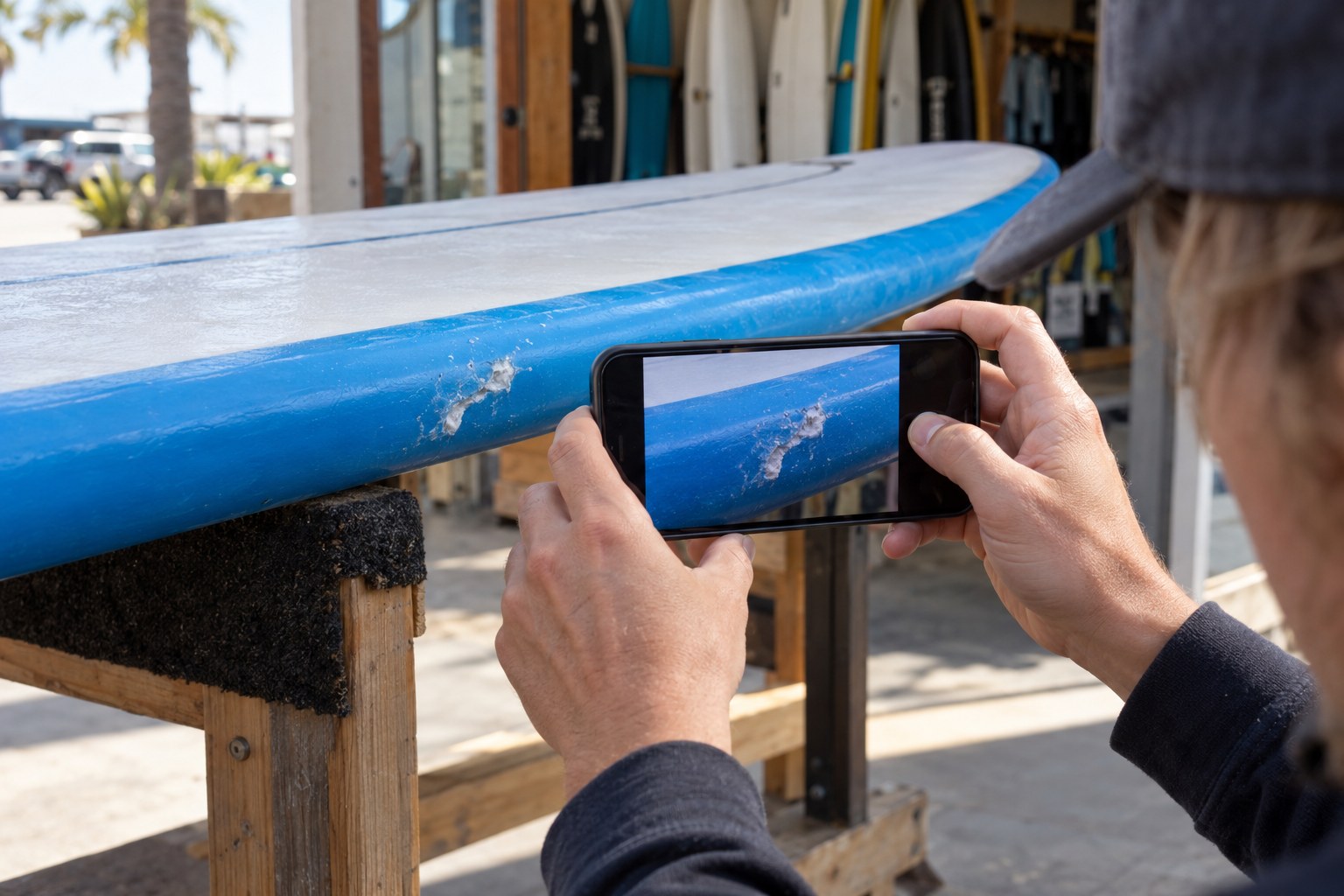
Photograph the whole rental board and any existing marks with the shop present, then keep the images with the hire record.
AI-generated illustration. Equipment details are illustrative; follow the instructions for your own item.
Condition photographs are most useful when they show both context and detail. A close-up of a mark may be clear but impossible to locate later; a full-board image may hide a small crack. At collection, ask the rental shop to go through the board with you and record any existing issues together before leaving.
Start with a view of the deck and another of the underside. Add the nose, tail and both rails, then any areas the staff identify. Include the fins, fin boxes and leash connection where visible. Keep a board number or distinctive marking in the record so the pictures can be associated with the correct item.
For each area of concern, take one wider photograph showing its location and one closer image showing the mark. Use enough light to avoid deep shadows or glare. Do not press, scrape or bend an area to make damage more visible. Ask staff whether a mark is cosmetic or requires a different board; a photograph alone is not a structural assessment.
If the board is wet or heavily waxed, acknowledge what cannot be seen clearly. Do not state that the photographs prove the entire board was undamaged. The useful record is what was visible and discussed at the handover.
Keep the agreed condition notes with the hire receipt. If the shop uses its own digital form, check that the observations are included before confirming it. Save a copy or ask how you can access the record later.
Leave enough time for a joint return inspection rather than dropping the board outside a closed shop. Take a comparable set of views where practical and ask staff to note the return. If an incident occurred during the hire, describe it directly instead of relying on photographs to explain what happened.
Avoid including other customers' faces or personal documents unnecessarily. These pictures are an equipment record, not a reason to photograph the whole shop. Store them with the dates and hire details until the rental is settled, then retain only what you need. Clear, paired images make the conversation easier for both sides without promising a particular outcome in any disagreement.
Boards & equipment
Choose construction alongside shape, condition and the way you will use the board, rather than treating a hard board as an automatic upgrade.
Boards & equipment
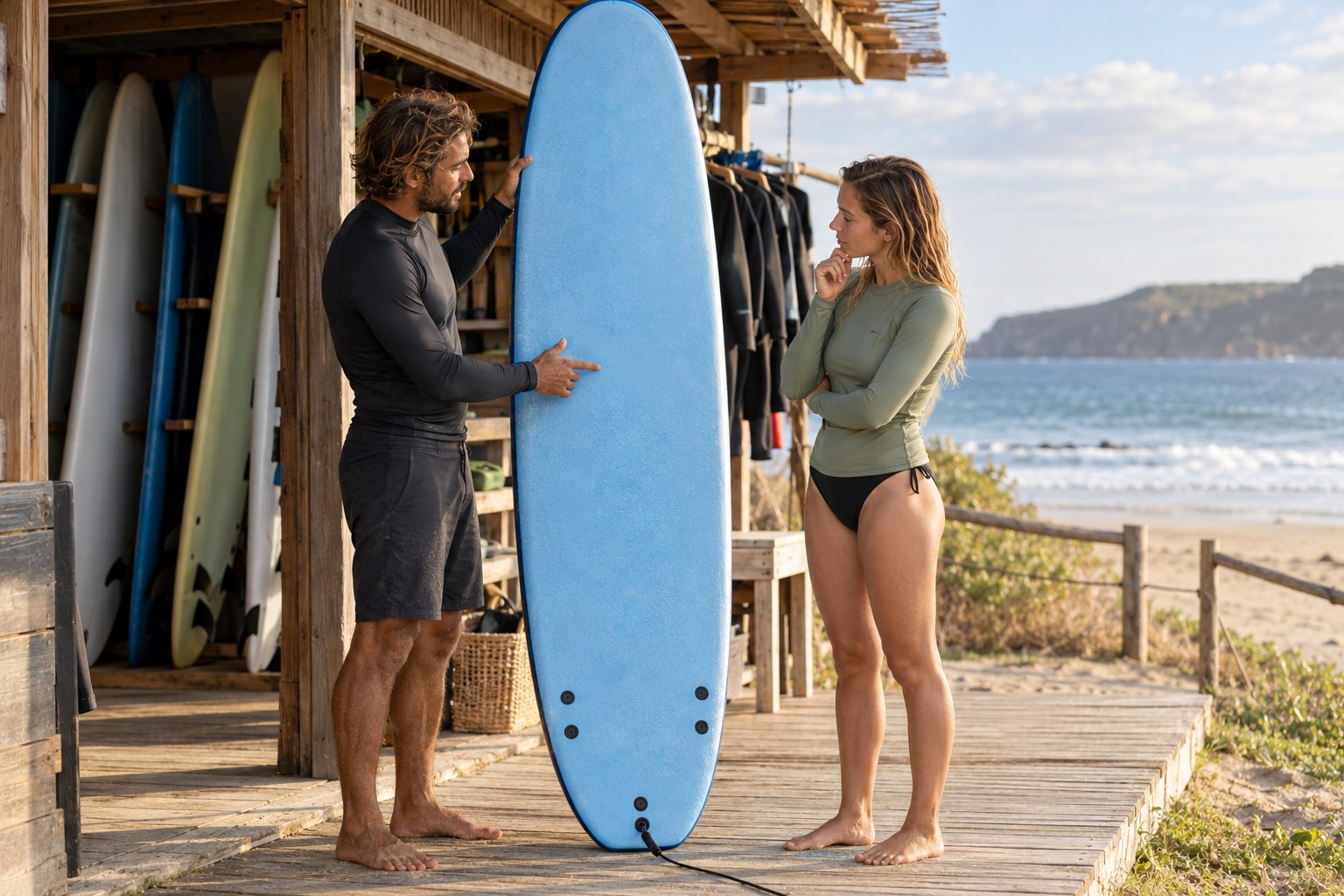
Bring a record of the boards you have used and the sessions you want to your sizing conversation.